Pharm'Up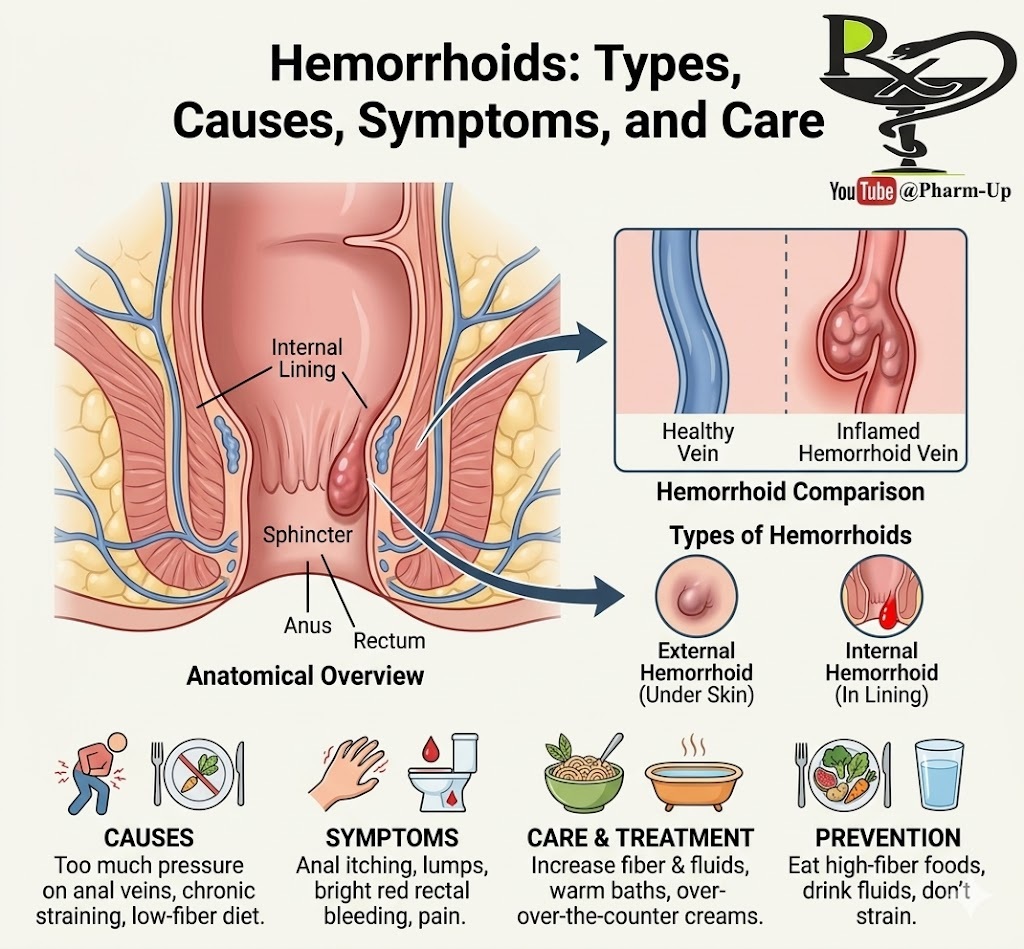
Hemorrhoids are swollen, inflamed veins located around the anus or the lower part of the rectum. They are classified into two main types based on their location: External (under the skin around the anus) and Internal (inside the lining of the anus and lower rectum).
Common Causes
Hemorrhoids develop when excessive pressure is placed on the anal veins. Contributing factors include:
- Lifestyle: Straining during bowel movements, sitting on the toilet for long periods, or frequently lifting heavy objects.
- Diet: Chronic constipation, diarrhea, or a low-fiber diet.
- Physical Changes: Aging or pregnancy, which can weaken the supporting tissues in the rectum.
Symptoms by Type
| Feature | External Hemorrhoids | Internal Hemorrhoids |
| Pain | Common, especially when sitting. | Usually painless unless prolapsed. |
| Physical Signs | Hard, tender lumps near the anus. | Bright red blood in stool or toilet paper. |
| Sensation | Intense anal itching. | Prolapse (falling through the anal opening). |
Treatment and Prevention
Most cases can be managed at home using the following strategies:
- Dietary Fiber: Increase intake of high-fiber foods or take fiber supplements/stool softeners.
- Hydration: Drink plenty of fluids daily to keep stools soft.
- Hygiene & Comfort: Take warm sitz baths several times a day and use over-the-counter creams or ointments for itching.
- Habit Changes: Avoid straining and limit the time spent sitting on the toilet.
When to See a Provider
You should consult a healthcare professional if symptoms persist after one week of home treatment. Rectal bleeding should always be evaluated by a provider to rule out more serious conditions such as colorectal cancer or inflammatory bowel disease (IBD).
About the Author


 Pharm'Up