FDA Greenlights Zoryve Cream 0.05% as a Steroid-Free Option for Young Children with Eczema
 Pharm'Up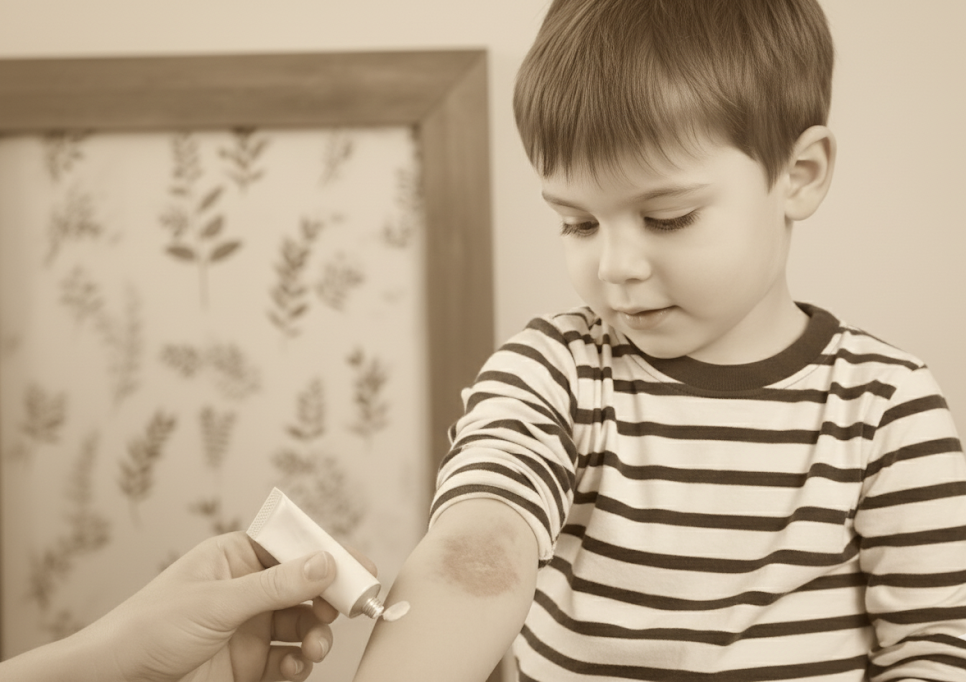
The Food and Drug Administration (FDA) has granted a supplemental new drug application (sNDA) approval for roflumilast (Zoryve; Arcutis Biotherapeutics) cream 0.05% for the topical treatment of mild to moderate atopic dermatitis (AD) in children aged 2 to 5 years. This marks the sixth FDA approval for roflumilast cream within the last three years, solidifying its role in dermatology.
Roflumilast cream 0.05% is an advanced, non-steroidal topical phosphodiesterase 4 (PDE4) inhibitor. It works by targeting the PDE4 intracellular enzyme, which is known to increase pro-inflammatory mediators and decrease anti-inflammatory mediators, thereby addressing the underlying inflammation driving AD.
The manufacturer emphasizes that this once-daily, steroid-free treatment offers a significant advantage for young patients, providing a long-term, continuous use option that can be applied anywhere on the body and helps limit cumulative topical steroid exposure. The formulation was specifically designed to avoid ingredients that might compromise the skin barrier, which is particularly vulnerable in young children with AD.
Clinical Evidence Supporting the Approval
The FDA’s decision is primarily based on compelling data from the Phase 3 INTEGUMENT-PED trial, supported by the INTEGUMENT-OLE long-term extension study, and a Phase 1 pharmacokinetic study.
INTEGUMENT-PED Trial Results (Ages 2 to 5)
The INTEGUMENT-PED was a randomized, double-blind, vehicle-controlled study involving 652 children (437 on roflumilast cream 0.05%; 215 on vehicle) over four weeks. The trial demonstrated:
- Rapid Disease Clearance: Significant improvements were noted as early as Week 1.
- Primary Endpoint Achieved: At Week 4, 25.4% of children treated with roflumilast achieved a validated Investigator Global Assessment – Atopic Dermatitis (vIGA-AD) success (defined as ‘clear’ or ‘almost clear’ with a ≥2-grade improvement from baseline), compared to only 10.7% of the vehicle group (P<.0001).
- EASI-75 Success: 39.4% of children using roflumilast achieved a 75% reduction in Eczema Area and Severity Index (EASI-75) at Week 4, compared to 20% using vehicle.
- Itch Reduction: Roflumilast was shown to reduce itch at Week 4. Over one-third of children with a baseline Worst Itch Numeric Scale (WI-NRS) score of 4 or higher achieved a ≥4-point reduction, compared to 18% in the vehicle group.
INTEGUMENT-OLE Long-Term Efficacy
The INTEGUMENT-OLE was an open-label extension study that tracked the long-term safety and efficacy of the treatment.
- Sustained and Improving Efficacy: After 56 weeks of continuous treatment, 71.9% of participants who rolled over from the roflumilast arm in INTEGUMENT-PED achieved a 75% improvement from baseline in EASI.
- Proactive Dosing: Participants who achieved a vIGA-AD score of 0 (‘clear’) were switched to proactive twice-weekly application. For these patients, the median duration of disease control was 238 days (34 weeks).
Safety Profile
Roflumilast cream 0.05% was well-tolerated across the pivotal studies. The most common adverse events reported were:
- Upper respiratory tract infection
- Diarrhea
- Vomiting
- Rhinitis
- Conjunctivitis
- Headache
The safety profile remained consistent throughout the long-term INTEGUMENT-OLE study.
Impact on Pediatric Care
This approval provides healthcare professionals, parents, and caregivers with a crucial steroid-free alternative for managing a common, chronic condition. Given that atopic dermatitis often begins in early childhood and can persist throughout life, having a safe and effective treatment suitable for long-term, continuous use is a significant advancement in pediatric dermatology.
About the Author