Pharm'Up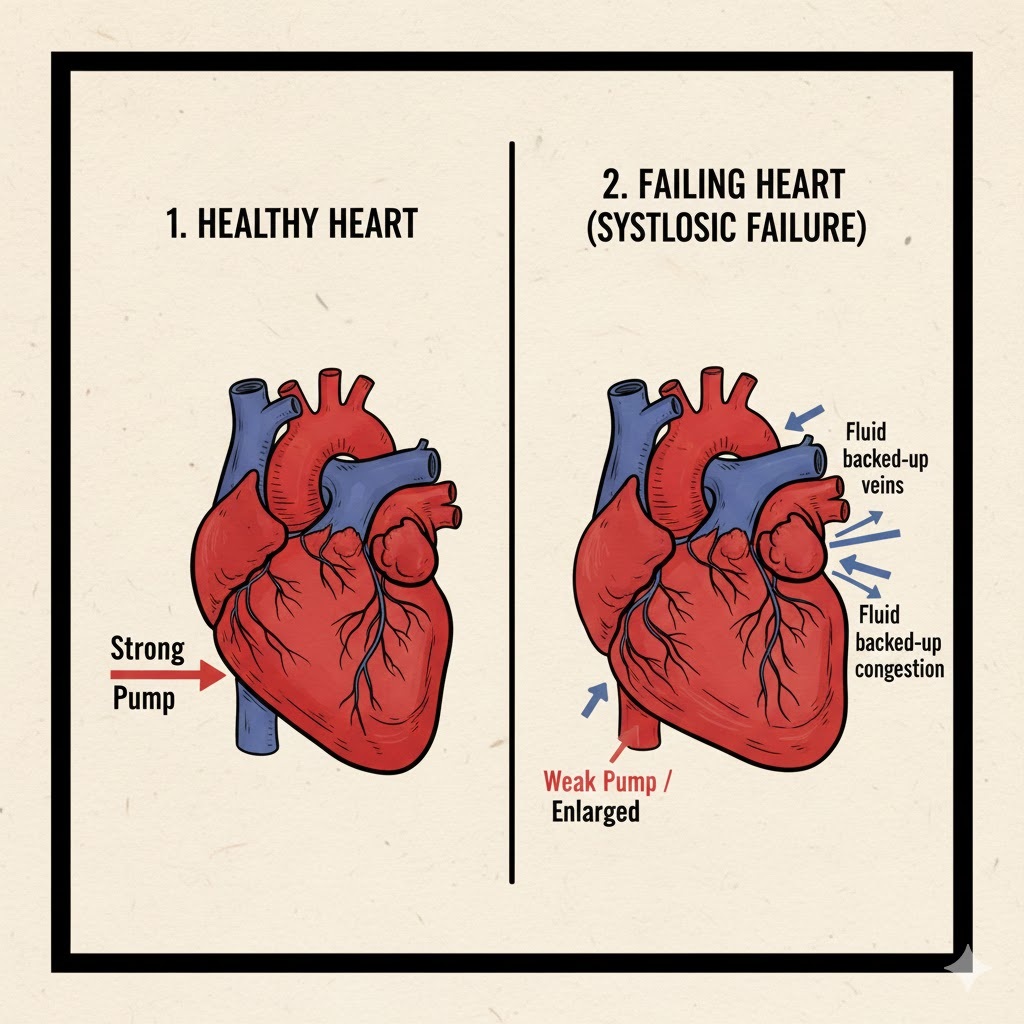
Heart failure is a chronic, long-term condition where the heart muscle cannot pump enough blood to meet the body’s needs for blood and oxygen. It does not mean the heart has stopped; rather, it means the heart is failing to pump efficiently.
How Heart Failure Affects the Body
Heart failure usually affects one side of the heart first, though over time, it often impacts both.
Left-Sided Heart Failure
This is the most common type. The left side of the heart must work harder to pump blood to the rest of the body.
- Systolic Failure: The heart muscle is too weak to squeeze properly.
- Diastolic Failure: The heart muscle is too stiff to relax and fill with blood.
Right-Sided Heart Failure
The right side of the heart pumps blood to the lungs to pick up oxygen. When it fails, blood “backs up” in the body’s veins. This is usually caused by left-sided failure, as the extra pressure is sent back through the lungs to the right side.
Disparities and Risk Factors
Heart failure affects millions, but the burden is not shared equally across all demographics.
Racial Disparities in the U.S.
- African Americans: This group has the highest risk of heart failure. African Americans are diagnosed with heart failure at a rate roughly 25% higher than white individuals. They are also more likely to develop the condition at a younger age and experience more severe symptoms.
- Prevalence: Approximately 3.6% of Black adults have heart failure, compared to 2.4% of White adults and 2.0% of Hispanic adults.
- Mortality: African Americans have a significantly higher rate of death from heart failure, often linked to higher rates of untreated hypertension (high blood pressure).
Common Risk Factors
- Age: People 65 and older are at highest risk due to natural heart stiffening.
- Underlying Conditions: Diabetes, obesity, and CAD (Coronary Artery Disease) are primary drivers.
- Lifestyle: High sodium intake is particularly dangerous for heart failure patients as it causes the body to retain fluid.
Symptoms: The Fluid Connection
When the heart doesn’t pump well, blood backs up in the veins. This causes fluid to leak into the tissues, leading to edema (swelling).
- Shortness of Breath: Fluid backing up into the lungs (Congestive Heart Failure).
- Swelling: Usually in the ankles, legs, or abdomen.
- Fatigue: Organs and muscles aren’t getting enough oxygen-rich blood.
- Persistent Cough: Often producing white or pink blood-tinged phlegm.
Diagnosis and Treatment
Doctors use a BNP (Brain Natriuretic Peptide) blood test to check for heart failure, as BNP levels rise when the heart is stressed.
Management Strategies
There is no cure for heart failure, but it is highly treatable:
- Medications: ACE inhibitors to relax vessels, or diuretics (“water pills”) to help the kidneys remove excess fluid.
- Fluid & Salt Restriction: Patients are often asked to limit sodium to less than 2,000 mg per day to prevent swelling.
- Advanced Devices:
- Pacemakers: To help the heart chambers beat in sync.
- LVAD (Left Ventricular Assist Device): A mechanical pump that helps the heart circulate blood.
About the Author


 Pharm'Up