Pharm'Up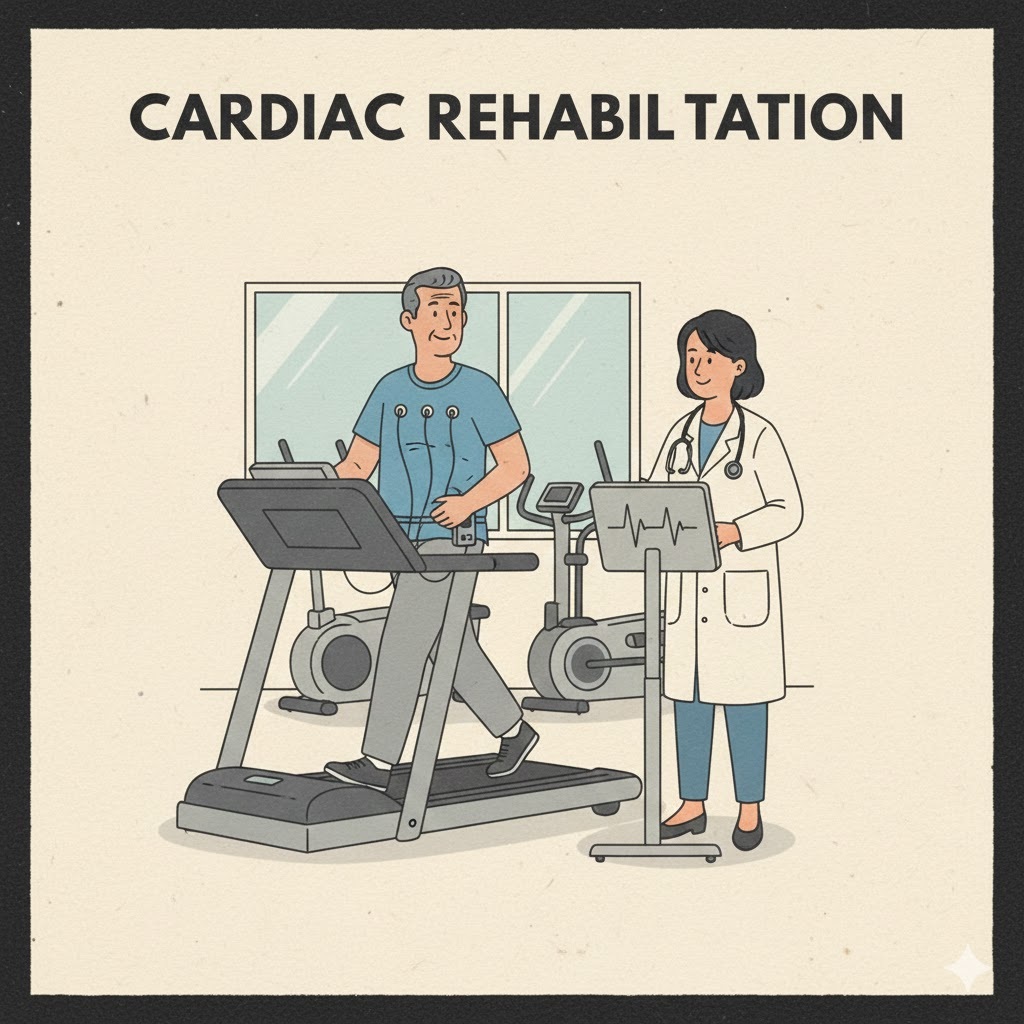
Cardiac rehabilitation (often called cardiac rehab) is a comprehensive, medically supervised program designed to improve your cardiovascular health following a significant heart event or surgery. Rather than just a “gym program,” it is a multidisciplinary approach to ensure your heart becomes stronger and your risk of future hospitalization decreases.
Who is it For?
You may be referred to cardiac rehab if you have experienced:
- Heart Attack (Myocardial Infarction): To recover muscle strength.
- Surgical Procedures: Including angioplasty (stents), coronary artery bypass grafting (CABG), or valve repair/replacement.
- Transplants: Both heart and lung transplant recipients benefit from supervised recovery.
- Chronic Conditions: Such as stable angina (chest pain) or heart failure.
The Three Pillars of Cardiac Rehab
A team of specialists—including cardiologists, exercise physiologists, nutritionists, and mental health counselors—works together to create a personalized plan based on three core areas:
1. Exercise Training
This is the “active” part of the program. You will perform cardiovascular exercises (like walking on a treadmill or using a stationary bike) while your heart rate and blood pressure are monitored by professionals.
2. Education for Heart-Healthy Living
A major goal is managing risk factors. You will receive guidance on:
- Nutrition: Adopting a heart-healthy diet (low in salt and saturated fats).
- Medication Management: Understanding how your prescriptions work.
- Smoking Cessation: Practical strategies to quit smoking.
- Condition Management: Learning to control diabetes, high blood pressure, and cholesterol.
3. Counseling and Stress Reduction
Heart events can be emotionally taxing. Counseling helps patients manage depression, anxiety, and stress, all of which can place physical strain on the heart if left unaddressed.
The Benefits of Participation
Studies show that patients who complete a cardiac rehab program experience:
- Reduced Mortality: A significantly lower risk of death from heart-related causes.
- Improved Quality of Life: Increased stamina and the ability to return to daily activities and work.
- Prevention: A decreased likelihood of needing future surgeries or experiencing another heart attack.
About the Author


 Pharm'Up