Pharm'Up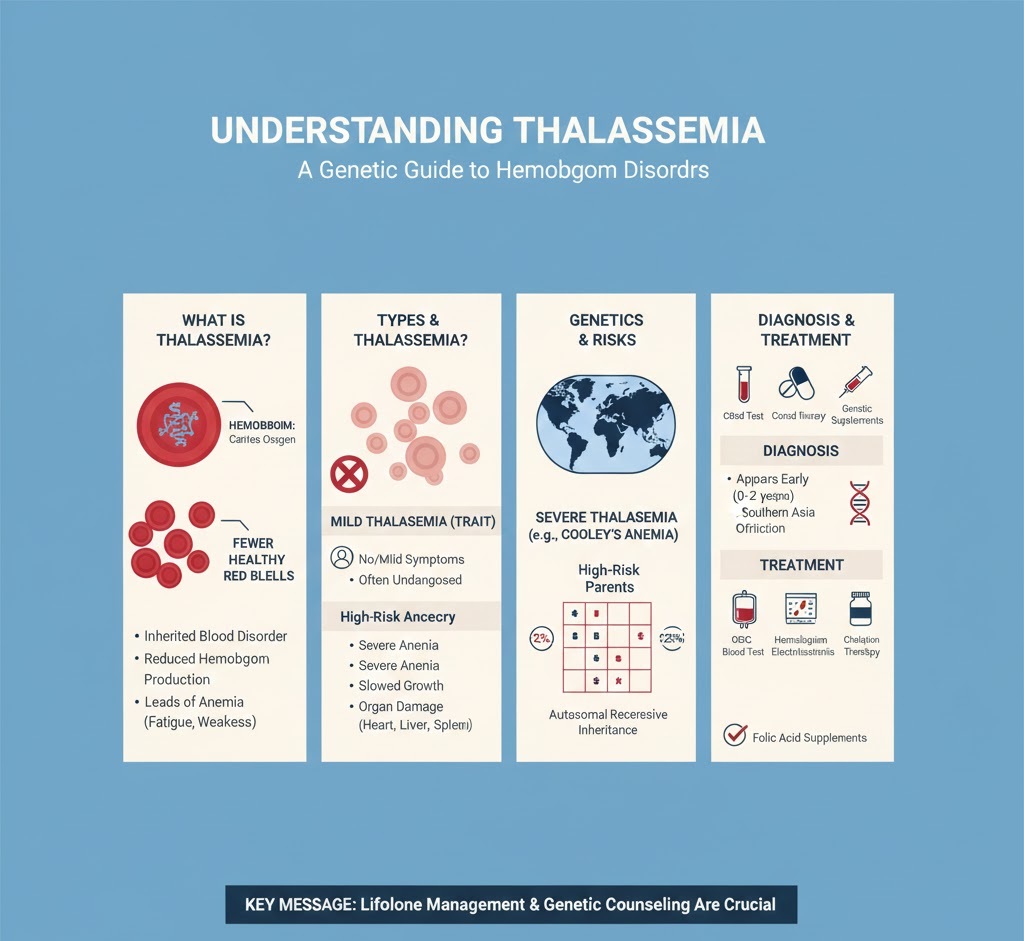
Thalassemias are a group of inherited blood disorders characterized by the body’s inability to produce sufficient amounts of healthy hemoglobin—the essential protein in red blood cells that transports oxygen to your organs and tissues.
This lack of hemoglobin leads to a reduced number of healthy red blood cells, resulting in anemia. Because it is a genetic condition, it is passed down from parents to children through DNA.
1. Types and Severity
Thalassemias are categorized based on which part of the hemoglobin molecule is affected (alpha or beta) and the severity of the mutation.
- Mild Thalassemia (Trait): Often causes no symptoms or very mild anemia. Many people only discover they have it through routine blood work.
- Severe Thalassemia (Cooley’s Anemia): This is the most serious form of Beta Thalassemia. It typically presents within the first two years of life.
- Impact on the Body: Can cause slowed growth, delayed puberty, and bone deformities (as the bone marrow expands to try and make more blood).
- Organ Stress: Without treatment, it can lead to an enlarged spleen and liver, and heart complications.
2. Demographics and Genetics
Thalassemia is most prevalent in specific ancestral groups, primarily in regions where malaria was historically common, as the trait offered some protection against the disease.
- High-Risk Ancestry: Mediterranean (Italian, Greek), Middle Eastern, Southern Asian, and African descent.
- Inheritance: It is an autosomal recessive disorder. If both parents carry the thalassemia trait, there is a 25% chance their child will have the severe form of the disease.
3. Diagnosis and Treatment
Diagnostic Tools
- CBC (Complete Blood Count): Measures the size and amount of red blood cells (cells are often smaller than normal).
- Hemoglobin Electrophoresis: A test that identifies the specific types of hemoglobin in the blood.
- Genetic Testing: To identify the exact mutations in the alpha or beta globin genes.
Management Options
| Treatment | Purpose |
| Blood Transfusions | Provides healthy red blood cells to maintain oxygen levels. |
| Chelation Therapy | Removes excess iron from the body (a side effect of frequent transfusions). |
| Folic Acid Supplements | Helps the body build new red blood cells. |
| Bone Marrow Transplant | Currently the only potential cure, typically reserved for severe cases in children. |
4. Visualizing Hemoglobin Deficiency
In a healthy individual, red blood cells are plump and filled with hemoglobin. In thalassemia, the cells may appear pale, small (microcytic), or misshapen, making them less efficient at carrying oxygen and more prone to breaking down.
About the Author