Pharm'Up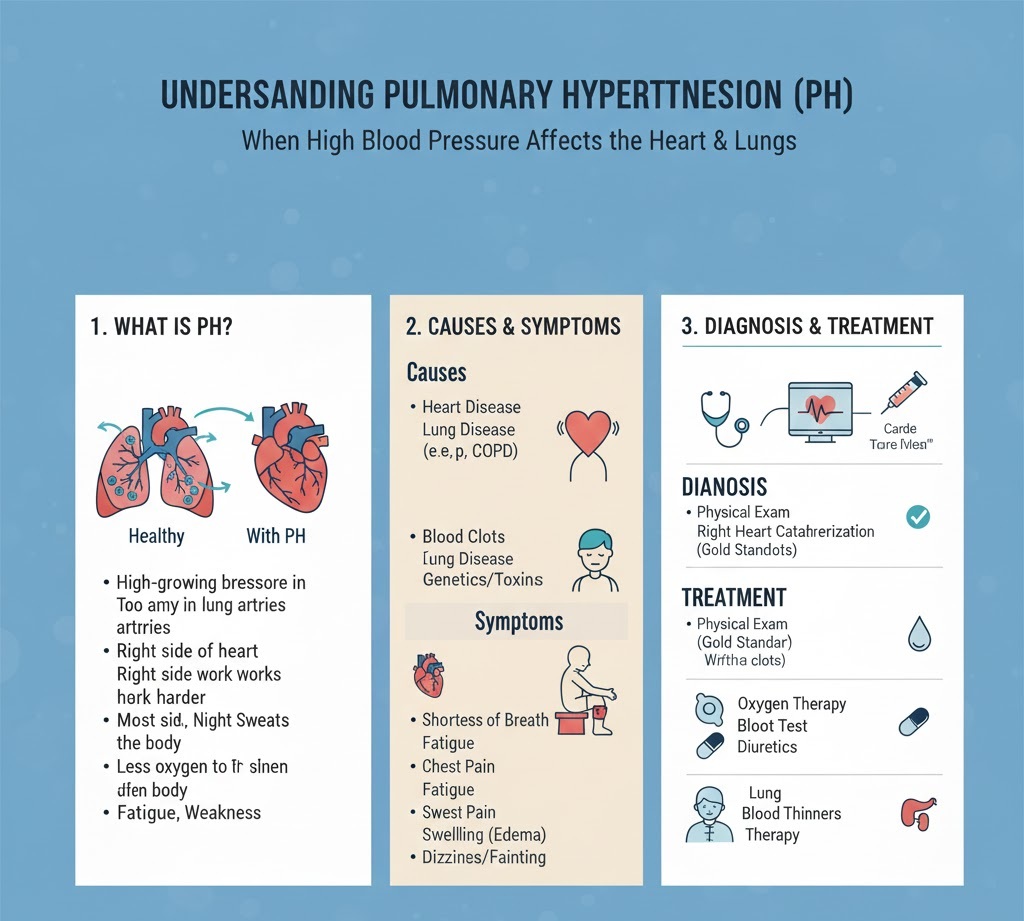
Pulmonary Hypertension (PH) is a type of high blood pressure that specifically affects the arteries in your lungs and the right side of your heart. In a healthy body, the right side of the heart pumps blood through the pulmonary arteries to the lungs with relatively low pressure. However, when these arteries become narrow, stiff, or thick, the heart must work much harder to push blood through, leading to increased pressure.
1. How Pulmonary Hypertension Develops
The condition is often categorized into five groups based on the underlying cause. Understanding the “why” is essential for determining the correct treatment.
- Group 1 (PAH): Pulmonary Arterial Hypertension caused by genetics, certain drugs, or connective tissue diseases.
- Group 2: Caused by left-sided heart diseases (like mitral valve disease or heart failure).
- Group 3: Caused by lung diseases (like COPD or pulmonary fibrosis) or low oxygen levels.
- Group 4: Caused by chronic blood clots (Pulmonary Emboli) that never fully dissolve.
- Group 5: Caused by other triggers, such as blood disorders (Sickle Cell) or metabolic disorders.
2. Symptoms and “The Great Mimic”
PH is often difficult to diagnose in its early stages because its symptoms mirror many other common heart and lung conditions. This can result in a delay of years before a correct diagnosis is made.
- Common Symptoms:
- Shortness of Breath (Dyspnea): Initially during exercise, but eventually occurring while at rest.
- Chest Pain: A feeling of pressure or “tightness.”
- Edema: Swelling in the ankles, legs, and eventually the abdomen (ascites).
- Cyanosis: A bluish tint to the lips or skin.
- Syncope: Dizziness or fainting spells, often during physical exertion.
3. Diagnosis and Impact on the Heart
If left untreated, the constant strain on the right side of the heart causes it to enlarge and eventually weaken—a condition known as Cor Pulmonale.
Diagnostic Procedures
- Echocardiogram: An ultrasound used to estimate the pressure in the pulmonary arteries.
- Right Heart Catheterization: The “gold standard” for diagnosis. A thin tube is threaded into the heart to directly measure the blood pressure inside the pulmonary artery.
- V/Q Scan: A specialized imaging test used specifically to look for the blood clots associated with Group 4 PH.
4. Treatment and Management
While most forms of PH cannot be cured, modern treatments have significantly improved quality of life and life expectancy.
| Treatment Type | Purpose |
| Vasodilators | Open up narrowed blood vessels to improve blood flow. |
| Diuretics | Help the kidneys remove excess fluid to reduce swelling and heart strain. |
| Oxygen Therapy | Provides extra oxygen to the lungs to reduce the workload of the heart. |
| Anticoagulants | Blood thinners used to prevent the formation of new clots. |
| Lung Transplant | Reserved for severe cases that do not respond to medication. |
About the Author