Pharm'Up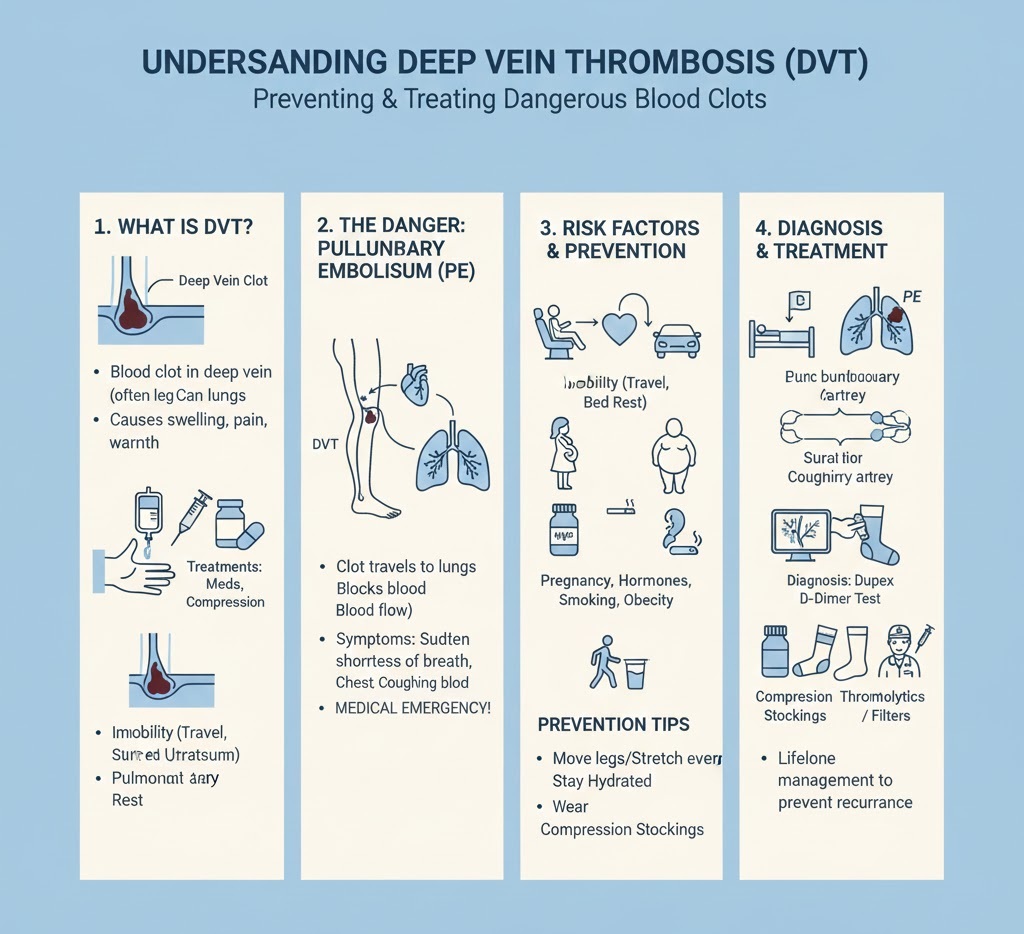
Deep Vein Thrombosis (DVT) occurs when a blood clot (thrombus) forms in one or more of the deep veins in your body, usually in your legs. Unlike superficial veins just under the skin, deep veins are surrounded by muscle. When a clot forms here, it can block blood flow or, more dangerously, travel through the bloodstream.
1. The Major Risk: Pulmonary Embolism
The most serious complication of DVT is a Pulmonary Embolism (PE). This happens when a part of the clot breaks loose, travels through the heart, and becomes lodged in the lungs.
- DVT Symptoms: Leg swelling, redness, warmth, and a “cramping” pain.
- PE Symptoms: Sudden shortness of breath, chest pain that worsens with a deep breath, and coughing up blood. This is a medical emergency.
2. Common Risk Factors
Anything that slows blood flow or makes the blood “thicker” can increase the risk of a clot:
- Immobility: Long flights, car rides, or bed rest after surgery.
- Injury or Surgery: Damage to a vein can trigger clot formation.
- Pregnancy: Increased pressure in the veins of the pelvis and legs.
- Health Conditions: Smoking, obesity, certain cancers, and birth control pills or hormone replacement therapy.
3. Diagnosis and Treatment
How it is detected:
- Duplex Ultrasound: The standard test that uses sound waves to visualize blood flow and identify clots.
- D-dimer Test: A blood test that looks for a specific protein fragment produced when a blood clot dissolves in the body.
Management Strategies:
| Treatment | Purpose |
| Anticoagulants | Often called “blood thinners,” these prevent the clot from getting larger and reduce the risk of new ones. |
| Compression Stockings | Specially fitted socks that apply pressure to the legs to prevent blood from pooling. |
| Thrombolytics | “Clot-busting” drugs used only in severe, life-threatening cases to dissolve the clot quickly. |
| IVC Filters | A small filter inserted into the large vein (vena cava) to catch clots before they reach the lungs. |
4. Prevention Tips for Travel
If you are on a long journey (more than 4 hours), follow these steps to keep your blood moving:
- Move your legs: Flex your ankles and do “calf pumps” while seated.
- Take breaks: Walk up and down the aisle of the plane or stop the car every hour to stretch.
- Hydrate: Drink plenty of water and avoid alcohol, which can contribute to dehydration and thicker blood.
About the Author