Pharm'Up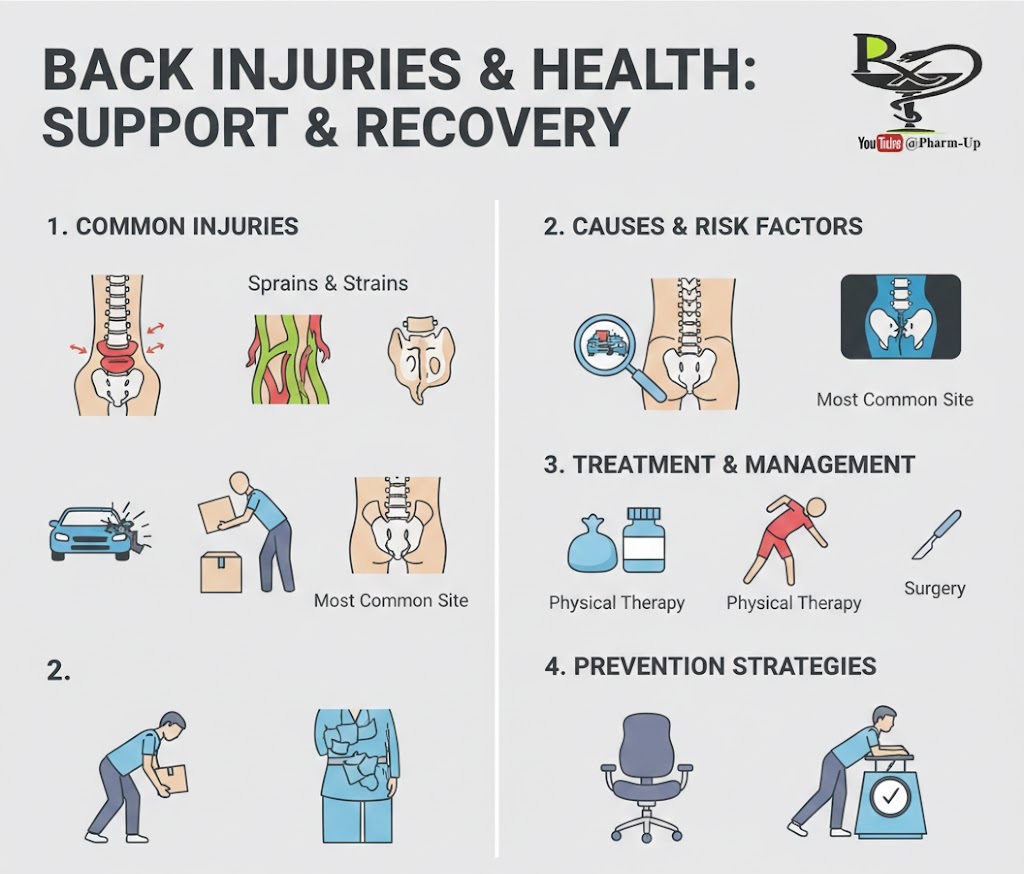
Your back is a complex structure of bones, muscles, and tissues that serves as the central support for your entire body, extending from the base of your neck down to your pelvis. Because it is involved in almost every physical movement, it is highly susceptible to injury from daily activities, sudden trauma, or repetitive strain.
1. Common Types of Back Injuries
While back pain can be vague, most injuries fall into three specific categories:
- Sprains and Strains: These involve damage to the soft tissues. A strain occurs when muscles or tendons are overstretched, while a sprain involves the tearing of ligaments that connect the bones.
- Herniated Disks: Often called a “slipped” or “ruptured” disk. This happens when the soft jelly-like center of a spinal disk pushes through a tear in the tougher exterior, often irritating nearby nerves.
- Fractured Vertebrae: These are breaks in the small bones of the spine. While often caused by high-impact accidents (like car crashes), they can also occur from minor falls in people with weakened bones (osteoporosis).
2. Causes and Risk Factors
Back injuries rarely happen without a trigger. Common causes include:
- Sudden Trauma: Car accidents, sports collisions, or falls.
- Occupational Strain: Heavy lifting at work or spending long hours hunched over a desk.
- Home Activities: Gardening, shoveling snow, or reaching awkwardly for heavy objects.
- The Lower Back Factor: The lower back (lumbar region) supports most of your body weight, making it the most frequent site of injury.
3. Treatment and Management
Recovery plans are tailored to the severity of the injury and usually follow a progressive path:
- Initial Care: Rest (briefly), icing to reduce inflammation, and over-the-counter pain medications.
- Therapy: Physical therapy to strengthen “core” muscles that support the spine.
- Intervention: For severe nerve compression or fractures, injections or surgery may be required.
4. Prevention Strategies
Many back injuries are preventable through mindful lifestyle changes:
- Proper Lifting: Always bend at the knees and use your legs—never your back—to lift heavy items.
- Ergonomics: Use chairs with proper lumbar support and maintain a neutral spine while sitting.
- Weight Control: Excess body weight, especially around the midsection, pulls the pelvis forward and strains the lower back.
About the Author