Pharm'Up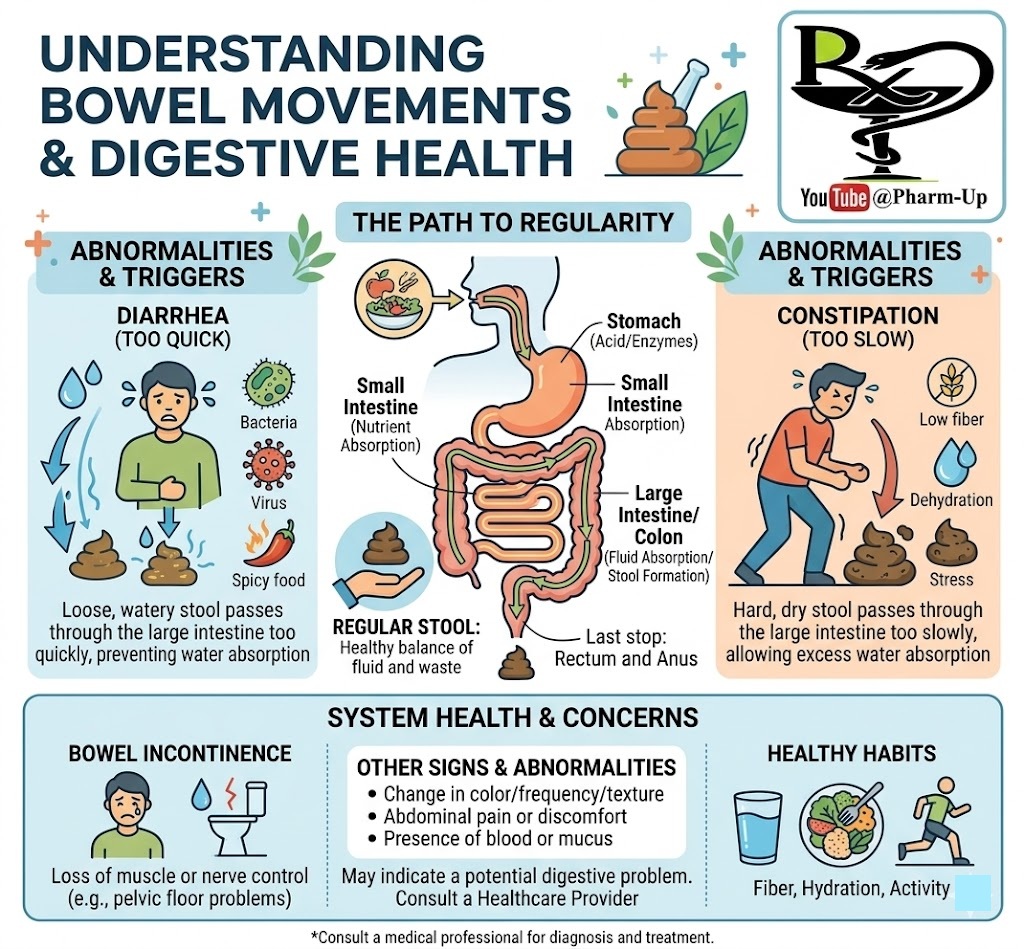
A bowel movement, or defecation, is the final phase of the digestive process. It is the action where your body expels stool—also commonly referred to as feces or poop—out of the body through the rectum and anus.
The Role of Stool and Digestion
Stool is composed of the remaining material after the digestive system has successfully absorbed the necessary nutrients, liquids, and fluids from the food and beverages you have consumed. This entire journey involves several organs working in concert:
- Stomach: Breaks down food using acid and enzymes.
- Small Intestine: The primary site for absorbing nutrients from the digested food.
- Colon (Large Intestine): Absorbs the remaining water and fluids, forming the stool.
Regular bowel movements are a key indicator of good digestive health and overall systemic well-being.
Understanding Bowel Movement Abnormalities
When the natural, slow, and regulated movement of stool through the large intestine is disrupted, it can result in various abnormalities. These can range from minor discomforts to indications of serious underlying digestive issues.
| Condition | Description | Cause/Sign |
| Diarrhea | Loose, watery stools occurring more frequently than usual. | Occurs when stool passes through the large intestine too quickly, preventing the standard absorption of water. |
| Constipation | Hard, dry stools that are difficult or painful to pass, with infrequent movements. | Occurs when stool passes through the large intestine too slowly, allowing too much water to be absorbed. |
| Bowel Incontinence | The inability to control bowel movements, leading to involuntary leaking of stool. | Indicates a potential problem with the muscles or nerves of the rectum, anus, or pelvic floor. |
It is essential to remember that persistent abnormalities in your bowel movements can be a symptom of various digestive problems.
About the Author