Pharm'Up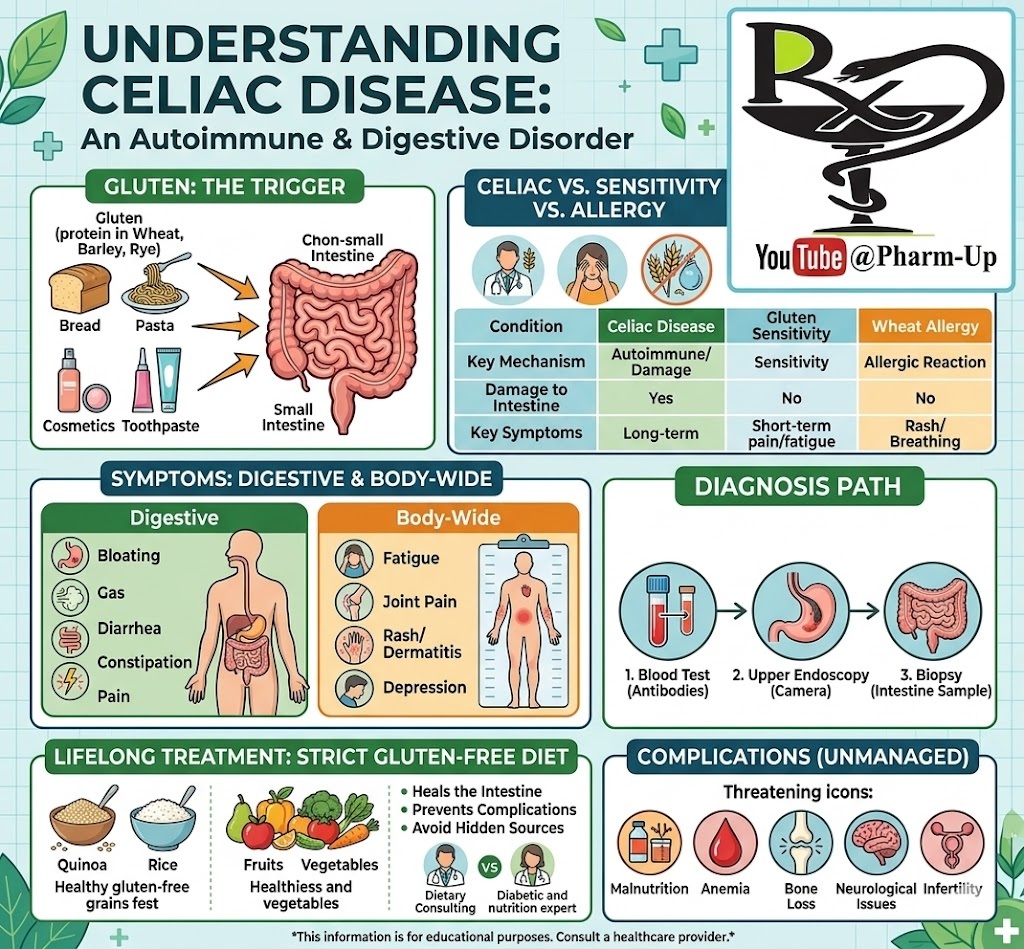
Celiac disease is a serious, long-term autoimmune and digestive disorder that causes the body’s immune system to attack the small intestine. This reaction is triggered by the ingestion of gluten, a protein found in wheat, barley, and rye. Over time, this immune response damages the lining of the small intestine (specifically the villi), preventing the absorption of critical nutrients and leading to malnutrition.
Celiac Disease vs. Sensitivities
It is important to distinguish celiac disease from other gluten-related conditions:
- Gluten Sensitivity: Causes similar symptoms (pain, fatigue) but does not cause the structural intestinal damage seen in celiac disease.
- Wheat Allergy: A classic food allergy where the immune system reacts to wheat proteins, causing symptoms like itchy eyes or breathing trouble, but without long-term intestinal damage.
Symptoms and Complications
Symptoms vary significantly between individuals and can affect both the digestive system and the rest of the body.
| Digestive Symptoms | Non-Digestive Symptoms | Potential Long-Term Problems |
| Bloating and Gas | Chronic Fatigue | Malnutrition & Anemia |
| Chronic Diarrhea | Bone or Joint Pain | Bone Loss (Osteoporosis) |
| Foul-smelling, greasy stool | Depression & Anxiety | Nervous system issues (Headaches) |
| Nausea or Vomiting | Mouth sores/Dry mouth | Reproductive issues (Infertility) |
| Weight loss (Adults) | Itchy skin rash (Dermatitis) | Developmental delays in children |
Diagnosis and Lifetime Management
Because the symptoms overlap with many other conditions, a formal diagnosis is essential before starting a treatment plan.
- Diagnosis: Doctors typically use blood tests to look for specific antibodies. If results are positive, an upper GI endoscopy is performed to take a tissue biopsy of the small intestine to confirm damage.
- The Only Treatment: The only effective treatment is a strict, lifelong gluten-free diet. This allows the small intestine to heal and prevents future complications.
- Hidden Sources: Gluten can be found in unexpected places beyond food, including:
- Vitamins and herbal supplements
- Lip balms and cosmetics
- Toothpaste and mouthwash
- Certain medications
Risk Factors
You are more likely to develop celiac disease if you are White, female, or have a first-degree relative with the condition. It is also more common in individuals with certain genetic conditions like Down syndrome or Turner syndrome.
About the Author