Pharm'Up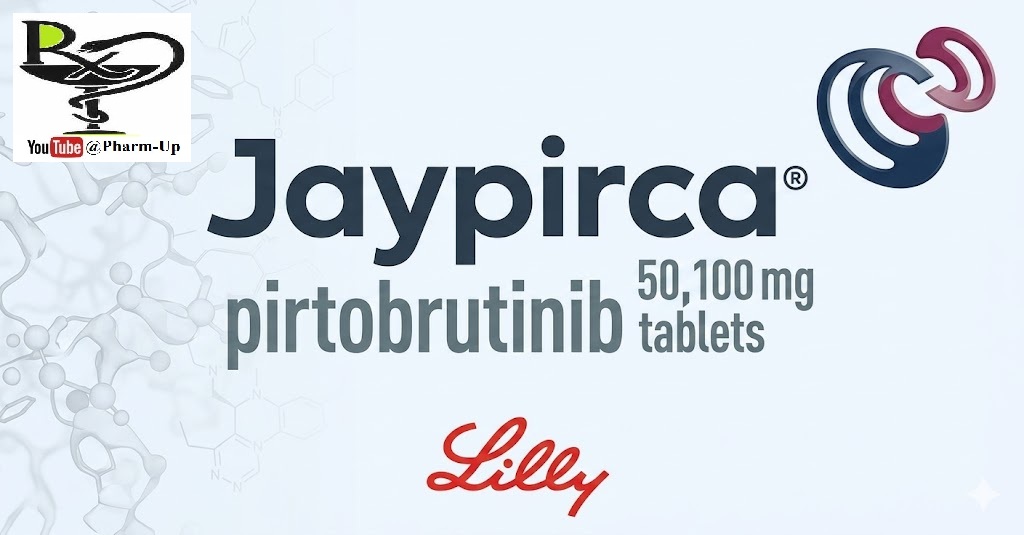
Eli Lilly and Company has announced a major therapeutic milestone in the treatment of B-cell malignancies. The Phase 3 BRUIN CLL-322 clinical trial has successfully met its primary endpoint, demonstrating that the addition of Jaypirca (pirtobrutinib) to the standard-of-care regimen of venetoclax and rituximab significantly extends the time patients live without their disease progressing.
This breakthrough specifically impacts patients with relapsed or refractory chronic lymphocytic leukemia (CLL) or small lymphocytic lymphoma (SLL), offering a new hope for high-efficacy, fixed-duration treatment.
Breaking Down the Science: The “Triplet” Advantage
The trial evaluated a potent combination of three distinct mechanisms to attack cancer cells. Unlike traditional treatments that must be taken indefinitely, this study utilized a fixed-duration approach, where treatment is administered for a maximum of two years.
- The Primary Winner: The addition of pirtobrutinib to the venetoclax-rituximab “doublet” led to a statistically significant and clinically meaningful improvement in progression-free survival (PFS).
- Overcoming Resistance: Crucially, the benefit was observed even in patients who had previously failed on “covalent” BTK inhibitors (like ibrutinib or acalabrutinib). As a non-covalent (reversible) inhibitor, Jaypirca bypasses the common resistance mutations that often render earlier drugs ineffective.
Key Findings from BRUIN CLL-322
| Metric | Outcome |
| Primary Endpoint | Significant improvement in PFS as assessed by an independent committee. |
| Secondary Endpoint | Overall Survival (OS) data is maturing but shows a positive trend for the triplet arm. |
| Safety Profile | Consistent with existing data for each drug; discontinuation rates remained low and comparable to the control group. |
| Patient Scope | Included both treatment-naive and previously treated (covalent BTK) populations. |
Expert Perspective
Jacob Van Naarden, President of Lilly Oncology, emphasized that the results “outperformed expectations.” He noted that because modern CLL treatments are so durable, most patients only require one or two lines of therapy in their lifetime.
“For doctors and patients who prefer a time-limited approach, these data demonstrate that the addition of Jaypirca could further extend the duration of benefit in second-line CLL.”
Future Outlook and Regulatory Path
Following these robust results, Eli Lilly plans to:
- Present detailed data at an upcoming global medical congress later this year.
- Submit for label expansion with global regulatory authorities to establish the triplet regimen as a standard second-line therapy.
- Continue the BRUIN program, which includes head-to-head trials against ibrutinib and studies in treatment-naïve patients to solidify Jaypirca’s role as a versatile, foundational therapy.
About the Author