Pharm'Up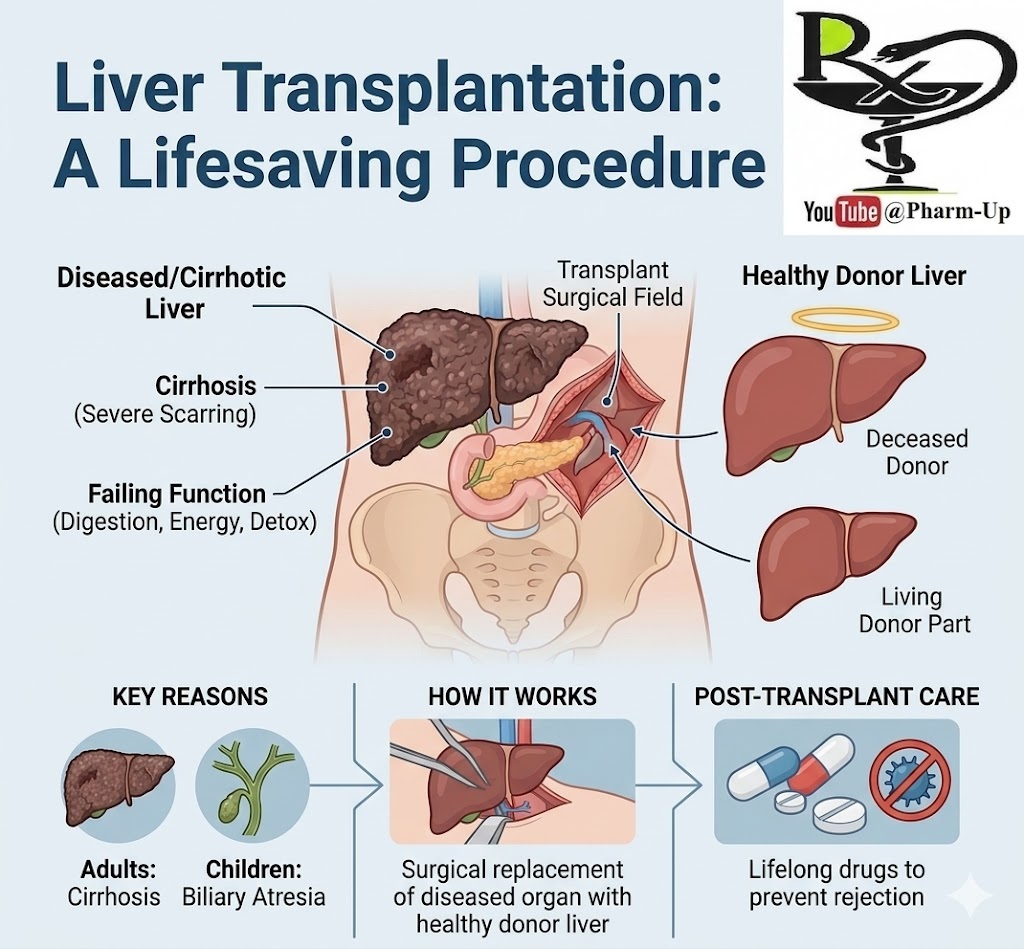
The liver is the body’s largest internal organ, essential for digesting food, storing energy, and filtering toxins. Because survival is impossible without a functioning liver, a liver transplant becomes necessary when the organ can no longer sustain itself through other treatments.
How the Procedure Works
A liver transplant involves surgically removing a diseased or failing liver and replacing it with a healthy one from a donor.
- Deceased Donors: Most transplanted livers come from individuals who have passed away.
- Living Donors: In some cases, a healthy living person can donate a portion of their liver to a patient in need.
Common Reasons for Transplantation
The necessity for a transplant often stems from severe scarring or congenital issues:
- In Adults: The leading cause is cirrhosis, which is permanent scarring caused by long-term disease or injury.
- In Children: The most frequent cause is biliary atresia, a condition affecting the bile ducts.
Post-Transplant Care
A successful surgery is only the first step. To ensure the body does not attack the new organ:
- Anti-Rejection Medication: Patients must take immunosuppressant drugs for the rest of their lives.
- Continuous Monitoring: Regular check-ups are required to ensure the new liver is functioning correctly and to manage potential side effects of the medication.
About the Author


 Pharm'Up