Pharm'Up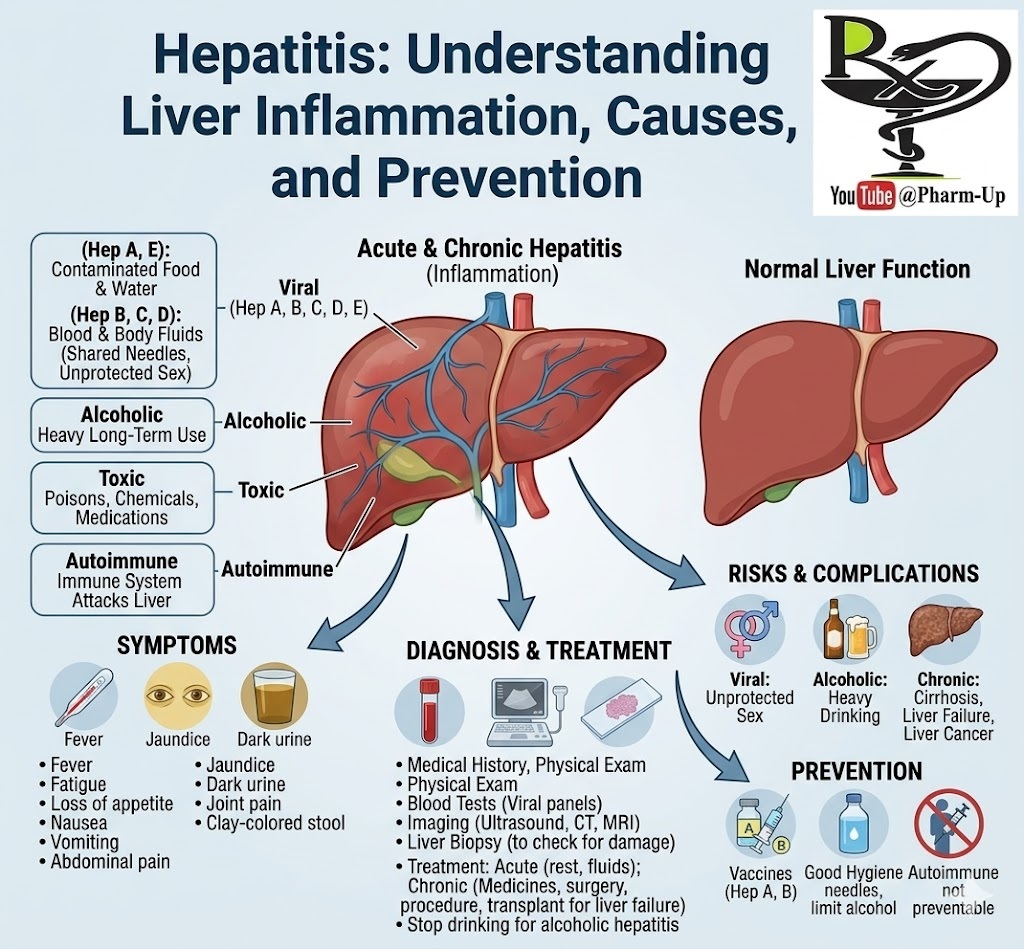
Hepatitis is the inflammation of the liver, often resulting from injury or infection. This swelling can significantly impair liver function and may manifest as either an acute (short-term) or chronic (long-term) condition.
Primary Causes of Hepatitis
- Viral Hepatitis: The most common form, caused by viruses A, B, C, D, and E.
- Alcoholic Hepatitis: Triggered by heavy, long-term alcohol consumption.
- Toxic Hepatitis: Caused by exposure to poisons, chemicals, or certain medications and supplements.
- Autoimmune Hepatitis: A chronic condition where the body’s immune system mistakenly attacks liver cells.
Transmission & Risks
| Type | Common Transmission Method |
| Hep A & E | Contaminated food/water or undercooked meat (pork, shellfish). |
| Hep B, C, D | Contact with infected blood or body fluids (e.g., shared needles). |
| Alcoholic | Excessive alcohol intake over many years. |
Symptoms to Monitor
Many infected individuals show no symptoms. When present, symptoms may include:
- Physical Signs: Jaundice (yellowing of skin/eyes), dark urine, and clay-colored stools.
- Systemic Issues: Fatigue, fever, joint pain, and loss of appetite.
- Digestive Distress: Abdominal pain, nausea, and vomiting.
Diagnosis, Treatment, and Prevention
- Diagnosis: Doctors use blood tests, imaging (Ultrasound/CT), and sometimes a liver biopsy to assess damage.
- Treatment: Acute cases may require only rest and fluids, while chronic cases are managed with specific antiviral medications. In severe cases of liver failure, a transplant may be necessary.
- Prevention: Vaccines are available for Hepatitis A and B. General prevention includes practicing good hygiene, avoiding shared needles, and limiting alcohol consumption.
About the Author


 Pharm'Up