Pharm'Up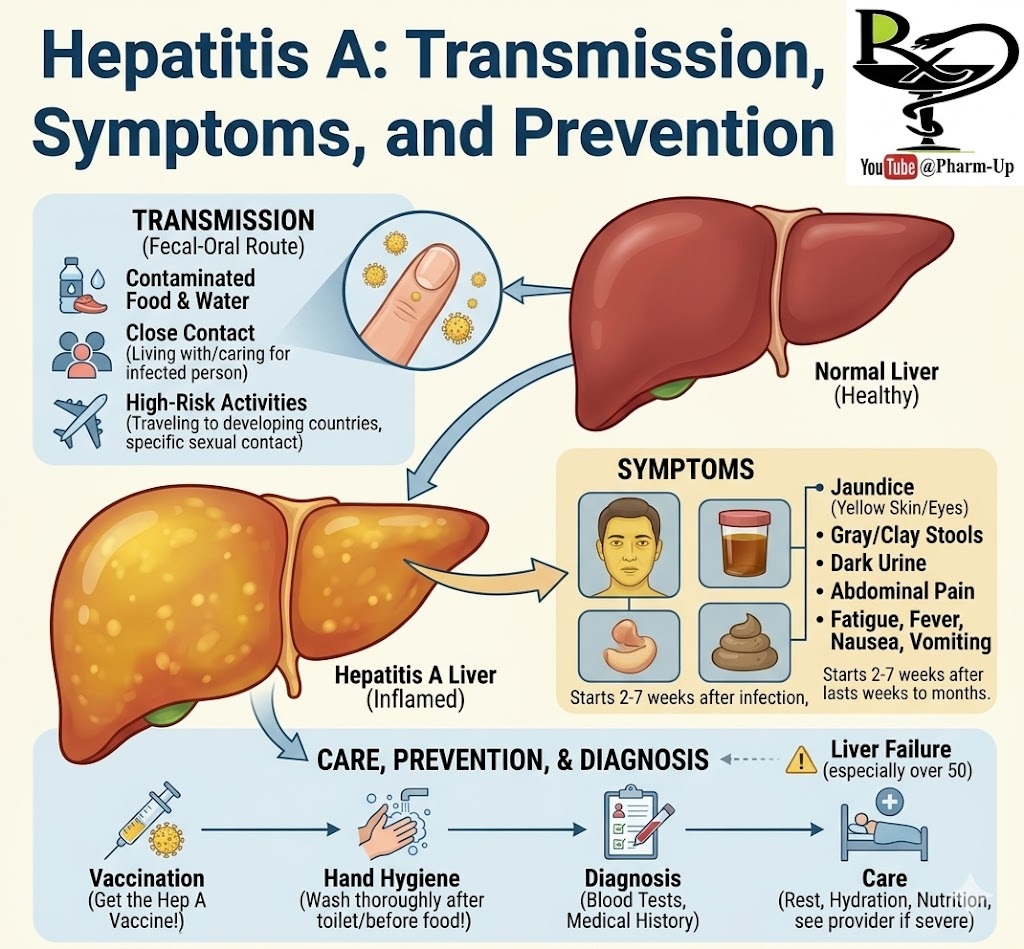
Hepatitis A is a highly contagious, short-term (acute) liver infection caused by the hepatitis A virus. Unlike other types of viral hepatitis, it does not typically lead to long-term chronic infection, and most people recover fully within a few weeks to months.
How Hepatitis A Spreads
The virus is primarily transmitted through the fecal-oral route. This occurs when a person ingests the virus through contact with an infected person’s stool. Common transmission paths include:
- Contaminated Food/Water: Eating food prepared by an infected person who did not wash their hands, or drinking water contaminated with sewage.
- Close Contact: Living with or caring for an infected person, or through specific types of sexual contact.
- High-Risk Activities: Using illegal drugs or traveling to areas where the virus is common.
Recognizing the Symptoms
Symptoms usually appear 2 to 7 weeks after exposure. While children often show no signs, adults may experience:
- Jaundice: Yellowing of the skin and eyes.
- Digestive Issues: Nausea, vomiting, diarrhea, and clay-colored stools.
- Systemic Pain: Joint pain, fever, fatigue, and abdominal discomfort.
- Urinary Changes: Noticeably dark yellow urine.
Management and Treatment
There is no specific medication to cure Hepatitis A. Treatment focuses on supportive care:
- Rest and Nutrition: The body needs energy to fight the virus.
- Hydration: Drinking plenty of fluids is vital, especially if vomiting or diarrhea occurs.
- Medical Consultation: A provider may suggest medications for symptom relief, but a hospital stay may be necessary for severe cases, particularly in those over 50 or with pre-existing liver conditions.
The Power of Prevention
Hepatitis A is highly preventable through two primary methods:
- Vaccination: The Hepatitis A vaccine is the most effective defense.
- Hand Hygiene: Thoroughly washing hands with soap and water after using the bathroom or changing diapers and before preparing food.
About the Author


 Pharm'Up