Real-World Evidence Shows Semaglutide Dose Escalation Linked to Lower Cardiovascular Risk Than Switching to Tirzepatide in Type 2 Diabetes
 Pharm'Up
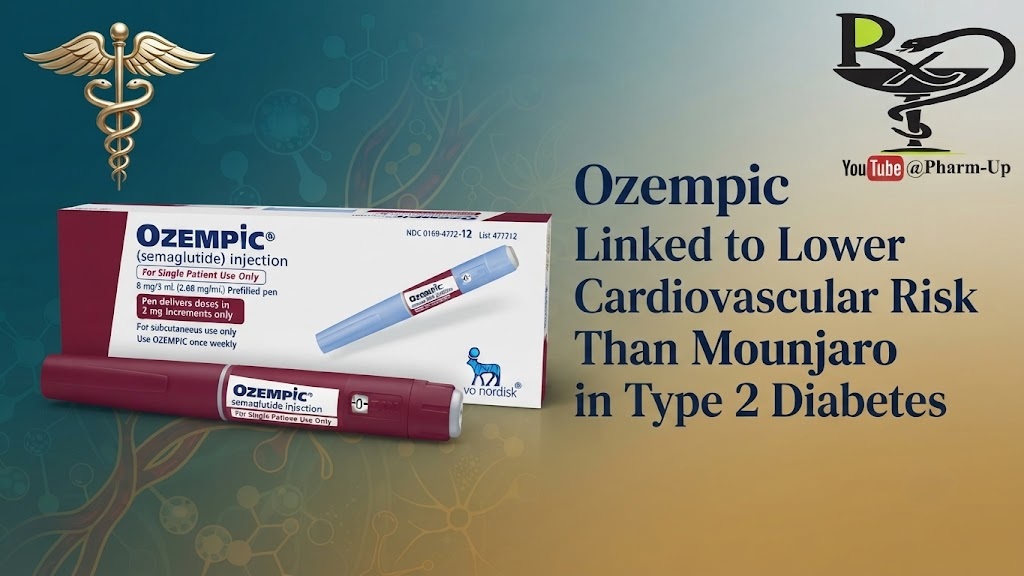
Novo Nordisk presented new retrospective real-world evidence at the European Association for the Study of Diabetes (EASD) Annual Meeting 2026 in Milan, Italy, comparing cardiovascular outcomes in adults with type 2 diabetes. The analysis demonstrated that patients who escalated their dosage of once-weekly semaglutide injection from 1 mg to 2 mg experienced a statistically significant 6% lower risk of major adverse cardiovascular events (MACE)—including all-cause death, myocardial infarction (heart attack), and stroke—compared to those who switched therapies to tirzepatide up to 15 mg (Adjusted HR 1.06; 95% CI 1.04-1.08; P=0.005).
Study Design and Cohort Breakdown
- Patient Population: The analysis evaluated 636,525 adults with type 2 diabetes who were initially receiving semaglutide 1 mg.
- 365-Day Follow-Up: Within one year of the index date (the first prescription fill for semaglutide 1 mg):
- 67.2% remained on semaglutide 1 mg.
- 29.2% escalated their dose to semaglutide 2 mg.
- 3.6% switched to tirzepatide.
- 720-Day Follow-Up: Long-term tracking revealed continued treatment intensification over time:
- 57.4% remained on semaglutide 1 mg.
- 36.9% escalated to semaglutide 2 mg.
- 5.7% switched to tirzepatide.
- Tirzepatide Dosing: Patients switching to tirzepatide started at 2.5 mg or 5 mg and could titrate across the dosing regimen, with approximately 31% reaching a dose of 10 mg or higher during follow-up.
- Subset Validation: A subgroup analysis evaluating patients with more than one HbA1c and/or weight measurement at baseline produced consistent findings (Adjusted HR, 1.07 [95% CI, 1.01-1.13], P<0.035).
Clinical Perspectives and Implications
- Informing Treatment Choices: Healthcare professionals frequently face the challenge of deciding whether to increase a patient’s current dosage or switch to an alternative medication when glycemic goals are not met. These findings provide insight into how treatment intensification strategies impact cardiovascular health.
- Cardiovascular Considerations: Experts emphasize that cardiovascular risk must remain a primary consideration alongside glycemic management when adjusting regimens for patients who are otherwise tolerating their therapy well.
Important Safety Information
- Limitations: As a retrospective real-world study, the analysis carries limitations such as potential residual unmeasured confounding, meaning associations can be demonstrated but causal relationships cannot be definitively established. Furthermore, claims data may exclude intermittent coverage or underserved populations, affecting generalizability.
- Boxed Warning: Semaglutide injection contains a Boxed Warning regarding the potential risk of thyroid tumors, including cancer. It is strictly contraindicated in individuals with a personal or family history of medullary thyroid carcinoma (MTC) or Multiple Endocrine Neoplasia syndrome type 2 (MEN 2).
- Common Side Effects: The most frequently reported side effects include nausea, vomiting, diarrhea, abdominal pain, and constipation.
About the Author