Pharm'Up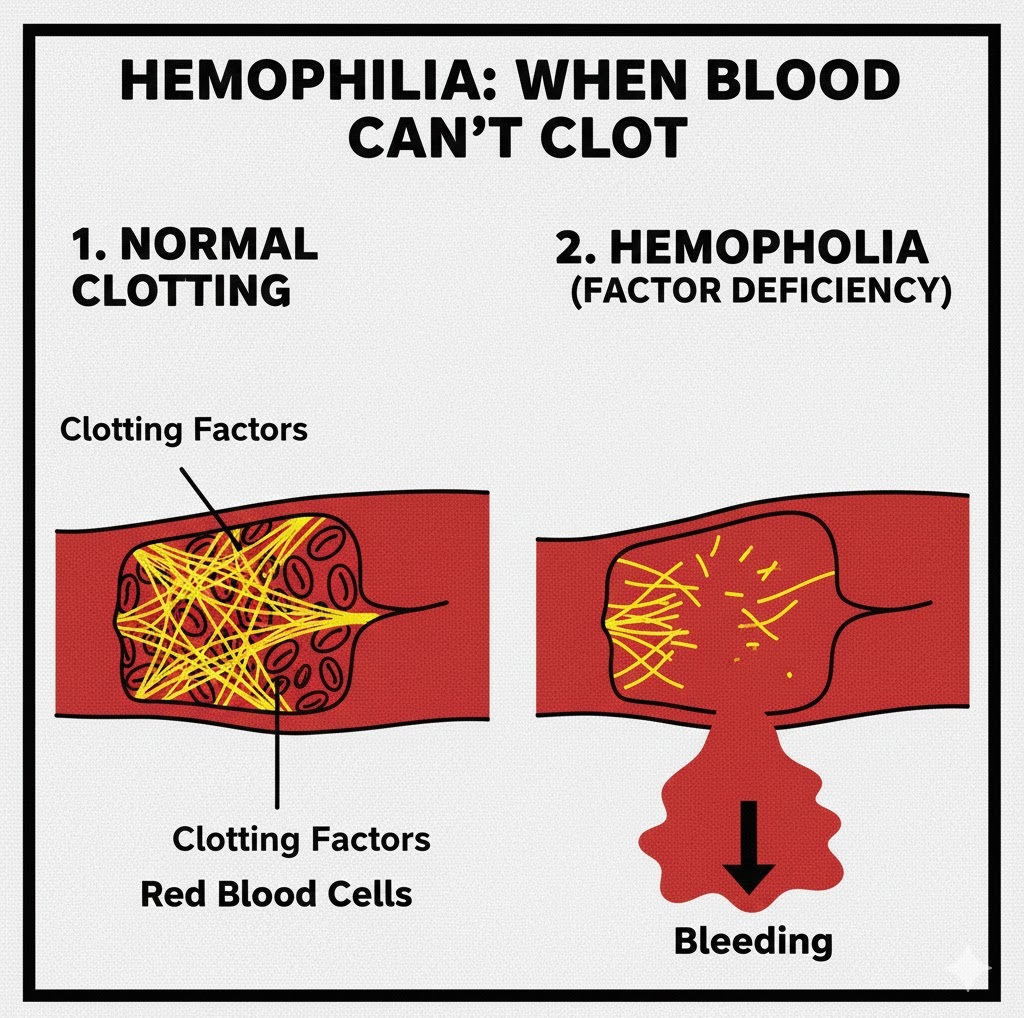
Hemophilia is a rare, typically inherited bleeding disorder where the blood fails to clot properly due to insufficient clotting factors. These proteins are essential for “plugging” damaged blood vessels. For a person with hemophilia, an injury that seems minor can lead to prolonged external bleeding or, more dangerously, internal bleeding into joints and organs.
Types and Genetic Causes
Hemophilia is classified by which specific protein is missing from the blood’s “clotting cascade.”
- Hemophilia A (Classic Hemophilia): The most common type, caused by a deficiency in Factor VIII (8).
- Hemophilia B (Christmas Disease): Caused by a deficiency in Factor IX (9).
The X-Link Connection
Hemophilia is an X-linked recessive disorder, meaning the instructions for making clotting factors are located on the X chromosome.
- In Males (XY): Since they have only one X chromosome, a single mutation causes the disease. This is why hemophilia is significantly more common in males.
- In Females (XX): They are usually “carriers” if one X is mutated. They typically only develop the disease if both X chromosomes are affected or if one is inactive.
Identifying the Symptoms
The severity of symptoms depends on the level of clotting factor present in the blood (mild, moderate, or severe).
- Joint Bleeding: Pain, swelling, and tightness in the knees, elbows, and ankles. Over time, this can lead to chronic arthritis.
- Hematomas: Deep muscle and soft tissue bleeding that creates a buildup of blood.
- Prolonged Bleeding: Difficulty stopping blood flow after dental work, vaccinations, or minor cuts.
- Internal Hazards: Blood in the stool or urine, or frequent, heavy nosebleeds.
- Emergency Sign: Bleeding in the brain (intracranial hemorrhage) is the most serious complication, characterized by severe headaches, seizures, or loss of consciousness.
Diagnosis and Genetic Testing
Because hemophilia is often hereditary, diagnosis frequently begins with family history.
- Screening Tests: Blood tests to see if the blood is clotting within the normal timeframe.
- Factor Assays: Specific tests to measure the exact percentage of Factor VIII or IX to determine the type and severity.
- Genetic Testing: Used to identify carriers within a family or to diagnose a fetus during pregnancy if there is a known risk.
Modern Treatment and Management
While there is currently no cure, hemophilia is highly manageable with modern medicine.
- Replacement Therapy: The primary treatment involving the infusion of clotting factor concentrates into a vein. These can be derived from human blood or created in a lab (recombinant factors).
- Prophylaxis: For severe cases, regular infusions are given to prevent bleeding before it starts, rather than just treating active episodes.
- Desmopressin (DDAVP): A hormone used in mild Hemophilia A to stimulate the body to release its own stored Factor VIII.
- Physical Therapy: Essential for maintaining joint health and mobility if repeated joint bleeding has occurred.
About the Author



 Pharm'Up