Breakthrough in Cardiac Care: New “Smart Stents” and Radial Access Techniques Transforming Angioplasty Success Rates
 Pharm'Up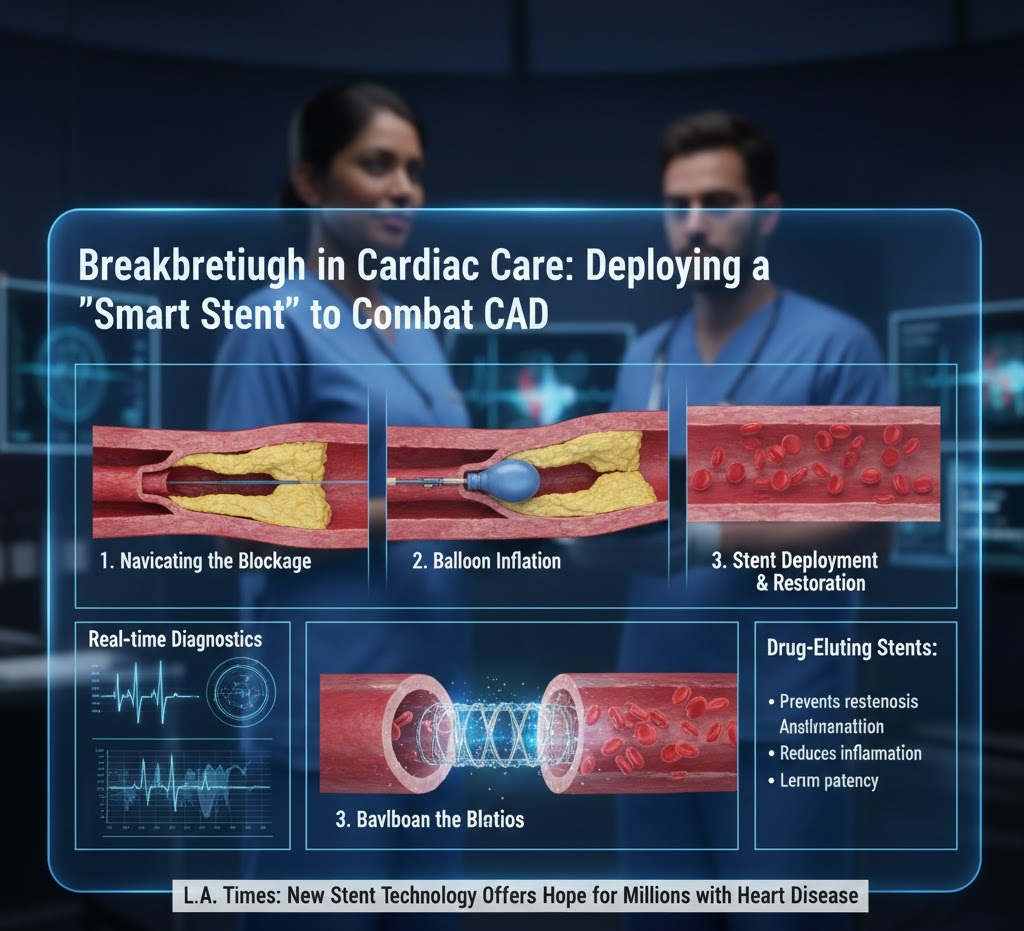
Cardiologists at the National Heart Center have released a comprehensive report detailing the evolution of Percutaneous Coronary Intervention (PCI)—commonly known as angioplasty—marking a new era in the fight against Coronary Artery Disease (CAD). The report highlights how a procedure once considered high-risk is now a standard, life-saving intervention with recovery times dropping to as little as 24 hours.
The Procedure: A Mechanical Lifeline
Angioplasty is no longer just a “balloon” procedure. Modern PCI involves a sophisticated multi-step process in a specialized Cardiac Catheterization Lab (Cath Lab). Using real-time X-ray guidance, specialists thread a catheter through the wrist (radial artery) or groin. Once at the site of the plaque buildup, a micro-balloon is inflated to compress the sticky cholesterol and calcium deposits against the artery walls.
The Rise of “Drug-Eluting” Stents
The most significant advancement detailed in the report is the widespread use of Drug-Eluting Stents (DES). These tiny, expandable mesh tubes are coated with specialized medication that is released slowly over time. This medicine prevents the artery from “re-clogging” (restenosis), a common problem with older, bare-metal stents.
“We aren’t just opening the pipe anymore,” says Dr. Sarah Jenkins, a leading interventional cardiologist. “We are installing a high-tech scaffold that actively treats the vessel wall to ensure it stays open for years to other.”
Emergency vs. Elective Intervention
The report emphasizes two critical pathways for the procedure:
- The Golden Hour: In emergency heart attack scenarios, angioplasty is the gold standard for restoring blood flow to “suffocating” heart muscle. Every minute saved in the Cath Lab directly correlates to saved heart tissue.
- Angina Relief: For those with chronic chest pain (angina), elective angioplasty provides immediate relief from the pressure and squeezing sensations that limit daily life.
Long-Term Management
While angioplasty is a mechanical fix, doctors warn it is not a “cure.” Patients are increasingly being enrolled in digital cardiac rehab programs to manage the underlying CAD through heart-healthy diets, supervised exercise, and strict adherence to blood-thinning medications to prevent clots from forming on the new stent.
About the Author




 Pharm'Up