Pharm'Up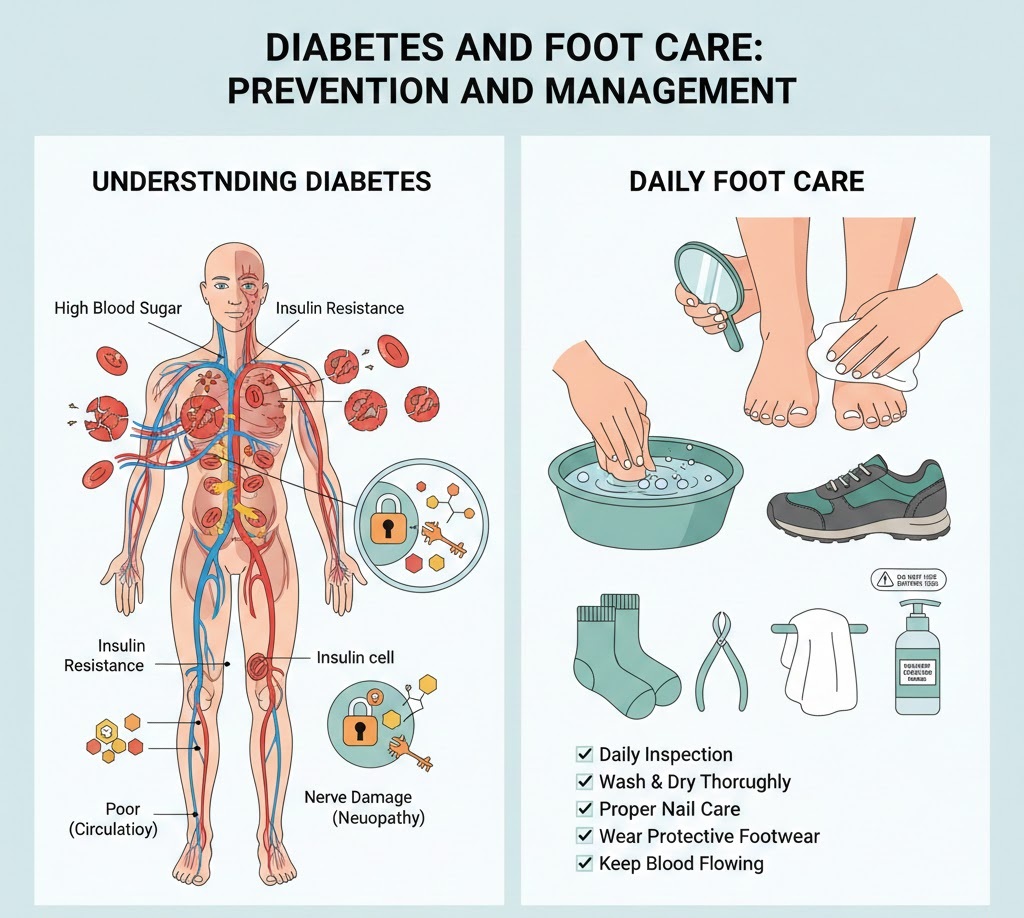
Diabetes is a chronic condition where your blood glucose (sugar) levels are too high. Glucose is your body’s main energy source, derived from the food you eat. To use this energy, a hormone called insulin acts like a key to let glucose into your cells.
- Type 1 Diabetes: The body does not produce insulin at all.
- Type 2 Diabetes: The body either doesn’t make enough insulin or doesn’t use it effectively.
When insulin isn’t working correctly, glucose stays in your bloodstream instead of fueling your cells, leading to serious health complications over time.
How Diabetes Affects the Feet
High blood sugar can lead to two main issues that make foot injuries dangerous:
- Diabetic Neuropathy (Nerve Damage): You may lose the ability to feel pain, heat, or cold in your feet. This means a small pebble or blister can go unnoticed and untreated.
- Peripheral Vascular Disease (Poor Circulation): Diabetes damages blood vessels, reducing blood flow to the extremities. Without good blood flow, it is much harder for the body to heal sores or fight off infections.+1
If left untreated, a simple cut can lead to an ulcer, then gangrene (tissue death), and may eventually require amputation to save the limb or the person’s life.
[Image showing diabetic neuropathy and poor circulation in the foot]
Essential Daily Foot Care Checklist
The best defense against complications is maintaining healthy blood sugar levels and following a strict daily foot care routine:
- Daily Inspection: Check your feet for cuts, redness, swelling, or blisters. Use a mirror to see the bottoms of your feet.
- Wash and Dry: Wash daily with warm water. Dry thoroughly, especially between the toes, to prevent fungal growth.+1
- Nail Care: Trim toenails straight across. Do not round the corners, as this can cause ingrown nails.
- Never Go Barefoot: Always wear shoes or slippers, even inside the house, to prevent accidental punctures or scrapes.
- Proper Footwear: Wear well-fitting, breathable shoes and seamless socks. Check the inside of your shoes for pebbles or rough edges before putting them on.+1
- Keep Blood Moving: Wiggle your toes and rotate your ankles several times a day.
Warning Signs: When to Call a Doctor
Early intervention is critical. Contact your healthcare provider immediately if you notice:
- A wound or blister that does not show signs of healing after two days.
- Localized warmth, redness, or swelling.
- Any foul odor or blackening of the skin (signs of infection or gangrene).
- A callus that has dried blood trapped inside it.
About the Author