Pharm'Up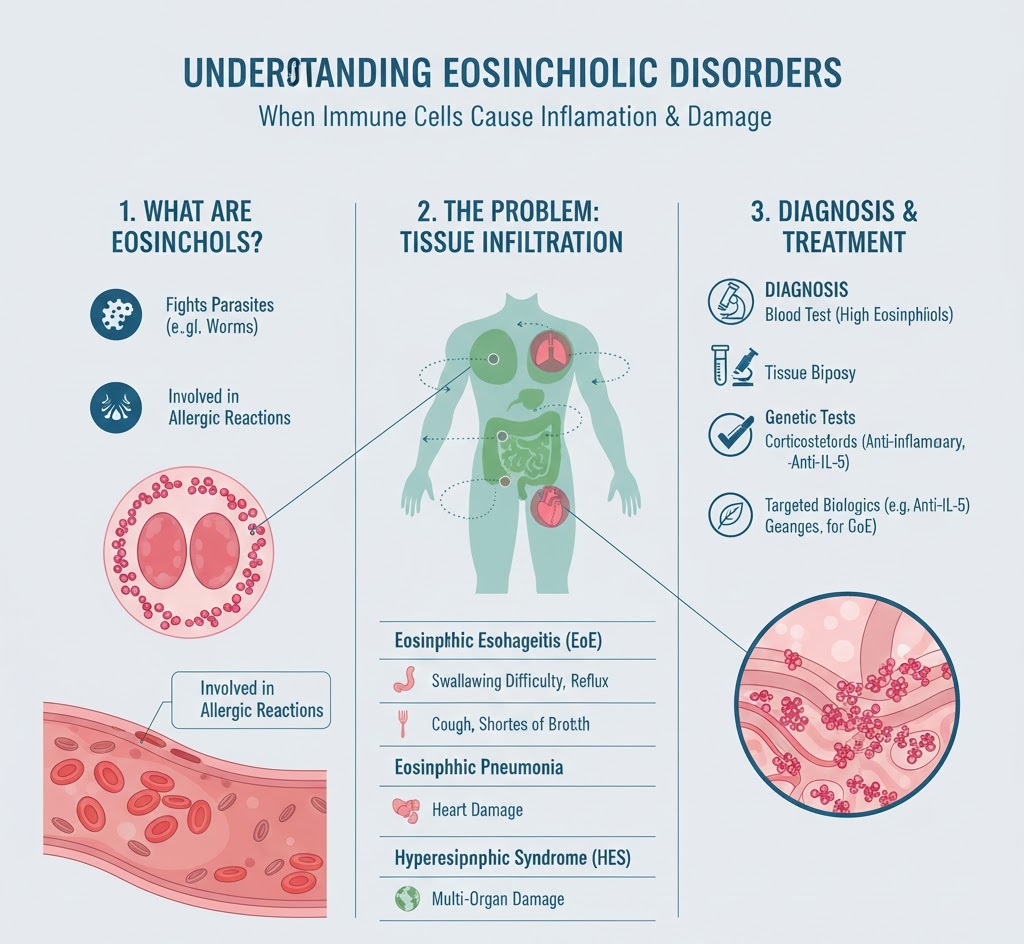
Eosinophils are a specialized type of white blood cell (leukocyte) that are part of your innate immune system. They are best known for two primary roles: attacking multicelluar parasites and modulating allergic inflammation.
While they are protective, an overproduction or “recruitment” of these cells to specific tissues can lead to chronic inflammation and organ damage.
1. Why Do Eosinophil Levels Rise?
Under normal conditions, eosinophils make up only about 1% to 4% of your total white blood cell count. A high level (known as Eosinophilia) usually indicates that the body is reacting to one of the following:
- Allergic Reactions: Asthma, hay fever, and drug sensitivities.
- Infections: Specifically those caused by parasites (like helminths/worms) or certain fungi.
- Autoimmune Conditions: Diseases where the body attacks itself, such as Lupus or certain types of vasculitis.
- Malignancies: Some types of leukemia or Hodgkin lymphoma can trigger an increase.
2. Common Eosinophilic Disorders
When eosinophils migrate out of the blood and infiltrate organs, they cause specific disorders named after the affected area:
| Disorder | Affected Area | Common Symptoms |
| Eosinophilic Esophagitis (EoE) | Esophagus | Difficulty swallowing, chest pain, reflux. |
| Eosinophilic Gastritis | Stomach | Nausea, vomiting, abdominal pain. |
| Eosinophilic Pneumonia | Lungs | Shortness of breath, cough, fever. |
| Eosinophilic Myocarditis | Heart | Chest pain, heart failure symptoms. |
| Hypereosinophilic Syndrome (HES) | Multiple Organs | Persistent high levels that damage the heart, skin, or nervous system. |
3. Diagnosis and Treatment
How it is detected:
- CBC (Complete Blood Count): Often the first sign is an incidental finding of high eosinophil counts.
- Biopsy: Since eosinophils often leave the blood to hide in tissue, a doctor may need a small tissue sample (e.g., from an endoscopy) to see them under a microscope.
- Absolute Eosinophil Count (AEC): A specific calculation ($WBC \times \% eosinophils$) to determine the exact concentration.
Management:
- Corticosteroids: These are the primary treatment. They work by suppressing the immune response and inducing “apoptosis” (cell death) in excess eosinophils.
- Targeted Biologics: Newer medications (like Mepolizumab) specifically block IL-5, the main protein that tells the bone marrow to make eosinophils.
- Dietary Elimination: In cases like EoE, removing common allergens (like dairy or wheat) can reduce inflammation.
4. Visualizing the Impact
The “pink” color seen in lab stains comes from the toxic proteins inside the cell. When these cells “degranulate” in your tissue, they release these proteins to kill parasites—but if no parasite is present, those same proteins irritate and scar your own healthy organs.
About the Author