Pharm'Up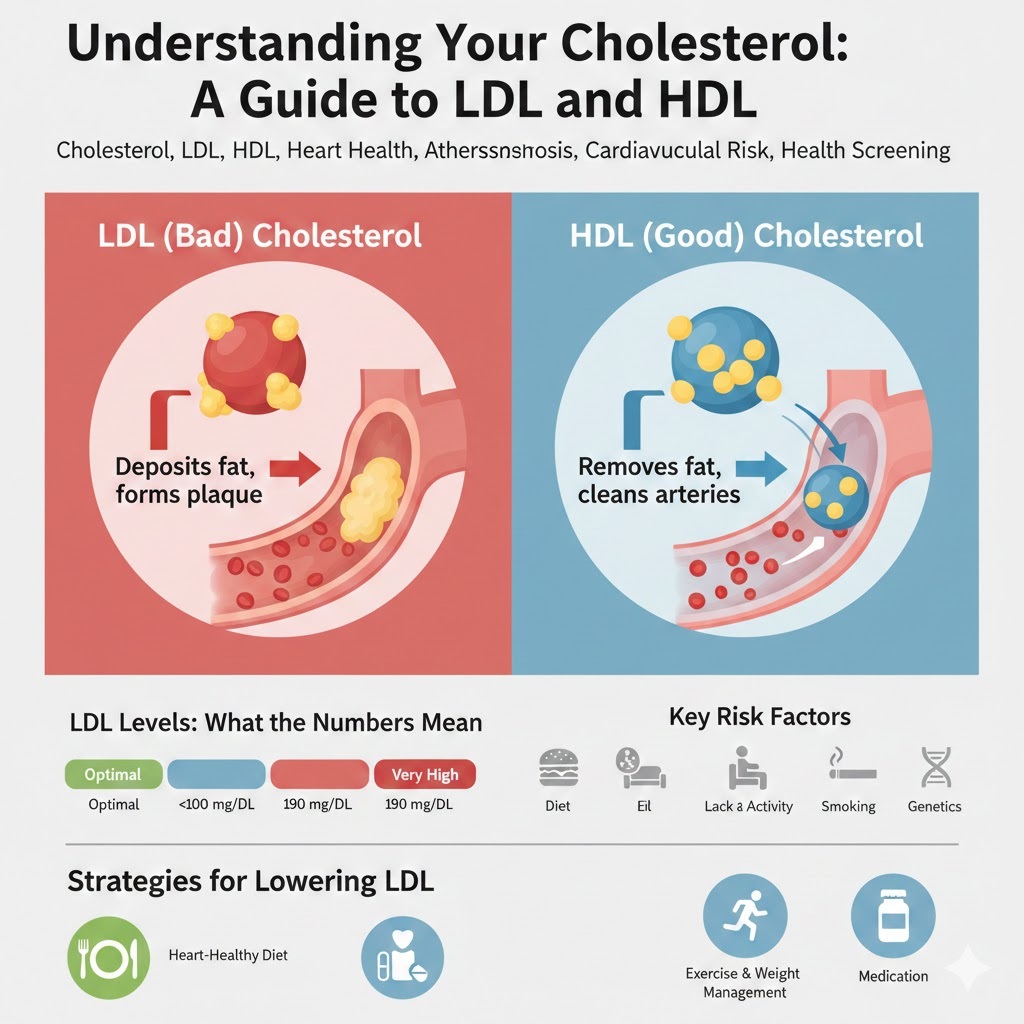
What Exactly is Cholesterol?
Cholesterol is a waxy, fat-like substance essential for building cells. While your liver produces all the cholesterol you need, you also ingest it through animal-based foods like meat and dairy.
When levels become too high, it stops being a building block and starts becoming a risk factor for coronary artery disease.
The “Good” vs. The “Bad”: LDL and HDL
Because fats (lipids) cannot travel through the blood alone, they hitch a ride on proteins. These combinations are called lipoproteins.
- LDL (Low-Density Lipoprotein): Known as “bad” cholesterol. It carries cholesterol to your arteries. High levels lead to plaque buildup.
- HDL (High-Density Lipoprotein): Known as “good” cholesterol. It acts as a scavenger, carrying cholesterol away from the arteries and back to the liver to be flushed from the body.
[Image comparing LDL and HDL lipoproteins showing LDL depositing fat and HDL removing it]
How High LDL Leads to Heart Disease
Excess LDL cholesterol combines with other substances to form plaque. This sticky substance clings to the walls of your arteries, a process called atherosclerosis.
- Narrowing: Plaque makes arteries hard and narrow.
- Oxygen Deprivation: Narrowed arteries slow blood flow, meaning your heart gets less oxygen.
- Chest Pain (Angina): A common symptom of reduced blood flow.
- Heart Attack: Occurs if the blood flow is completely blocked.
LDL Levels: What the Numbers Mean
For most healthy adults, the goal is to keep LDL levels as low as possible.
| LDL Level (mg/dL) | Category |
| Less than 100 | Optimal |
| 100–129 | Near/Above Optimal |
| 130–159 | Borderline High |
| 160–189 | High |
| 190 and above | Very High |
When Should You Get Checked?
Cholesterol is measured via a simple blood test. Recommendations vary by age:
- Age 19 or younger: First test between 9–11; repeat every 5 years.
- Age 20–44: Every 5 years.
- Men 45–65 / Women 55–65: Every 1–2 years.
- Age 65+: Annually.
Factors Influencing Your Numbers
Your LDL level is shaped by a mix of lifestyle and biology:
- Lifestyle: High saturated fat intake, lack of exercise, and smoking (which kills off “good” HDL).
- Biology: Aging, genetics (such as Familial Hypercholesterolemia), and sex (LDL often rises after menopause).
- Medical: Conditions like diabetes or kidney disease, and certain medications like steroids.
Strategies for Lowering LDL
- Heart-Healthy Diet: Focus on the DASH or TLC eating plans, which prioritize fiber and limit saturated/trans fats.
- Weight & Activity: Regular movement and maintaining a healthy weight help shift the balance between LDL and HDL.
- Medication: If lifestyle changes aren’t enough, doctors may prescribe statins or other cholesterol-lowering drugs.
- Advanced Treatment: For severe genetic cases, lipoprotein apheresis (a filtering process similar to dialysis) can be used.
About the Author