Pharm'Up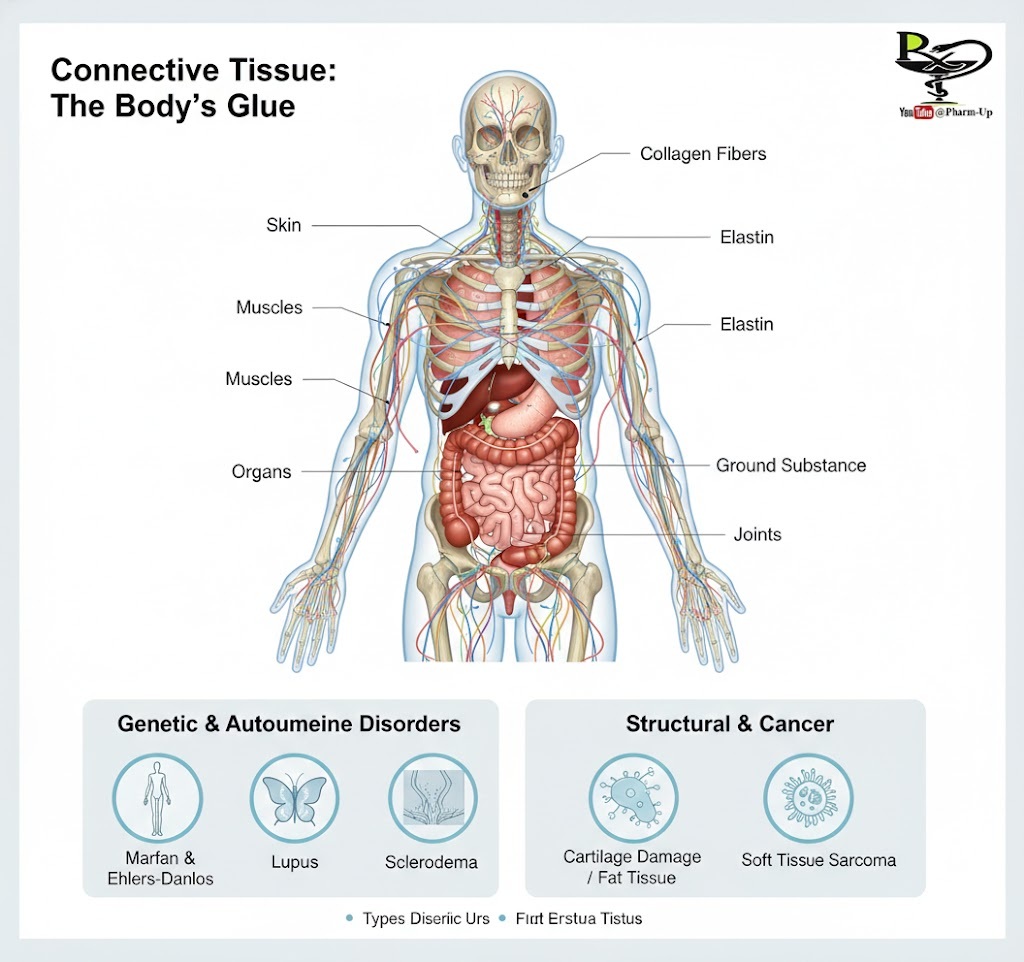
Connective tissue serves as a vital “cellular glue” that supports many different parts of the body, including the skin, eyes, and heart. It provides shape to body parts and helps them stay strong, while also assisting certain tissues in performing their specific functions. This tissue is composed of various proteins, and common examples include cartilage and fat.
1. Types of Connective Tissue Disorders
There are over 200 disorders that can impact connective tissue, generally categorized by their underlying causes:
- Genetic Disorders: Conditions passed down through families, such as Ehlers-Danlos syndrome, Marfan syndrome, and osteogenesis imperfecta.
- Autoimmune Disorders: Conditions where the immune system attacks the body’s own tissues, including lupus and scleroderma.
- Cancers: Malignancies such as specific types of soft tissue sarcoma.
2. Symptoms and Management
Because there are so many variations of these conditions, each disorder presents with its own unique symptoms. Consequently, treatment plans are highly specific and depend entirely on the particular diagnosis and the needs of the patient.
About the Author