Pharm'Up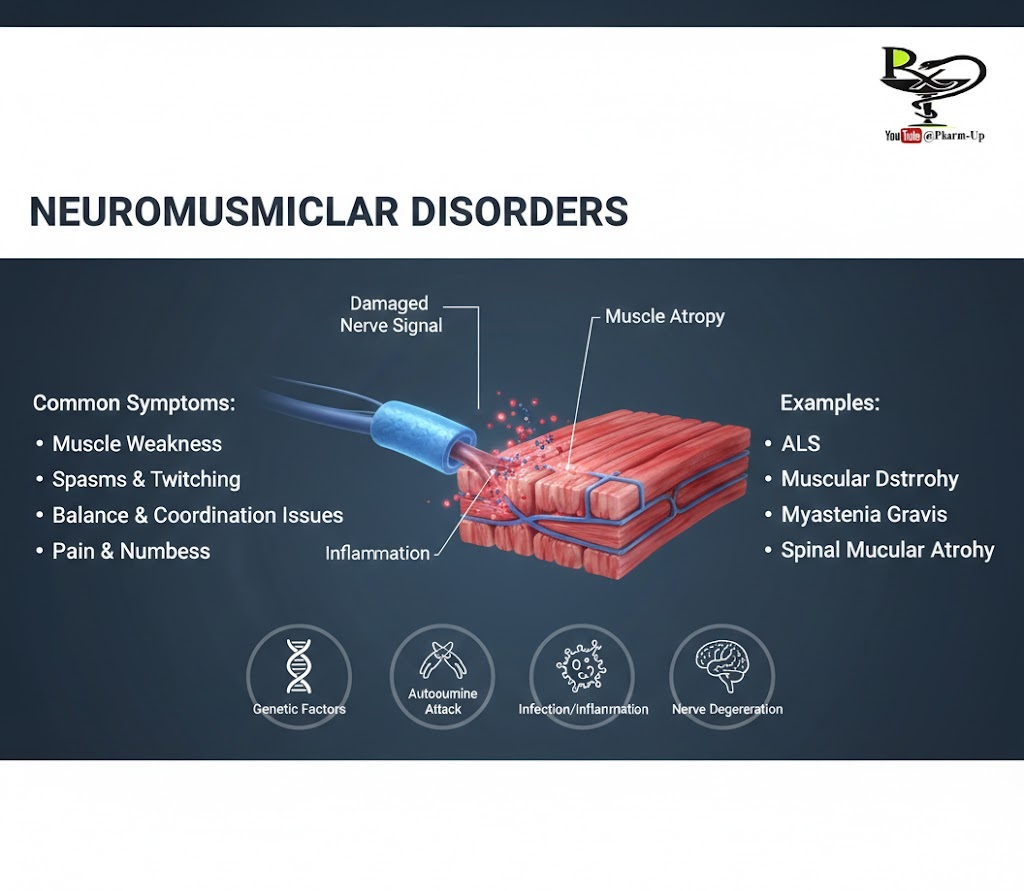
Neuromuscular disorders are a group of conditions that impair the functioning of the muscles, either directly or indirectly through the nerves that control them. These diseases strike at the vital communication link where the nervous system meets the muscular system, often leading to progressive muscle weakness and loss of motor control.
Understanding the Impact
When the neuromuscular system is compromised, it generally affects one of three areas:
- The Motor Neurons: The nerve cells that send signals from the brain/spinal cord.
- The Muscle Fibers: The tissue responsible for contraction and movement.
- The Neuromuscular Junction: The “bridge” where the nerve and muscle communicate.
Common Symptoms
As these disorders progress, the lack of proper signaling causes the muscles to underperform or deteriorate. Common signs include:
- Muscle Atrophy: The visible wasting away of muscle tissue.
- Twitching & Spasms: Involuntary movements or “fasciculations.”
- Myalgia: Persistent muscle pain or cramping.
- Loss of Mobility: Difficulty walking, swallowing, or performing fine motor tasks.
Key Examples & Causes
While some cases are idiopathic (cause unknown), most fall into two categories:
| Condition | Type/Primary Cause |
| ALS (Lou Gehrig’s Disease) | Progressive degeneration of motor neurons. |
| Muscular Dystrophy | Genetic disorder causing muscle fiber breakdown. |
| Myasthenia Gravis | Autoimmune attack on the nerve-muscle junction. |
| Spinal Muscular Atrophy | Genetic condition affecting spinal cord nerve cells. |
Treatment and Management
Although many of these conditions do not yet have a definitive cure, medical intervention focuses on improving quality of life. This includes medications to manage symptoms, physical therapy to maintain strength, and assistive devices to support independence and mobility.
About the Author