Pharm'Up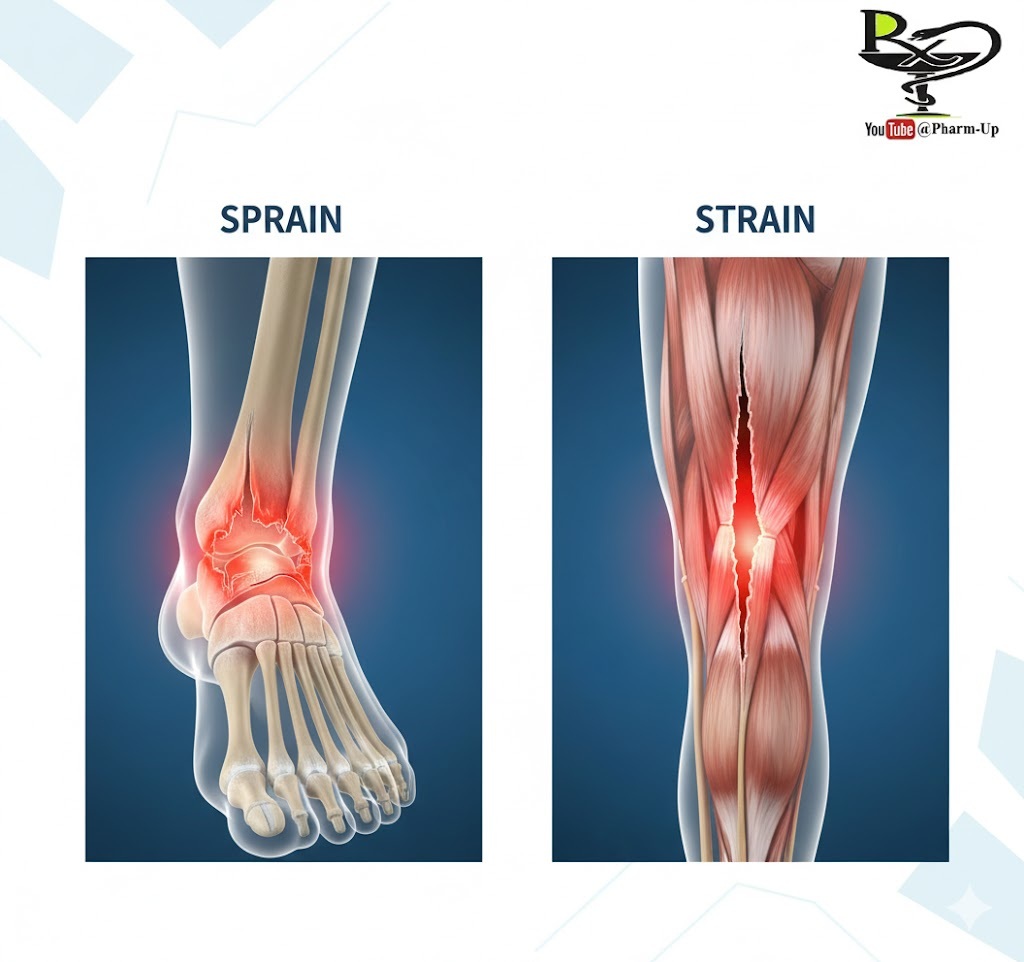
While the terms are often used interchangeably, sprains and strains affect different types of tissue. Both are common injuries that can occur suddenly during sports or everyday activities like tripping or lifting.
Sprain vs. Strain: What’s the Difference?
| Feature | Sprain | Strain |
| Affected Tissue | Ligament (connects bone to bone) | Muscle or Tendon (connects muscle to bone) |
| Common Areas | Ankles, wrists, and knees | Back, hamstrings, and shoulders |
| The Sensation | May feel a “pop” or “tear” at the moment of injury | Often involves muscle spasms or “pulling” |
| Key Symptoms | Bruising, swelling, and joint instability | Pain, swelling, and limited muscle flexibility |
The R.I.C.E. Method and Recovery
The initial treatment for both injuries focuses on reducing inflammation and protecting the tissue so it can begin to knit back together.
- Rest: Avoid activities that cause pain or stress to the injured area.
- Ice: Apply cold packs to reduce swelling and numb the pain.
- Compression: Use an elastic bandage to help limit swelling.
- Elevation: Keep the injured limb above the level of your heart.
Moving Toward Healing
Once the initial swelling subsides, physical therapy and gentle strengthening exercises are vital. These steps help restore the range of motion and strengthen the surrounding muscles to prevent the injury from happening again.
About the Author