Pharm'Up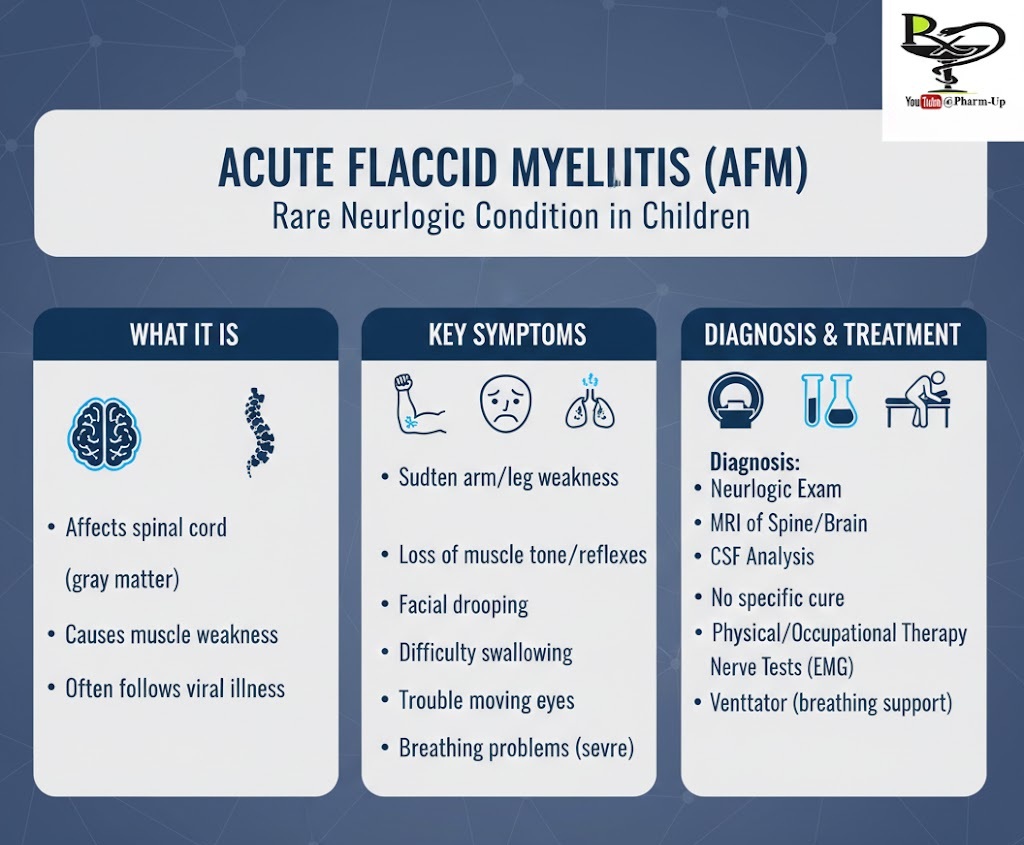
Acute Flaccid Myelitis (AFM) is a rare but serious condition that affects the nervous system, specifically the gray matter in the spinal cord. This area of the spinal cord is responsible for controlling muscle movement, which is why the hallmark of AFM is sudden muscle weakness.
While it is often compared to polio because of how it attacks the spine, it is a distinct disease caused by different types of viruses.
Symptoms and Warning Signs
AFM symptoms usually appear suddenly, often following a mild respiratory illness or fever. Seek medical care immediately if you or your child experience:
- Sudden Weakness: Loss of muscle tone and reflexes in the arms or legs.
- Facial Symptoms: Drooping of the eyelids or face, and difficulty moving the eyes.
- Bulbar Symptoms: Difficulty swallowing or slurred speech.
- Pain: Significant discomfort in the neck, back, or limbs.
- Respiratory Distress: In severe cases, the muscles used for breathing weaken, which may require the use of a ventilator.
Causes and Risk Factors
- Viral Triggers: While the exact cause can be hard to pinpoint in every case, researchers have linked AFM to several viruses, particularly enteroviruses (like EV-D68), as well as West Nile virus and adenoviruses.
- Demographics: While adults can get AFM, over 90% of cases occur in young children.
Diagnosis and Treatment
Diagnosis
Because AFM symptoms overlap with other conditions like Guillain-Barre syndrome, doctors use several specialized tests:
- MRI: Essential for visualizing inflammation in the spinal cord’s gray matter.
- Cerebrospinal Fluid (CSF) Analysis: To check for signs of inflammation or infection in the fluid surrounding the brain and spine.
- Nerve Tests: EMG and nerve conduction studies to see how well signals travel from nerves to muscles.
Management
There is currently no specific cure or “magic bullet” treatment for AFM.
- Neurologist Care: Treatment is managed by specialists who focus on symptoms.
- Rehabilitation: Physical and occupational therapy are the primary ways to help patients regain strength and mobility in weakened limbs.
Prevention Tips
Since AFM is often triggered by viral infections, standard hygiene is the best defense:
- Hand Hygiene: Wash hands frequently with soap and water.
- Disinfect: Clean high-touch surfaces and toys regularly.
- Stay Home: If you or your child are sick, stay home to prevent spreading viruses to others.
About the Author