Pharm'Up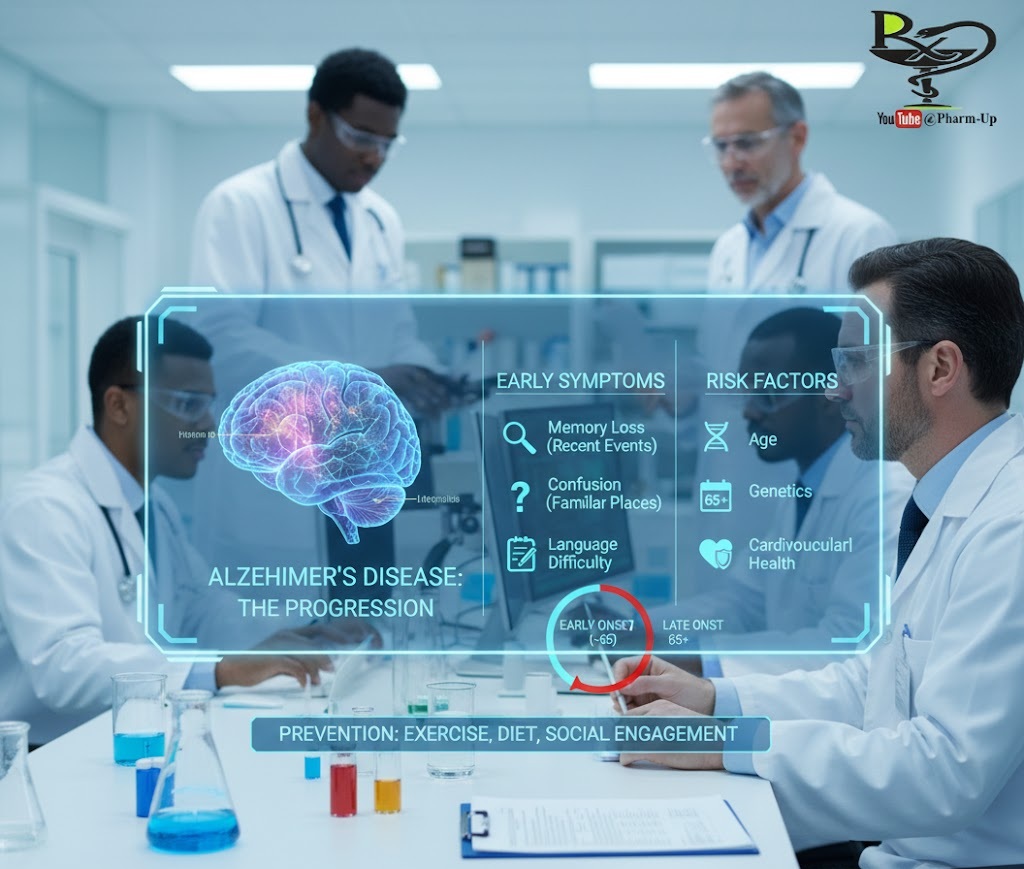
The Nature of Alzheimer’s Disease (AD)
Alzheimer’s Disease is the most prevalent form of dementia, but it is crucial to understand that it is not a normal part of the aging process. While everyone may forget a name or misplace keys occasionally, AD is a progressive brain disorder that physically destroys neurons and their connections, eventually impairing the ability to perform the simplest daily tasks.
Recognizing the Progression
The disease typically follows a slow, years-long trajectory, starting in the areas of the brain responsible for language and thought.
- Early/Mild Stages: Often dismissed as “senior moments.” Symptoms include repeating questions, losing track of bills, or getting lost in familiar neighborhoods.
- Moderate Stages: Significant confusion begins. Patients may fail to recognize family members or experience personality changes, such as increased anxiety or wandering.
- Late Stages: The brain can no longer communicate with the body. Patients require 24-hour assistance for basic survival, including eating and personal hygiene.
Risk Factors and Brain Health
While age remains the primary risk factor, researchers are increasingly looking at “modifiable” lifestyle choices that can impact brain resilience.
| Non-Modifiable Risks | Modifiable Lifestyle Factors |
| Age: Risk increases significantly after 65. | Cardiovascular Health: Managing blood pressure. |
| Genetics: Family history plays a role. | Sensory Health: Correcting hearing loss. |
| TBI: History of concussions or brain injury. | Social Connection: Staying engaged with others. |
| MCI: Having Mild Cognitive Impairment. | Physical Activity: Regular exercise to boost blood flow. |
Diagnosis and Modern Management
Diagnosing AD is a process of elimination. Since many conditions (like Vitamin B12 deficiency or depression) can mimic dementia, doctors use a combination of:
- Cognitive Testing: Evaluating memory, problem-solving, and language.
- Medical History: A deep dive into medications and behavioral changes.
- Neurological Exams: Ruling out other brain disorders through specialists.
The Current Reality: While there is currently no cure to stop the degeneration entirely, early diagnosis allows for the use of medications that can manage symptoms and, more importantly, gives families time to plan for the road ahead.
A Proactive Approach to Brain Health
You can’t stop the clock, but you can build a “cognitive reserve.” Quality sleep, a heart-healthy diet, and quitting smoking are essentially “insurance” for your brain cells.
About the Author