Pharm'Up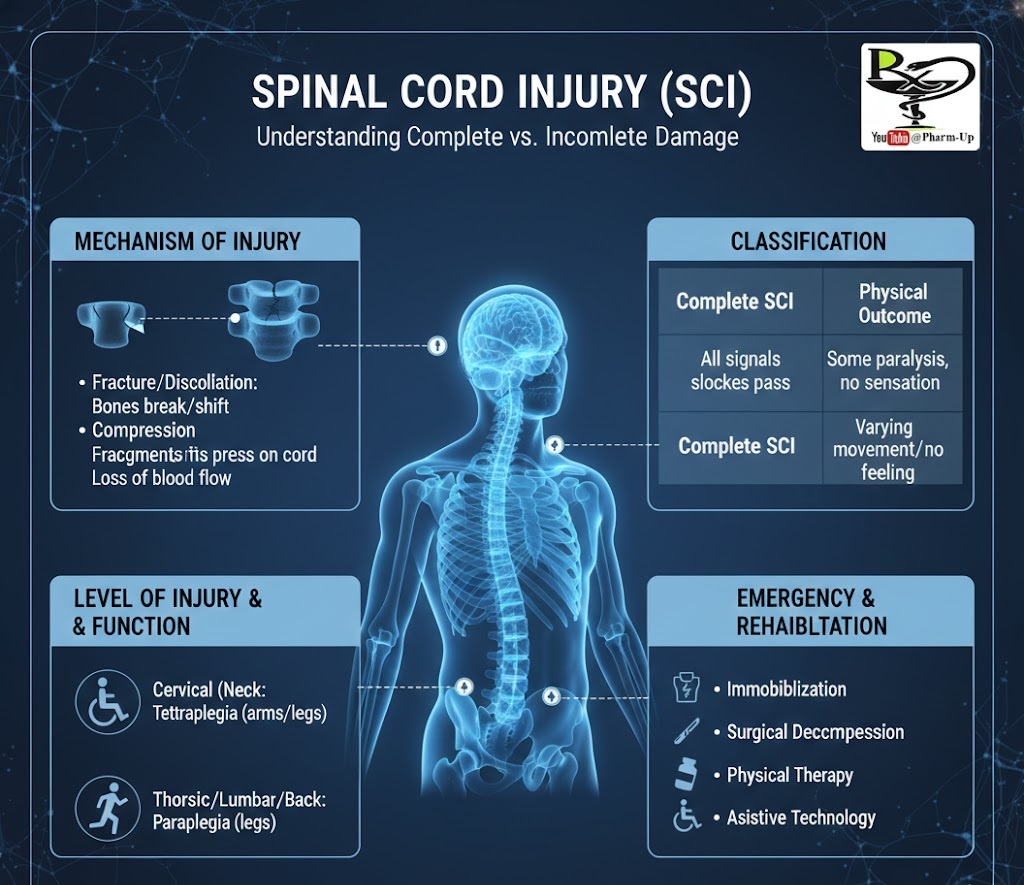
A spinal cord injury (SCI) is a life-altering event that occurs when the “data cable” of the body is damaged. While many believe an injury must severed the cord to cause paralysis, most injuries actually result from the cord being bruised, compressed, or torn by displaced bone fragments from the surrounding vertebrae.
The Mechanics of Injury
The spinal cord is housed within the vertebral column. When a traumatic blow occurs:
- The Fracture/Dislocation: The bones of the spine (vertebrae) break or shift out of alignment.
- Compression: These bone fragments press into the soft tissue of the spinal cord.
- Ischemia: The initial trauma can cut off blood flow to the nerves, causing secondary damage in the hours following the accident.
Classification: Complete vs. Incomplete
Medical professionals classify injuries based on the amount of signal transmission remaining below the site of the “insult.”
| Injury Type | Signal Transmission | Physical Outcome |
| Complete SCI | All signals are blocked below the injury site. | Total loss of motor function and sensation below the injury. |
| Incomplete SCI | Some signals can still pass through the damaged area. | Varying degrees of movement or feeling remain below the injury. |
Level of Injury and Function
The location of the injury on the spine determines which parts of the body are affected.
- Cervical (Neck): Results in tetraplegia (quadriplegia), affecting the arms, legs, torso, and sometimes the ability to breathe.
- Thoracic/Lumbar (Back): Results in paraplegia, affecting the legs and lower body while leaving arm function intact.
Emergency Intervention & Stabilization
Because nerve cells are extremely sensitive, the first few hours (the “Golden Hours”) are critical.
- Immobilization: Using braces or traction to ensure the spine does not move further, which could worsen the cord damage.
- Surgical Decompression: Removing bone fragments or herniated disks that are pressing on the cord.
- Methylprednisolone: High-dose steroids may be administered to reduce inflammation and swelling around the nerves.
The Road Ahead: Rehabilitation
Once the spine is stable, the focus shifts to maximizing remaining function:
- Neuroplasticity: Physical therapy helps the brain find new pathways to send signals.
- Assistive Technology: From advanced wheelchairs to “exoskeletons” and voice-controlled home systems, technology plays a vital role in restoring independence.
About the Author