Single-Shot Breakthrough: Wistar Scientists Achieve First-Ever Early HIV Neutralization
 Pharm'Up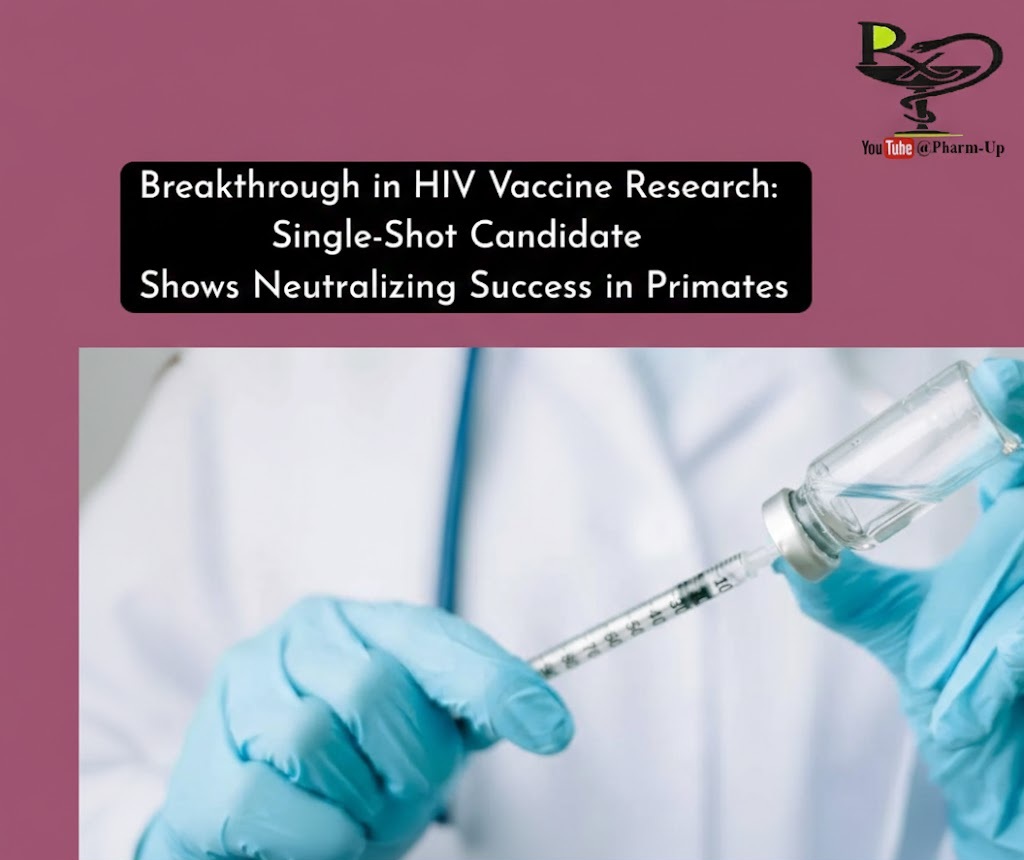
In a milestone that has eluded HIV researchers for over four decades, scientists at The Wistar Institute have successfully induced neutralizing antibodies against HIV in nonhuman primates after a single immunization. The study, published in Nature Immunology on February 3, 2026, presents a radical departure from traditional vaccine designs that typically require seven or more injections to see any measurable immune response.
The Science of “WIN332”
The research, led by Dr. Amelia Escolano, centers on an engineered HIV envelope protein designated WIN332. The breakthrough was achieved by challenging a long-standing “dogma” in virology regarding how the immune system interacts with the virus’s protective sugar coating.
The Bold Design Choice
For years, scientists believed that a specific sugar molecule—the N332-glycan—was essential for antibodies to bind to the virus. Escolano’s team took the unprecedented step of completely removing this sugar.
- Discovery of Type II Antibodies: By removing the N332-glycan, the team identified a new class of antibodies (Type II) that do not require the sugar to neutralize the virus.
- Rapid Response: Neutralizing antibodies were detectable just three weeks after the first injection.
- Potent Boosting: A second dose further amplified the response, suggesting that a complete, effective regimen could be achieved in as few as three total shots.
“Usually, HIV vaccination protocols require seven, eight, or even ten injections to start seeing any neutralization. For our immunogen, WIN332, we injected once and already saw results. This represents something never before observed.”
— Dr. Amelia Escolano, Senior Author
A Paradigm Shift for Global Access
One of the primary barriers to a global HIV vaccine has been the complexity of multi-dose regimens, which are difficult to implement in low-resource settings.
| Metric | Traditional Experimental Vaccines | The WIN332 Candidate |
| Doses for Neutralization | 7 to 10 injections | 1 injection |
| Time to Initial Response | Several months/years | 3 weeks |
| Potential Full Schedule | High-complexity / Long-term | 3-dose streamlined protocol |
Dr. Ignacio Relano-Rodriguez, the study’s first author, noted that this simplification could make a future vaccine dramatically more affordable and accessible worldwide.
What’s Next?
The success in nonhuman primates has already caught the attention of major global health organizations. The Wistar Institute is currently:
- Moving toward human clinical trials to verify safety and efficacy.
- Refining “related immunogens” to be used in the booster phase to maximize the breadth of protection across different HIV strains.
- Evaluating the vaccine’s longevity to ensure the “single-shot” start leads to permanent protection.
About the Author