Pharm'Up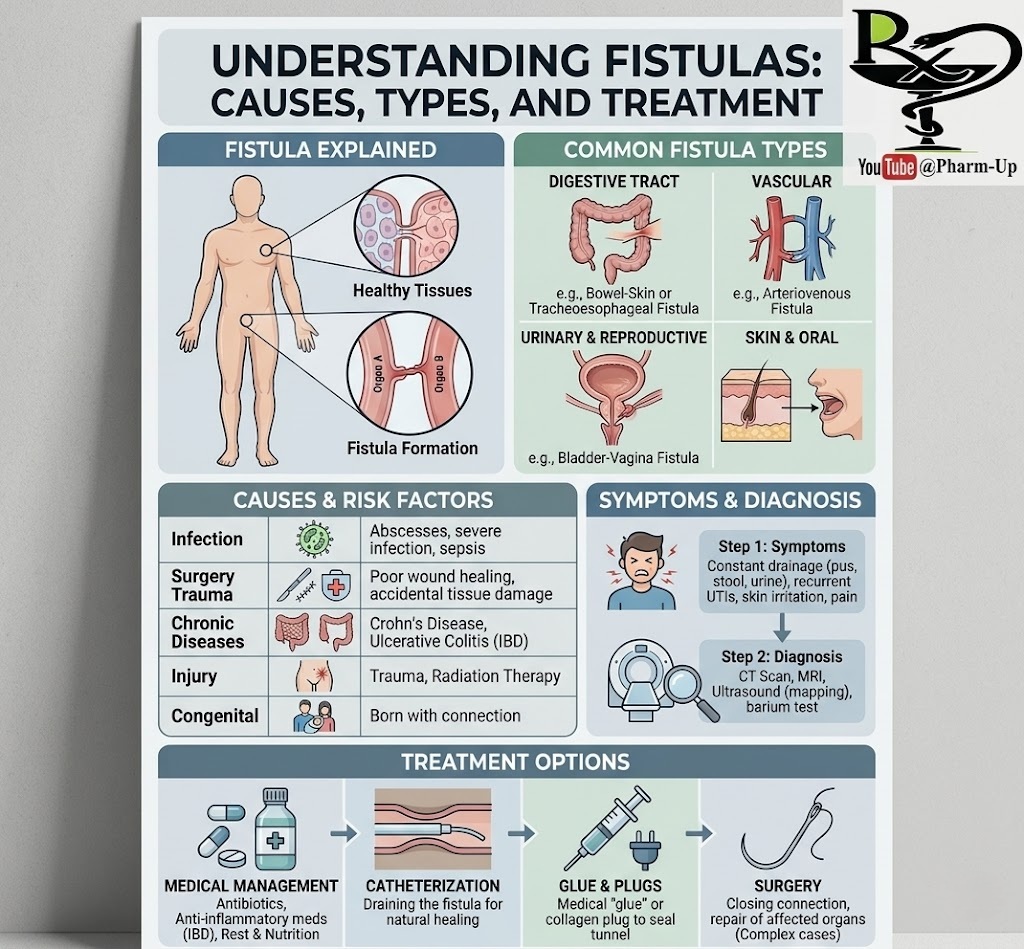
A fistula is an abnormal, tunnel-like connection that forms between two organs or vessels that are not normally connected. These “shortcuts” can disrupt normal bodily functions by allowing fluids—such as digestive juices or blood—to move into areas where they don’t belong.
Common Types of Fistulas
Fistulas can occur almost anywhere in the body, but they are most frequently categorized by the systems they affect:
- Digestive Tract: Connections between the bowel and the skin, or between the esophagus and the windpipe (tracheoesophageal fistula).
- Vascular System: An abnormal connection between an artery and a vein (arteriovenous fistula), which can bypass capillaries and strain the heart.
- Urinary & Reproductive: Connections between the bladder and the vagina, or the bowel and the vagina, often resulting from surgery or prolonged labor.
Causes and Risk Factors
While some individuals are born with these connections (congenital), most fistulas develop due to tissue damage or inflammation:
| Cause | Description |
| Infection | Abscesses that fail to heal properly can leave a permanent tunnel. |
| Chronic Diseases | Inflammatory Bowel Diseases (IBD) like Crohn’s or Ulcerative Colitis. |
| Surgical Trauma | Accidental injury to tissue during a procedure or poor wound healing. |
| Injury | Severe physical trauma or radiation therapy to the pelvic or chest area. |
Symptoms and Diagnosis
Symptoms vary wildly based on location but often include:
- Constant fluid drainage (pus, stool, or urine) from an abnormal opening.
- Recurrent infections, such as frequent UTIs or skin irritations.
- Pain and swelling in the affected area.
Diagnosis typically involves imaging tests like CT scans, MRIs, or ultrasounds to map the tunnel’s path. In digestive cases, a barium swallow or enema may be used to see where the fluid leaks.
Treatment Options
Treatment is tailored to the fistula’s size and location. Not all fistulas require invasive measures; some small ones may close with rest and proper nutrition.
- Medical Management: Antibiotics to treat underlying infections and medications to reduce inflammation (especially in Crohn’s disease).
- Fibrin Glue or Plugs: A medical “glue” or a collagen plug used to seal the tunnel without major surgery.
- Catheterization: Draining the fistula to allow the tissue to heal from the inside out.
- Surgery: Necessary for complex fistulas to close the connection and repair the affected organs.
About the Author