Novel Inherited Retinal Disorder Linked to EFEMP1 Mutation Shows Functional Night-Vision Deficits Years Ahead of Structural Tissue Damage
 Pharm'Up
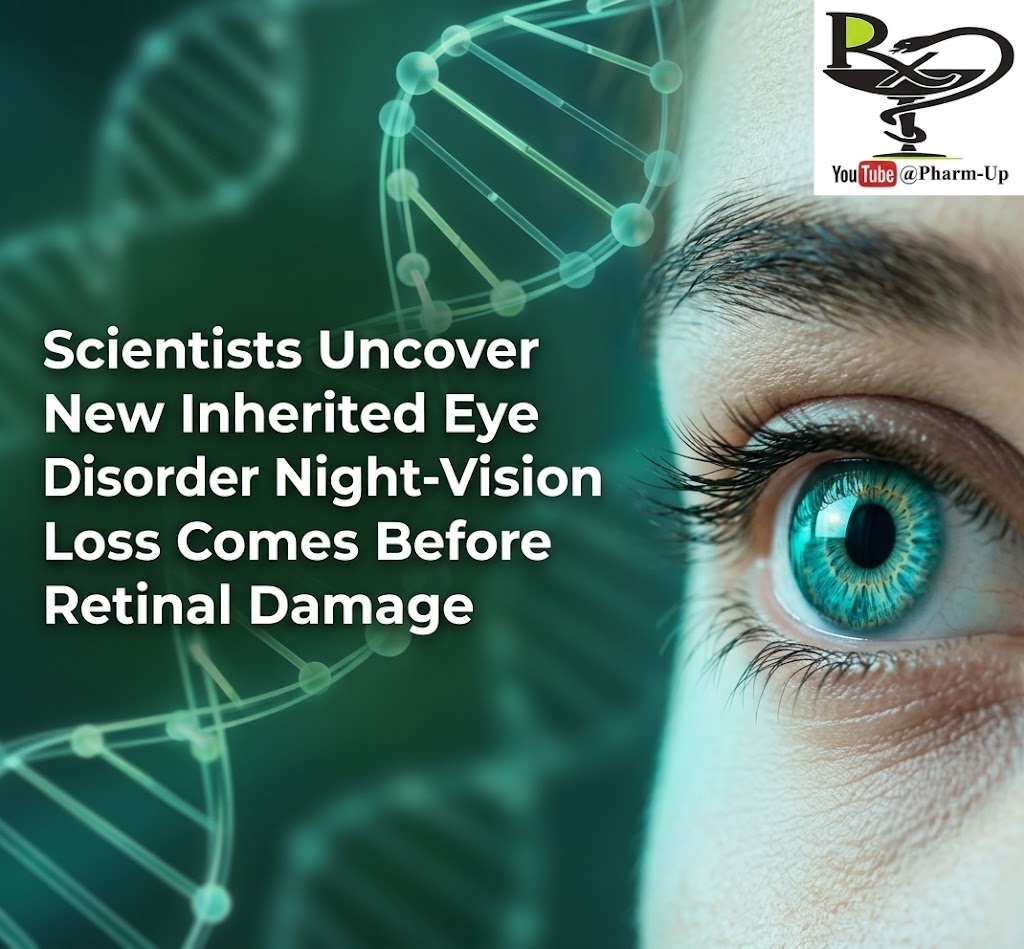
An international consortium of vision researchers has characterized a previously undocumented inherited retinal disease triggered by a rare genetic variant in the EFEMP1 gene. Published in JAMA Ophthalmology, the investigation demonstrates that patients carrying the specific p.Arg140Trp variant suffer from early progressive rod-photoreceptor failure and night-vision loss long before standard clinical imaging tools can detect any physical abnormalities or anatomical retinal degradation.
The study—led by investigators from the University Hospital and University of Bonn alongside specialists from the universities of Edinburgh, Basel, and Pennsylvania, as well as clinical centers in Prague and Philadelphia—examined three unrelated families presenting with identical genetic alterations. By integrating comprehensive clinical workups, functional vision assessments, and cellular assays, the team pinpointed a distinct late-onset pattern of retinal degeneration.
Decoupling Functional Decline from Anatomical Damage
In contrast to conventional degenerative eye conditions that manifest visible structural degradation early on, this condition produces a pronounced temporal gap between functional loss and structural pathology:
- Predominant Rod Involvement: The pathology preferentially targets the peripheral retina and rod photoreceptors—the sensory cells responsible for dim-light and night vision—while sparing the central macula and preserving high-resolution central visual acuity for extended periods.
- Severe Dark-Adaptation Latency: Functional testing demonstrated significant delays in the recovery of rod-mediated vision following exposure to light in variant carriers, despite normal visual acuity and routine eye examinations showing an intact, unremarkable retinal structure.
- Early Diagnostic Window: Detecting impaired dark adaptation while photoreceptors remain structurally intact offers clinicians an actionable therapeutic window to monitor disease trajectory and potentially intervene before irreversible photoreceptor loss occurs.
Molecular Insights and Phenotypic Divergence
Laboratory evaluations revealed that the altered EFEMP1 protein behaves abnormally at the cellular level. The mutant protein exhibits a pronounced propensity to form aberrant molecular complexes, accumulates intracellularly, and fails to secrete into the extracellular matrix at physiological rates. This chronic cellular congestion and disrupted matrix interaction likely drive the progressive decline and eventual loss of retinal cells.
Crucially, the discovery broadens the known phenotypic spectrum of the EFEMP1 gene. Previously, EFEMP1 was almost exclusively associated with Doyne honeycomb retinal dystrophy (Malattia Leventinese), a condition caused by a different variant (p.Arg345Trp) that predominantly destroys the central retina and macula. The newly identified p.Arg140Trp variant instead establishes a predominantly peripheral degradation pattern, demonstrating that distinct mutations within the same gene can manifest as radically different retinal pathologies.
The researchers note that while additional cohort studies are necessary to define the full disease spectrum and global prevalence across broader populations, these findings could immediately resolve previously unexplained cases of late-onset inherited retinal degeneration and emphasize the critical necessity of dark-adaptation functional testing in unexplained vision loss.
About the Author