AbbVie Secures FDA Approval for JUVMO (Tavapadon): A Novel D1/D5 Targeted Therapy Transforming Parkinson’s Disease Care
 Pharm'Up
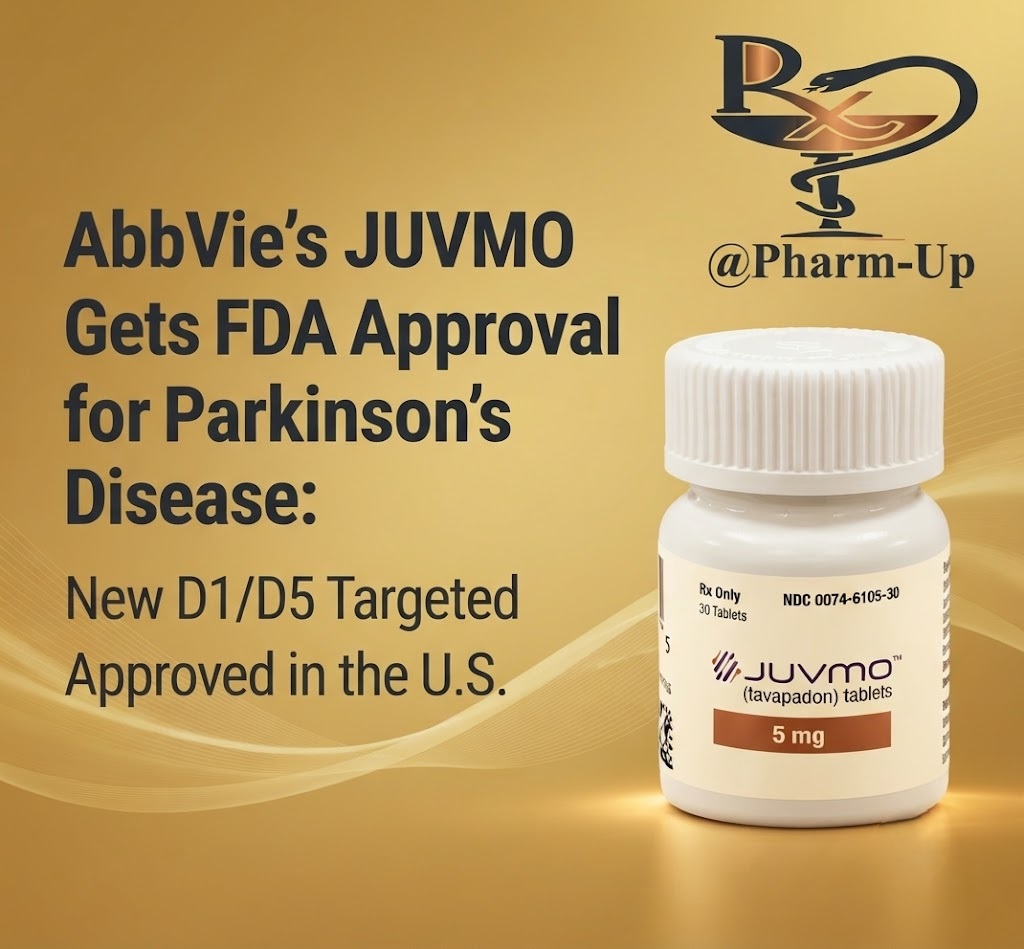
AbbVie has achieved a significant milestone with the U.S. Food and Drug Administration (FDA) granting approval for JUVMO (tavapadon) for the treatment of Parkinson’s disease in adults. Announced on September 28, 2026, this once-daily oral medication introduces an innovative approach to dopamine-based therapy by selectively targeting the D1/D5 receptor family. The treatment is slated to become commercially available to patients across the United States in October 2026.
A Novel Mechanism: Targeting D1/D5 Receptors
Unlike currently available traditional dopamine agonists—which primarily target D2/D3 receptors—tavapadon stands out as the first and only selective D1/D5 receptor agonist approved for adult Parkinson’s patients. Designed to activate the specific dopamine pathways responsible for motor control, JUVMO can be administered either as a monotherapy or combined with oral levodopa therapy.
Backed by the Comprehensive Phase 3 TEMPO Program
The FDA’s approval of JUVMO is anchored in robust data derived from AbbVie’s extensive Phase 3 TEMPO clinical development program:
- TEMPO-1 (Early Disease, Monotherapy): Demonstrated that JUVMO significantly improved activities-of-daily-living scores compared to placebo at week 26, alongside notable combined enhancements in motor function.
- TEMPO-2 (Early Disease, Monotherapy): Reconfirmed efficacy by showing a significant enhancement in MDS-UPDRS Part II scores over placebo.
- TEMPO-3 (Combination with Levodopa): Evaluated patients experiencing motor fluctuations. At week 26, patients receiving JUVMO alongside levodopa gained an impressive 1.7 hours of daily “on” time without troublesome dyskinesia (compared to 0.6 hours for the placebo-levodopa group) while reducing daily “off” time by 1.9 hours (versus 0.9 hours for placebo).
Dosage Strengths and Safety Profile
JUVMO tablets are available in therapeutic strengths of 5 mg, 10 mg, and 15 mg, alongside a specialized titration pack featuring 0.25 mg and 1 mg tablets.
According to safety data released by AbbVie, reported adverse events varied based on whether the drug was used standalone or alongside levodopa:
- Without Levodopa: Commonly reported side effects included nausea, headache, dizziness, fatigue, changes in taste, vomiting, dry mouth, and anxiety.
- With Levodopa: Commonly reported adverse events featured nausea, dyskinesia, dizziness, headache, hallucinations, and orthostatic hypotension.
Impact on the Global Parkinson’s Landscape
Affecting more than 11 million people worldwide, Parkinson’s disease is a progressive neurological condition characterized by debilitating tremors, muscular rigidity, slowed movement, and severe balance complications. By offering a mechanistically distinct route through the D1/D5 receptor pathways, JUVMO equips clinicians with a powerful tool to better manage both early-stage patients and those experiencing treatment-limiting motor fluctuations.
About the Author