Uncovering the True Mechanism: Zavondemstat and QC6352 Target DHODH Instead of KDM4 in Glioblastoma Study
 Pharm'Up
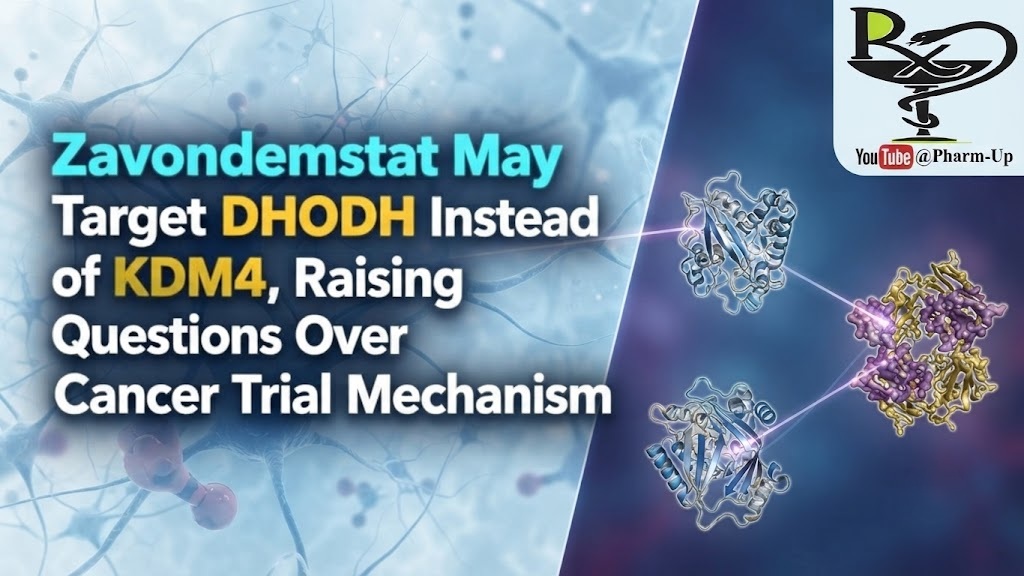
A groundbreaking multi-institution study led by the University of Sydney, in collaboration with Goethe University, the University of Oxford, and the Institute of Cancer Research in London, has revealed that the experimental cancer drug zavondemstat and its related research compound QC6352 may operate through an entirely different biological pathway than previously understood. Published in Nature Chemical Biology, the findings show that rather than primarily targeting KDM4 proteins, these compounds exert their anticancer activity by blocking dihydroorotate dehydrogenase (DHODH)—a vital enzyme required by cancer cells to synthesize the building blocks for rapid DNA replication and growth.
Background and Initial Discovery
KDM4 proteins have long been investigated as potential cancer targets due to their tendency to promote excessive cell growth and tumor progression when overactive. QC6352 was widely used as a standard tool compound to study KDM4 biology. Initially, researchers evaluated zavondemstat and QC6352 as potential treatments for glioblastoma, which is the most aggressive and common form of brain cancer. However, suspicions arose when experiments using alternative compounds specifically designed to inhibit KDM4 failed to replicate the same potent anticancer effects seen with QC6352.
By deploying patient-derived glioblastoma stem cells, tumor models, and advanced genetic, molecular, and mechanistic experiments, the team traced the drugs’ true activity directly to DHODH inhibition. According to Professor Lenka Munoz from the University of Sydney’s School of Medical Sciences and Charles Perkins Centre, DHODH functions like a cellular machine producing molecular “bricks” for DNA. Blocking it halts the rapid proliferation of cancer cells.
Implications for Research and Clinical Trials
This revelation carries significant weight for the broader scientific community:
- Re-evaluating Past Research: Numerous global studies have relied on QC6352 to investigate KDM4 biology; these earlier conclusions may now need reinterpretation based on the newly discovered DHODH mechanism.
- Clinical Development Updates: Zavondemstat advanced into clinical trials based on the premise that it acted on KDM4, meaning ongoing trials may require an updated understanding of its underlying mechanism.
- Target Validation Challenges: The study underscores a widespread challenge in oncology drug development—ensuring accurate target validation before entering clinical testing to avoid poor trial designs, patient misplacement, and misdirected research funding.
Future Directions in Glioblastoma and Tool Design
The discovery opens up promising avenues for exploring DHODH inhibition specifically for glioblastoma treatment, building on other DHODH-targeting drugs currently studied in different cancer contexts. Additionally, the research team successfully developed novel, precise chemical tools capable of inhibiting KDM4 without affecting DHODH, providing scientists with cleaner instruments to study KDM4’s true biological roles in future cancer research.
About the Author