Vanillin-Based Formulations Emerge as a Promising Solution for Chronic Wound Healing and Ulcer Treatment
 Pharm'Up
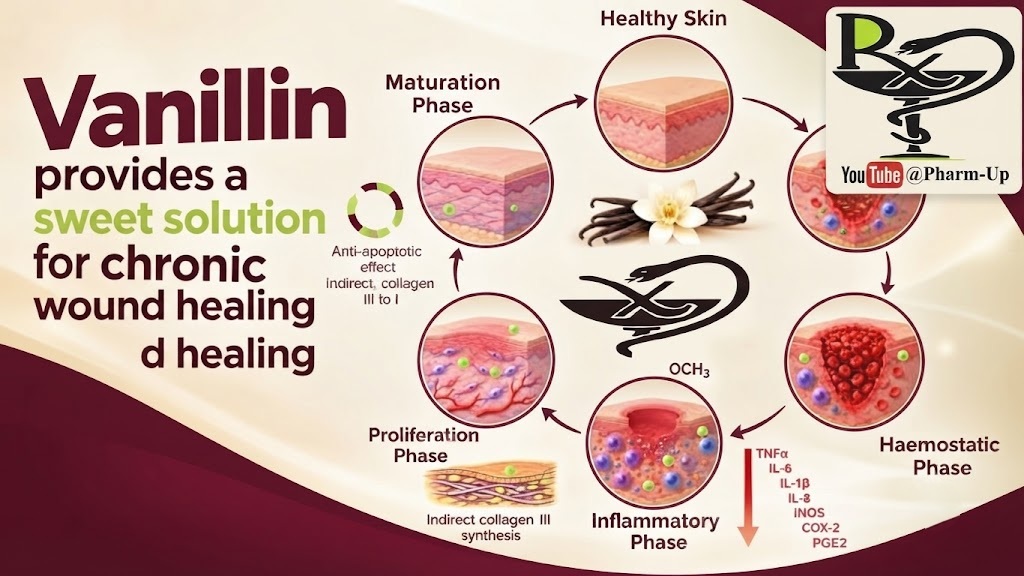
Researchers at Flinders University’s Biomedical Nanoengineering Laboratory have identified that vanillin—traditionally known as the primary flavor component derived from natural vanilla pods—exhibits pronounced antioxidant, anti-inflammatory, and antibacterial properties. These characteristics make it an exceptional candidate for next-generation medical formulations aimed at chronic wound healing, ulcer treatment, and targeted drug delivery.
Key Scientific Insights & Biological Activity
- Multifunctional Chemical Properties: Vanillin functions as a dynamic crosslinker and active element in material design, exhibiting strong antibacterial, anti-inflammatory, and antioxidant capabilities.
- Amphiphilic Structure: Due to its amphiphilic molecular structure, vanillin can readily interact with reactive oxygen species, cellular membranes, and polymeric matrices, providing a solid foundation for functional biomedical applications.
- Scalability and Cost-Effectiveness: While extracted from natural vanilla pods, synthetic vanillin can also be produced cost-effectively from clove oil or rice. Its abundance and compatibility with good manufacturing practices offer significant advantages for industrial scale-up, formulation reproducibility, and supply chain robustness.
- Targeted Therapeutic Delivery: Vanillin-based formulations are considered safe and multifunctional solutions, particularly for treating ulcers and facilitating the targeted delivery of hydrophobic compounds.
Context & Broader Food-Based Medical Research
This research builds upon previous scientific explorations at Flinders University investigating how common foods can offer medical benefits. For example, a recent study published in Small in February 2026 detailed a nanoscale peppermint-oil derived coating designed to protect against infection, inflammation, and oxidative stress while remaining fully compatible with human tissue.
Professor Krasimir Vasilev, Professor of Biomedical Nanotechnology and Director of Flinders’ Biomedical Nanoengineering Laboratory, noted that vanillin’s long history of safety, chemical stability, and widespread appeal in the global food system can be successfully translated into medical applications. Through coordinated engagement between academia, clinicians, and industry, vanillin has the potential to transition from an underutilized bioactive compound into a clinically deployable component of advanced wound care and regenerative therapeutics.
About the Author