Government Approves 30% Trade Margin Cap on Non-Scheduled Cancer Drugs, Expecting ₹2,500 Crore in Annual Savings
 Pharm'Up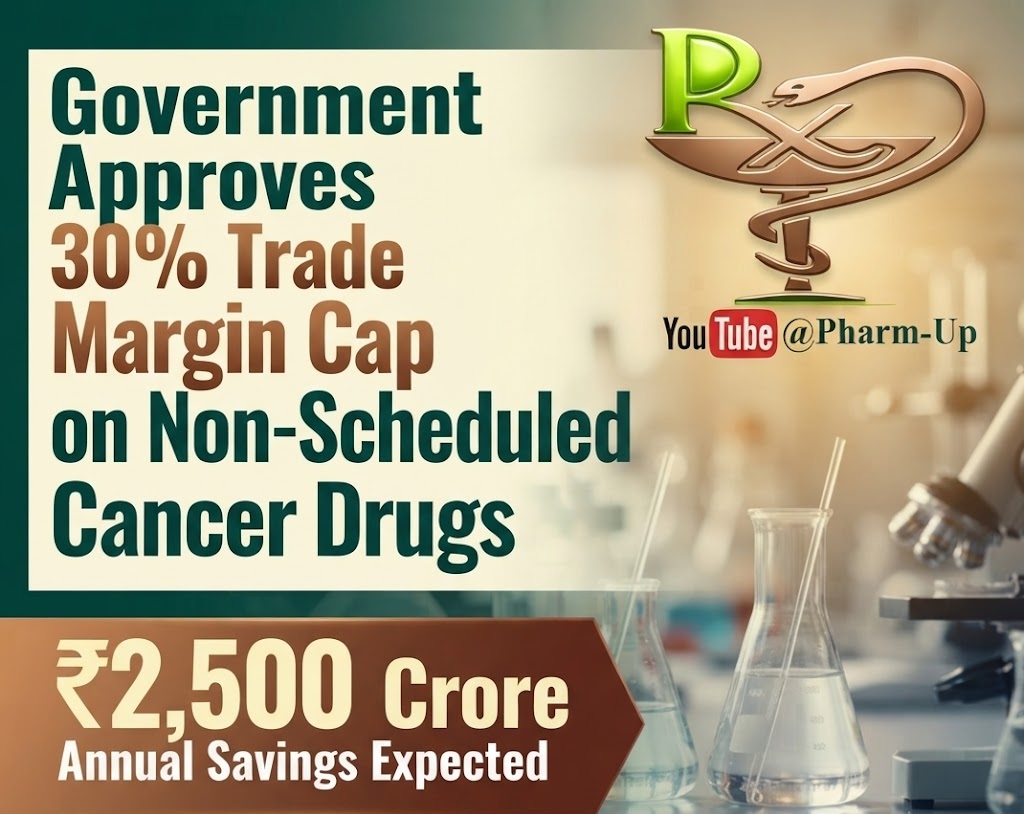
The Government of India has approved a 30% cap on trade margins for non-scheduled anti-cancer medicines, a landmark price-control measure designed to curb excessive mark-ups across the pharmaceutical supply chain and ease the financial strain on cancer patients.
Key Highlights of the New Price Control Measure
- Expected Price Reductions: The policy aims to reduce medicine prices by up to 70%.
- Financial Relief: Cancer patients are projected to save an estimated ₹2,500 crore annually.
- Addressing High Mark-Ups: An analysis by the National Pharmaceutical Pricing Authority (NPPA) revealed that non-scheduled anti-cancer drugs carried an average price mark-up of approximately 170%, with some reaching 700% or more.
- Scope of Coverage: The 30% margin cap will apply across various categories of non-scheduled anti-cancer medicines, including branded, generic, domestically manufactured, imported, patented, and non-patented drugs.
Implementation and Regulatory Process
- Expert Committee: The Directorate General of Health Services (DGHS) will constitute an expert committee to finalize the specific list of medicines covered under the cap.
- NPPA Notification: Following the committee’s finalization, the NPPA will take necessary regulatory steps and issue an official notification to implement the measure.
- Production Continuity: To prevent shortages, manufacturers of non-scheduled anti-cancer drugs will be legally required to maintain their current production levels while the price-control measures take effect.
Background on Trade Margin Regulations
This initiative expands upon the NPPA’s previous interventions, such as a 2019 price-capping measure on 42 selected non-scheduled anti-cancer drugs that successfully generated roughly ₹984 crore in annual savings. With an estimated cancer incidence of about 60 people per lakh population in India, this new broad-based policy aims to provide much broader and more substantial out-of-pocket expenditure relief.
About the Author