Pharm'Up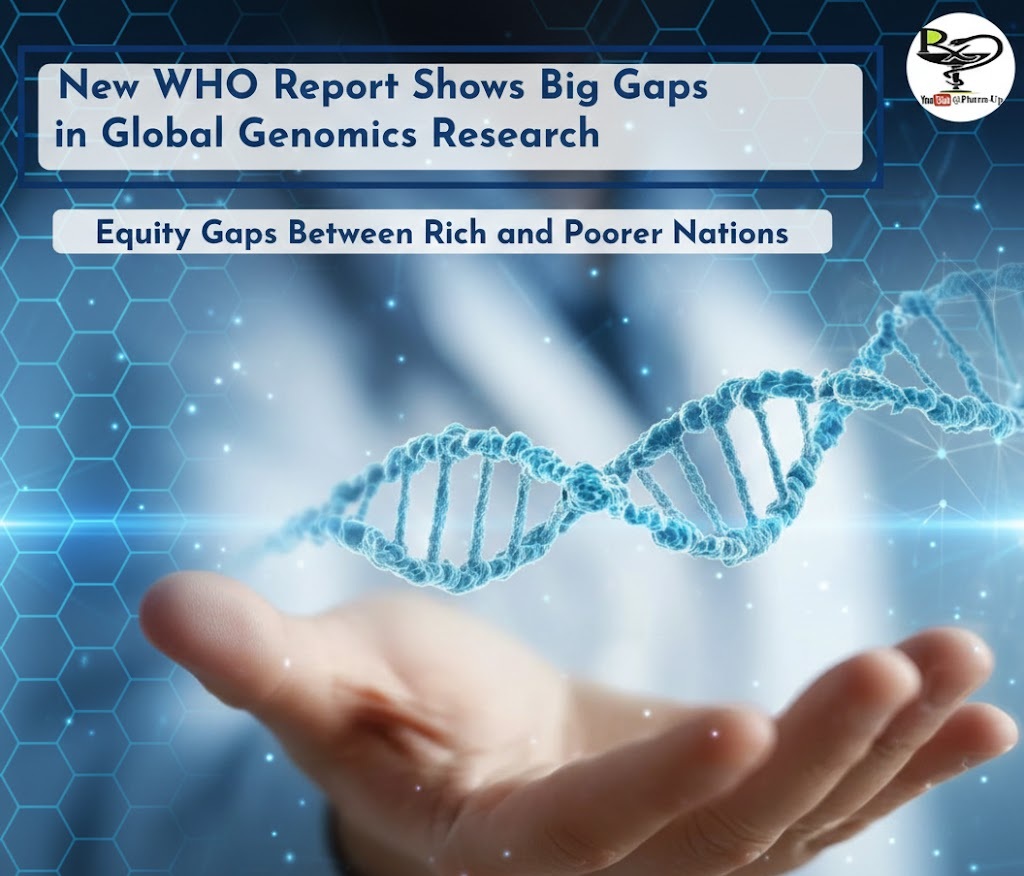
A landmark global analysis by the World Health Organization (WHO) has exposed a “glaring equity gap” in human genomics research. While genomic technologies have revolutionized medicine since the 1990s, the benefits remain concentrated in wealthy nations, potentially widening the health divide between high- and low-income regions.
The Growth vs. Equity Imbalance
Since 1990, more than 6,500 genomic clinical studies have been registered. While the volume of research surged after 2010 due to falling costs, the distribution remains heavily skewed:
- High-Income Dominance: Over 80% of all studies occur in high-income countries.
- LMIC Marginalization: Less than 5% of research takes place in low- and middle-income countries (LMICs).
- Secondary Status: Many LMICs participate only as data-collection sites rather than research leaders.
Geographic Leadership
The report identifies a small cluster of nations—led by China, the United States, and Italy—that account for over 70% of all registered studies. India has emerged as the most active lower-middle-income participant, though often as a secondary site in multi-country trials.
Critical Research Gaps
The WHO report highlights three “missed opportunities” where genomics could save lives but is currently underutilized:
1. Infectious Diseases
Despite the global burden of Tuberculosis, HIV, and Malaria, infectious disease research accounts for only 3% of genomic studies. Most current research is focused on cancer and rare diseases.
2. Demographic Neglect
Research is overwhelmingly focused on adults (ages 18–64), who represent 75% of study participants.
- Children: Only 4.6% of studies.
- Older Adults: Only 3.3% of studies.
3. Local Health Needs
Research agendas are often set by high-income funders rather than the urgent health priorities of the regions where the data is collected.
WHO Recommendations for a “Genomic Future”
To ensure genomics benefits everyone, Dr. Meg Doherty, WHO Director of the Department of Science for Health, calls for:
- Infrastructure Investment: Building sequencing and laboratory capacity directly in LMICs.
- Local Leadership: Empowering LMIC-based institutions to lead and fund their own genomic programs.
- Ethical Data Sharing: Ensuring genomic data collection follows the new WHO principles for ethical and equitable sharing.
“Genomic technologies have extraordinary potential… however, these disparities, unless strategically addressed, could reinforce existing inequities.” — Dr. Meg Doherty, WHO
| Research Category | Global Percentage | Status |
| High-Income Countries | >80% | Saturated |
| LMIC Regions | <5% | Critically Underserved |
| Cancer & Rare Diseases | >75% | Dominant |
| Infectious Diseases | ~3% | Underexplored |
About the Author