Pharm'Up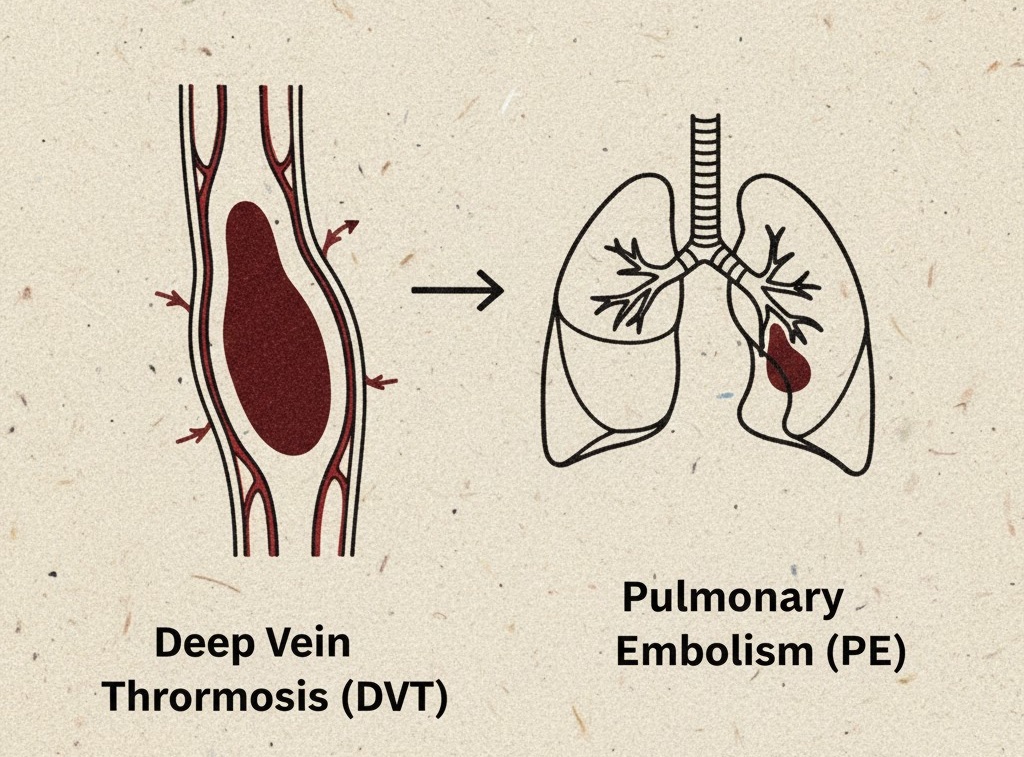
A blood clot is a gelatinous mass formed by the clump of platelets, proteins, and blood cells. While they are a vital part of the body’s repair system—sealing wounds to prevent excessive blood loss—they become life-threatening when they form inappropriately or fail to dissolve after healing.
Common Types of Dangerous Blood Clots
When a clot (thrombus) forms inside a blood vessel and stays there, it is called thrombosis. If it breaks loose and travels elsewhere, it is an embolism.
- Deep Vein Thrombosis (DVT): A clot that develops in a deep vein, most commonly in the legs, thighs, or pelvis.
- Pulmonary Embolism (PE): Occurs when a DVT travels to the lungs. This can block oxygen flow to the rest of the body and cause sudden death.
- Cerebral Venous Sinus Thrombosis (CVST): A rare clot in the brain’s venous sinuses that prevents blood from draining, potentially leading to a hemorrhagic stroke.
- Arterial Clots: Clots in the arteries can lead to ischemic strokes (brain) or heart attacks (heart).
Risk Factors and Causes
Many lifestyle factors and medical conditions can make your blood “stickier” or damage vessel walls, leading to clots:
- Immobility: Long flights, car rides, or hospital stays where you are in one position for a long time.
- Medical Conditions: Diabetes, obesity, COVID-19, cancer, and atrial fibrillation.
- Physical Changes: Pregnancy and the postpartum period, or serious injuries/surgeries.
- Lifestyle: Smoking and certain medications like birth control pills.
Symptoms by Location
Symptoms vary significantly depending on where the clot is located:
| Location | Key Symptoms |
| Arm or Leg | Swelling, warmth, redness, and sudden or gradual pain. |
| Lungs | Shortness of breath, rapid heart rate, and pain when breathing deeply. |
| Brain | Sudden severe headache, weakness on one side, and trouble speaking. |
| Heart | Chest pain, sweating, and pain radiating down the left arm. |
| Abdomen | Severe abdominal pain, nausea, and vomiting. |
Diagnosis and Treatment
If a blood clot is suspected, doctors act quickly using physical exams and specialized tests.
- Diagnosis: Often involves a D-dimer blood test (which looks for a protein fragment produced when a clot dissolves) and imaging like Ultrasound, CT Scans, or Angiography.
- Treatment: * Anticoagulants (Blood Thinners): Prevent the clot from getting larger while the body slowly reabsorbs it.
- Thrombolytics: “Clot-busting” drugs used in emergencies to dissolve clots quickly.
- Surgery: Procedures like a thrombectomy to physically remove the blockage.
✅ Prevention Tips
- Stay Mobile: On long trips, stand up and stretch every 2 hours.
- Hydrate: Drink plenty of water to maintain blood volume.
- Exercise: Regular physical activity keeps circulation moving.
- Compression: Use compression stockings if recommended after surgery or for travel.
About the Author




 Pharm'Up