Pharm'Up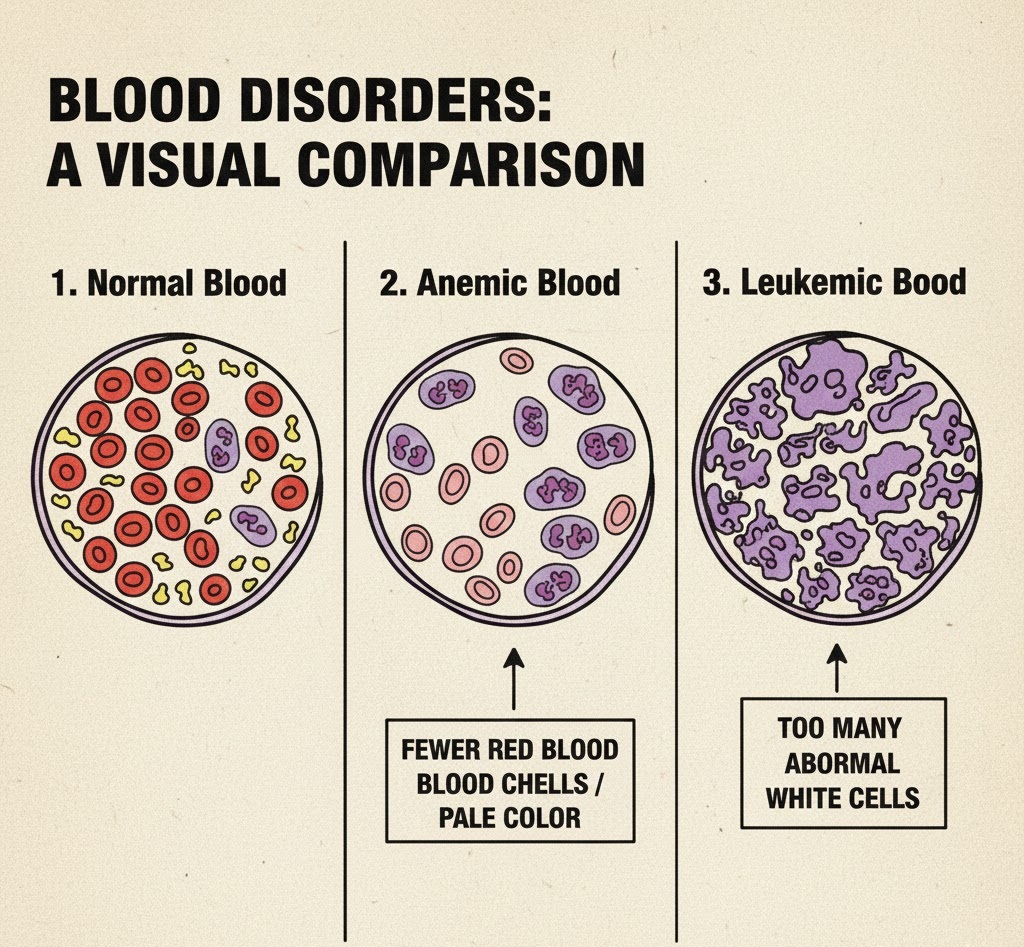
Your blood is a complex, living tissue comprised of both liquid and solid components. It serves as the body’s primary transport system, delivering oxygen, nutrients, and immune defenses to every cell. When a blood disorder occurs, it impairs one or more of these components, preventing the blood from functioning correctly.
The Anatomy of Blood
To understand blood disorders, we must first look at the four primary ingredients of healthy blood:
- Plasma: The liquid base (making up over 50% of your blood). It consists of water, salts, and proteins that help transport nutrients and hormones.
- Red Blood Cells (RBCs): These carry life-sustaining oxygen from your lungs to the rest of your body.
- White Blood Cells (WBCs): The “soldiers” of the immune system that fight off infections and foreign invaders.
- Platelets: Tiny cell fragments that work with proteins to form clots, sealing wounds to prevent blood loss.
Categories of Blood Disorders
Blood disorders can be acute (sudden and short-term) or chronic (long-lasting). They are generally categorized by the specific part of the blood they affect:
1. Clotting and Bleeding Problems
These involve the platelets and clotting proteins. If your blood doesn’t clot enough, you face bleeding disorders (like Hemophilia). If it clots too much, you may experience thrombosis, which can lead to strokes or heart attacks.
2. Anemia (Red Blood Cell Disorders)
Anemia occurs when your blood lacks enough healthy red blood cells or hemoglobin. This means your organs don’t get enough oxygen, leading to fatigue, weakness, and shortness of breath.
3. Blood Cancers
These are serious conditions where the body produces abnormal blood cells that interfere with the function of healthy cells.
- Leukemia: Affects the white blood cells and bone marrow.
- Myeloma: Affects plasma cells, a specific type of white blood cell.
4. White Blood Cell & Eosinophilic Disorders
These disorders specifically affect the immune cells. For example, Eosinophilic disorders occur when the body produces too many eosinophils (a type of WBC), which can cause chronic inflammation and organ damage.
Causes and Origins
Blood disorders aren’t caused by a single factor. Their origins can be:
- Inherited: Passed down through genes (e.g., Sickle Cell Anemia or Hemophilia).
- Nutritional: A lack of iron, Vitamin B12, or folate in the diet.
- Secondary: Resulting from other diseases (like kidney or liver disease).
- Iatrogenic: Side effects from certain medications or treatments like chemotherapy.
About the Author




 Pharm'Up