Pharm'Up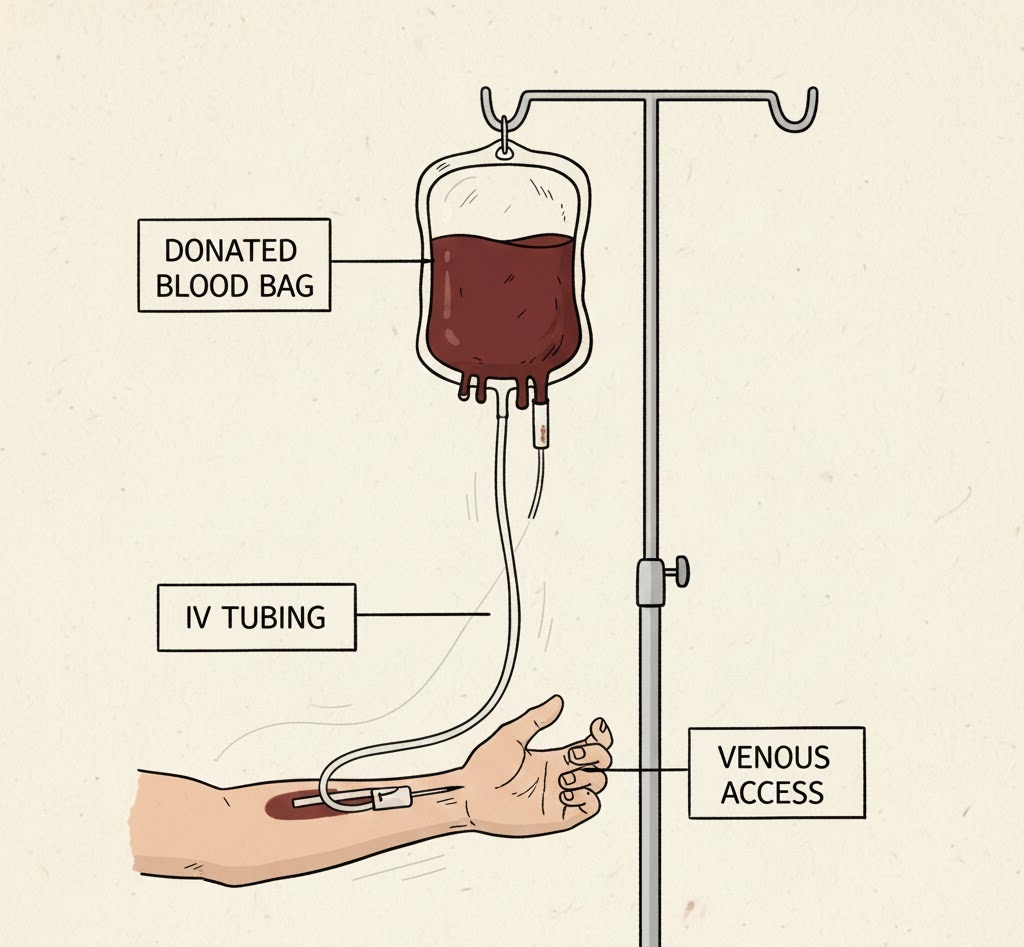
A blood transfusion is a common medical procedure in which donated blood or blood components are delivered into your body through an intravenous (IV) line. This process is essential for replacing blood lost during surgery or injury, or for treating patients whose bodies cannot produce enough healthy blood cells on their own.
Components of a Transfusion
Patients rarely receive “whole blood.” Instead, they usually receive specific components tailored to their medical needs:
- Red Blood Cells (RBCs): These are transfused to treat anemia or significant blood loss. They increase the body’s ability to carry oxygen to vital organs and tissues.
- Platelets: Essential for patients with bleeding disorders or those undergoing chemotherapy. Platelets help the blood clot and stop active bleeding.
- Plasma: The protein-rich liquid portion of the blood. It is often used for patients with severe burns, liver failure, or life-threatening infections to help maintain blood pressure and support clotting.
Ensuring Safety and Quality
The safety of the blood supply is a top priority. Blood banks follow a rigorous multi-step process to protect recipients:
- Donor Screening: Potential donors are interviewed about their health history and travel.
- Laboratory Testing: Every unit of donated blood is tested for infectious agents, including HIV, Hepatitis B and C, and West Nile Virus.
- Cross-matching: Before a transfusion, a small sample of the patient’s blood is mixed with the donor blood to ensure they are compatible.
Note: While no medical procedure is without risk, the chance of contracting a virus through a modern blood transfusion is extremely low due to advanced screening technologies.
Autologous Transfusion: Using Your Own Blood
If you have a surgery scheduled months in advance, you may have the option of an autologous transfusion. This involves:
- Having your own blood drawn and stored weeks before the procedure.
- Receiving your own blood back during or after surgery if you experience blood loss.
- Benefits: This eliminates the risk of transfusion reactions or the transmission of blood-borne diseases from others.
What to Expect During the Procedure
A transfusion typically takes 1 to 4 hours, depending on how much blood is needed. A healthcare provider will monitor you closely for signs of a reaction, such as fever, chills, or a rash. Most people feel no discomfort during the process, and the life-saving benefits are often felt almost immediately.
About the Author



 Pharm'Up