Pharm'Up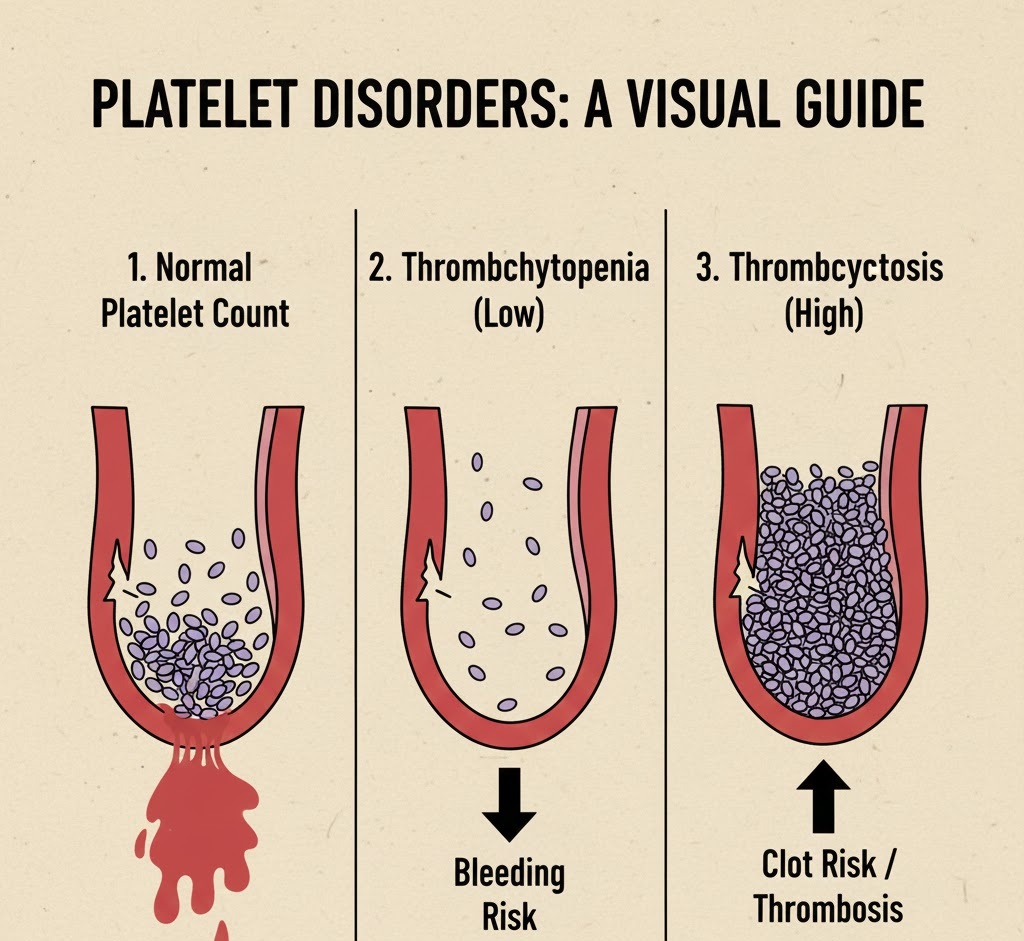
Platelets, also known as thrombocytes, are small, colorless cell fragments in our blood that form in the bone marrow. Their primary mission is to stop bleeding by clumping together and forming a “plug” whenever a blood vessel is damaged.
Low Platelet Count: Thrombocytopenia
When you don’t have enough platelets, your blood cannot clot effectively. This condition, called thrombocytopenia, can lead to:
- External Bleeding: Frequent nosebleeds, bleeding gums, or cuts that won’t stop.
- Internal Bleeding: Bruising (purpura) or small red spots on the skin (petechiae).
- Treatments: Depending on the severity, doctors may prescribe medication or provide platelet transfusions to boost your levels.
High Platelet Count: Clotting Risks
Having too many platelets can be just as dangerous as having too few, as it increases the risk of inappropriate blood clots that can block blood flow.
- Thrombocythemia: A rare condition where the bone marrow produces too many platelets for an unknown reason.
- Thrombocytosis: A high platelet count triggered by another underlying condition, such as an infection, inflammation, or iron deficiency.
- Risks: Excessive platelets can lead to a stroke, heart attack, or clots in the veins.
Platelet Dysfunction: When Quality is the Issue
Sometimes the number of platelets is normal, but they don’t work correctly. The most common example is von Willebrand Disease.
In this inherited condition, the platelets lack a specific “glue” (the von Willebrand factor) that allows them to stick to each other or to the walls of the blood vessel.
Comparison of Platelet Disorders
| Condition | Platelet Level | Primary Risk |
| Thrombocytopenia | Low | Excessive bleeding |
| Thrombocythemia | High (Primary) | Blood clots / Stroke |
| Thrombocytosis | High (Secondary) | Clotting due to illness |
| Platelet Dysfunction | Normal count | Inability to form a plug |
About the Author


 Pharm'Up