Pharm'Up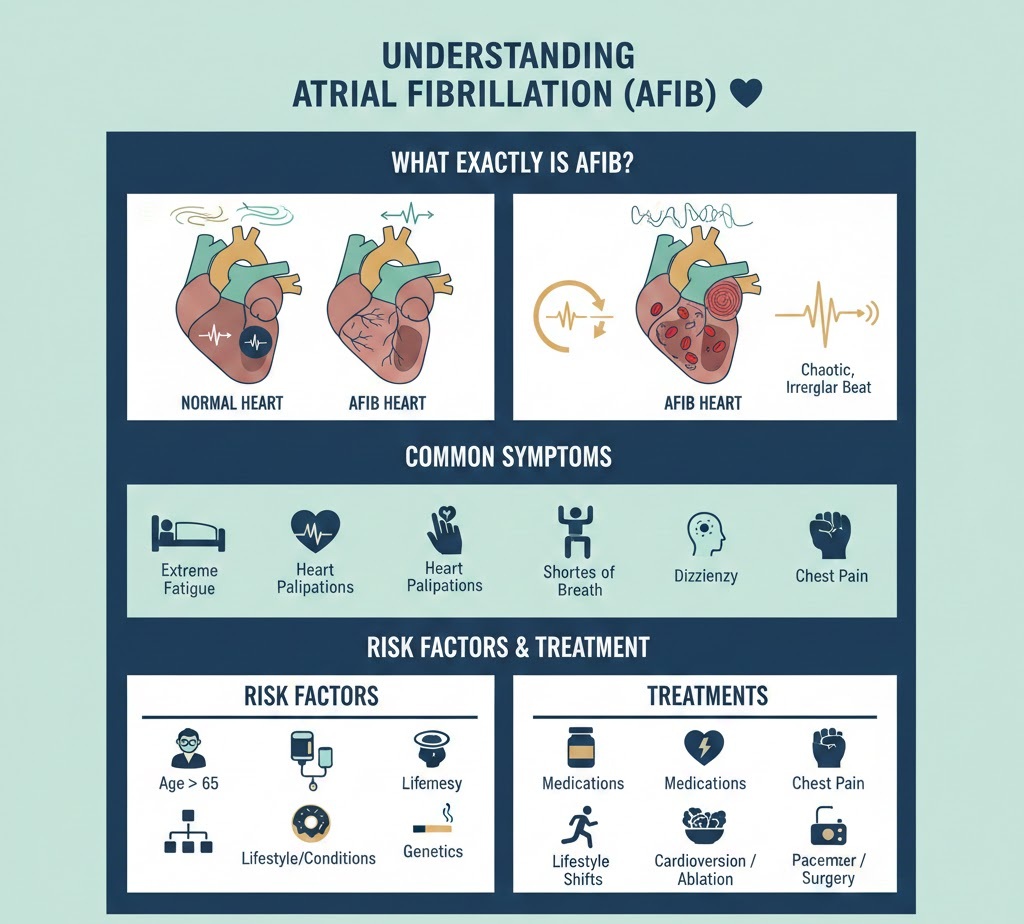
Atrial fibrillation (AFib) is more than just a “flutter” in your chest—it is the most common type of heart arrhythmia, affecting millions of people worldwide. Left untreated, AFib can lead to life-altering complications like stroke or heart failure.
In this guide, we’ll break down what AFib feels like, why it happens, and the modern treatments available today.
What Exactly is AFib?
Normally, your heart contracts and relaxes to a regular beat. In AFib, the heart’s upper chambers (the atria) beat chaotically and irregularly, out of sync with the lower chambers (the ventricles).
This mismatch means your heart can’t pump blood efficiently. Some people experience AFib in brief episodes (paroxysmal), while for others, it becomes a permanent rhythm.
Common Symptoms to Watch For
Not everyone with AFib feels “sick.” In fact, some people have no symptoms at all. However, most people notice one or more of the following:
- Extreme Fatigue: Feeling exhausted even after rest (the most common symptom).
- Heart Palpitations: The sensation of your heart skipping a beat, fluttering, or pounding.
- Shortness of Breath: Difficulty breathing during exercise or even while lying down.
- Dizziness: Feeling lightheaded or fainting.
- Chest Pain: Pressure or discomfort in the chest area.
Who is at Risk?
While AFib can affect anyone, your risk increases significantly if you are over age 65. Other major risk factors include:
- Pre-existing Conditions: High blood pressure, diabetes, sleep apnea, and kidney disease.
- Lifestyle Factors: Excessive alcohol consumption, smoking, and obesity.
- Genetics: A family history of heart disease or arrhythmias.
- Surgery: Recent operations on the heart, lungs, or esophagus.
Note: Research shows that while AFib is most commonly diagnosed in people of European ancestry, individuals of African descent often face a higher risk of complications like stroke.
Why Early Treatment Matters
The biggest danger of AFib isn’t the fluttering sensation—it’s what happens to your blood. When the heart doesn’t pump effectively, blood can pool and form clots. If a clot travels to the brain, it causes a stroke. AFib is also a leading cause of heart failure and has been linked to an increased risk of dementia.
How AFib is Treated
Modern medicine offers several ways to manage AFib, ranging from lifestyle changes to advanced surgery:
- Medications: Doctors often prescribe blood thinners to prevent clots and rate-control drugs to keep the heart beating at a healthy pace.
- Lifestyle Shifts: Adopting a heart-healthy diet (like the DASH plan), quitting smoking, and managing stress can significantly reduce “triggers.”
- Medical Procedures: * Cardioversion: A “reset” for your heart using low-energy electrical shocks.
- Catheter Ablation: A procedure that scars a tiny area of heart tissue to block irregular electrical signals.
- Surgical Options: For severe cases, doctors may install a pacemaker or perform a Maze procedure to create a new path for electrical signals.
Take Control of Your Heart Health
If you’ve noticed a fluttering in your chest or unexplained fatigue, don’t wait. Early diagnosis through an EKG or a wearable heart monitor can make all the difference.
About the Author


 Pharm'Up