Pharm'Up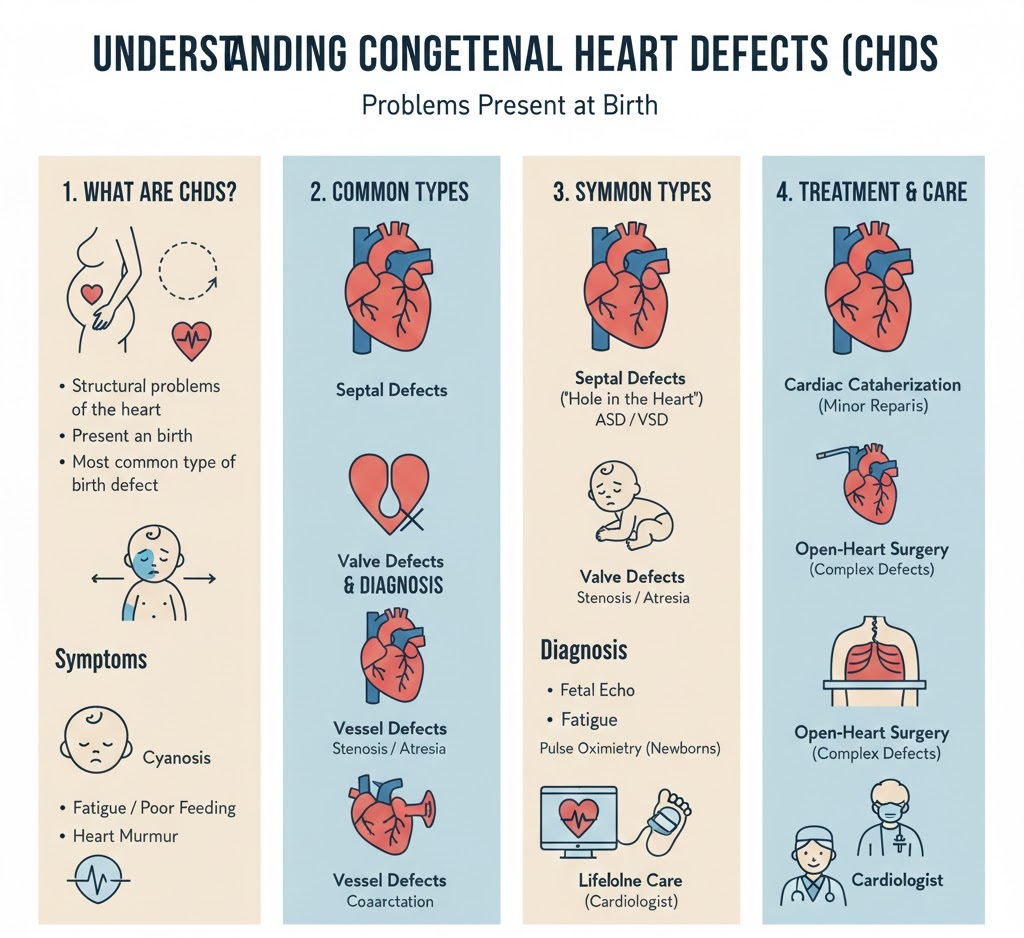
Congenital Heart Defects (CHDs) are structural problems of the heart that are present at birth. They are the most common type of birth defect, occurring when the heart or its major blood vessels do not develop properly during pregnancy. These defects can range from simple “holes” that may close on their own to complex, life-threatening conditions that require immediate intervention.
1. Common Types of Heart Defects
CHDs are generally categorized by the part of the heart they affect:
- Septal Defects: Often called a “hole in the heart.” This occurs in the wall (septum) that separates the left and right sides.
- Atrial Septal Defect (ASD): A hole between the upper chambers.
- Ventricular Septal Defect (VSD): A hole between the lower chambers.
- Heart Valve Defects: Valves may be too narrow (stenosis), closed off completely (atresia), or leak (regurgitation).
- Vessel Defects: Issues with the large vessels like the aorta or pulmonary artery (e.g., Coarctation of the Aorta).
- Cyanotic Defects: Serious defects that cause low oxygen levels, leading to a bluish tint to the skin (Cyanosis). A well-known example is Tetralogy of Fallot.
2. Risk Factors and Prevention
While many causes remain unknown, certain factors during the first trimester of pregnancy increase the risk:
| Risk Factor | Impact/Description |
| Maternal Diabetes | High blood sugar can interfere with fetal heart development. |
| Medications | Use of ACE inhibitors (blood pressure) or retinoic acids (acne) during pregnancy. |
| Infections | Contracting Rubella (German Measles) while pregnant. |
| Lifestyle | Smoking or exposure to secondhand smoke. |
| Genetics | Family history of CHDs or conditions like Down Syndrome. |
3. Signs and Symptoms
Severe defects are often caught shortly after birth, while milder ones may go unnoticed until adulthood. Common signs include:
- Cyanosis: Bluish color in the lips, skin, or fingernails.
- Tachypnea: Rapid or labored breathing.
- Feeding Difficulties: A baby becoming easily fatigued or sweaty during feedings.
- Heart Murmur: An extra or unusual sound heard by a doctor during a heartbeat.
4. Diagnosis and Lifelong Care
Detection
- Fetal Echocardiogram: A specialized ultrasound performed between weeks 18–22 of pregnancy.
- Pulse Oximetry: A simple screening for newborns that measures oxygen levels in the blood.
- Echocardiogram: An ultrasound of the heart after birth to confirm a diagnosis.
Treatment
Many CHDs can be treated with Cardiac Catheterization, where a thin tube is used to patch holes without open-heart surgery. More complex cases require Open-Heart Surgery to repair valves or vessels. Because these are structural issues, patients require lifelong follow-up with a Congenital Cardiologist to monitor for complications like heart failure or arrhythmias.
About the Author


 Pharm'Up