Pharm'Up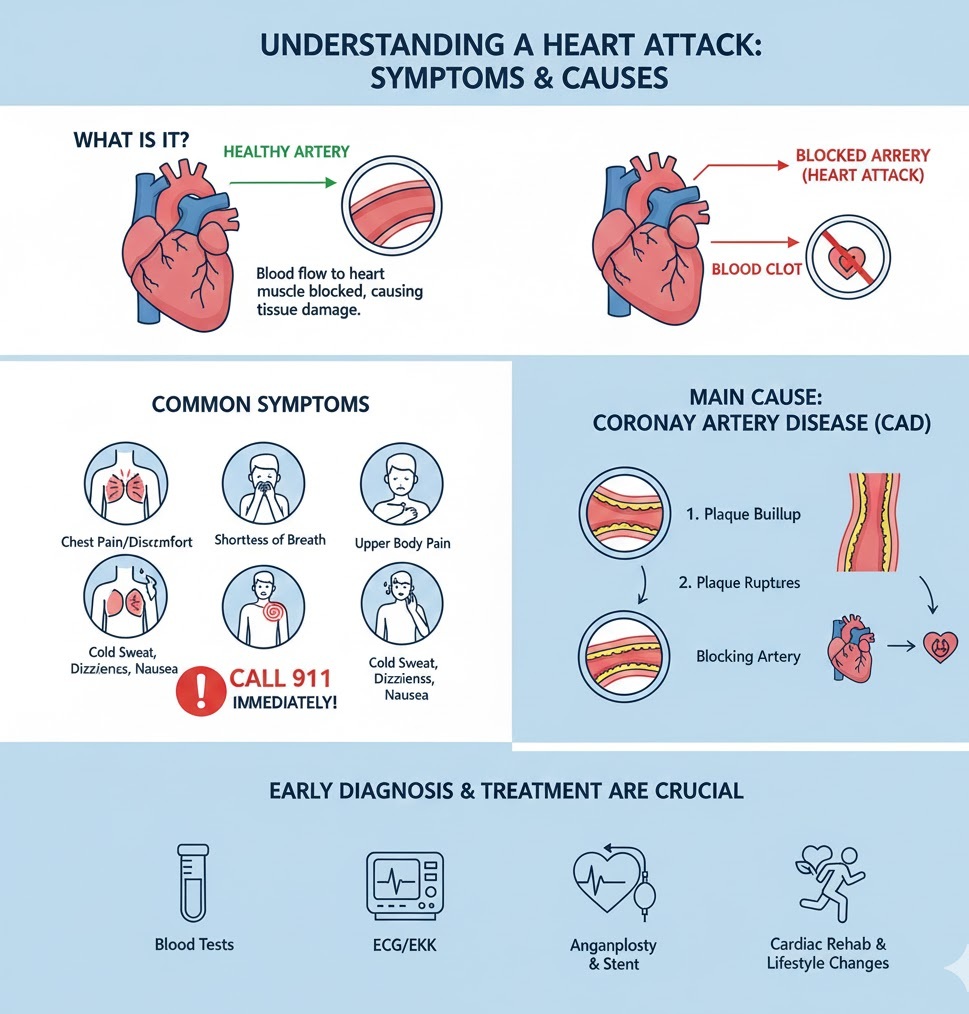
A heart attack (myocardial infarction) occurs when the flow of oxygen-rich blood to a section of the heart muscle suddenly becomes blocked. Without oxygen, the muscle begins to die. Immediate medical intervention is the only way to prevent permanent damage.
Recognizing the Symptoms
Symptoms can vary between individuals, and they don’t always look like the “chest-clutching” moment seen in movies.
The Most Common Signs:
- Chest Discomfort: Pressure, squeezing, or fullness in the center or left side of the chest. It may last several minutes or go away and return.
- Shortness of Breath: This can occur with or without chest pain, even while resting.
- Upper Body Pain: Discomfort radiating to the arms (often the left), back, shoulders, neck, jaw, or upper stomach.
- Other Warning Signs: Breaking out in a cold sweat, nausea, lightheadedness, or unusual fatigue (particularly common in women).
Important: If you suspect a heart attack, call 911 immediately. Do not wait to see if the symptoms go away.
Why Heart Attacks Happen
The leading cause is Coronary Artery Disease (CAD).
- Atherosclerosis: Over years, cholesterol and other materials build up into plaque on the artery walls.
- Rupture: A piece of plaque can break open.
- Clotting: The body forms a blood clot around the rupture. This clot can completely block blood flow through the artery.
Diagnosis and Recovery
At the hospital, doctors use blood tests (to check for heart damage markers) and an EKG/ECG to diagnose the event.
Treatments include:
- Medications: To dissolve clots or thin the blood.
- Coronary Angioplasty: A procedure where a balloon is used to open the blocked artery, often followed by placing a stent to keep it open.
- Cardiac Rehabilitation: A supervised program of exercise and education to help you recover and prevent future attacks.
About the Author