Pharm'Up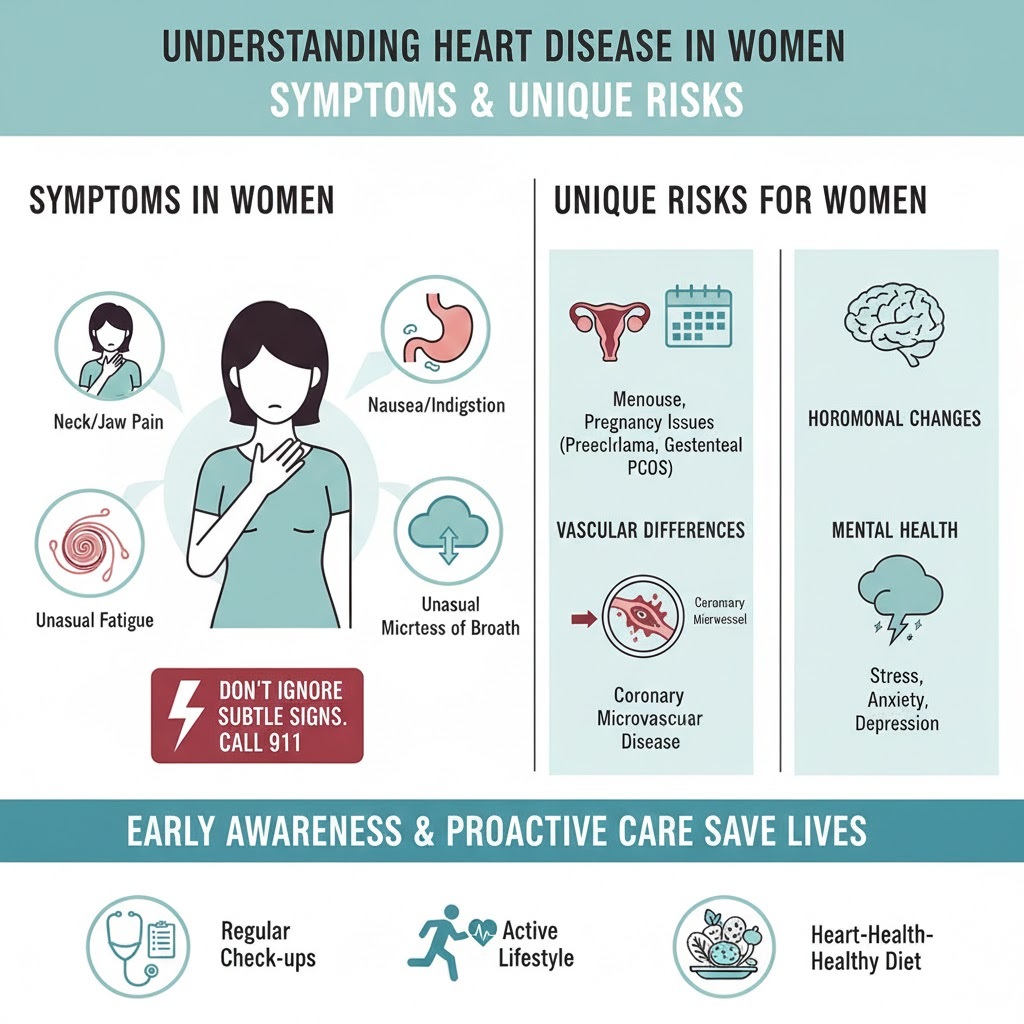
Heart disease is an umbrella term for various conditions affecting the heart and blood vessels. While coronary artery disease (CAD)—the buildup of plaque in the arteries—is the most common form for both men and women, heart disease often manifests and progresses differently in women.
Why Heart Disease is Different for Women
In the United States, heart disease is the leading cause of death for women. However, diagnosis is often delayed because:
- Atypical Symptoms: Women may not experience the “classic” crushing chest pain often seen in men.
- “Silent” Disease: Women are more likely to have no symptoms at all until a major event occurs.
- Unique Conditions: Women are more prone to certain types of heart disease, such as Coronary Microvascular Disease (affecting the smallest arteries) and Broken Heart Syndrome (triggered by extreme emotional stress).
Symptoms to Watch For
While chest pain is still the most common symptom, women should be vigilant about these “non-traditional” warning signs:
| General Heart Disease Signs | Heart Attack Specific Signs (Women) |
| Dull, heavy, or sharp chest discomfort | Pressure or tightness in the chest |
| Pain in the neck, jaw, throat, or back | Unusual, overwhelming fatigue |
| Nausea or vomiting | Indigestion or heartburn-like pain |
| Shortness of breath during daily tasks | Dizziness or lightheadedness |
| Fatigue that feels “out of the ordinary” | Pain in the upper back or stomach |
Specific Risk Factors for Women
Beyond traditional risks like smoking and high blood pressure, certain factors are specific to women:
- Menopause: A drop in estrogen (which protects the heart) after age 55 or early menopause (before 40) increases risk.
- Pregnancy Complications: History of gestational diabetes, preeclampsia, or high blood pressure during pregnancy.
- Hormonal Health: Use of certain birth control methods, Endometriosis, or Polycystic Ovary Syndrome (PCOS).
- Mental Health: Stress, anxiety, and depression have a significant impact on a woman’s heart health.
Prevention and Proactive Care
Heart disease is often preventable through consistent lifestyle choices:
- Know Your Numbers: Regularly check your blood pressure, cholesterol (especially HDL), and blood sugar.
- Move Daily: Aim for physical activity to combat the risks of a sedentary lifestyle.
- Heart-Healthy Diet: Focus on whole foods and limit processed sugars and fats.
- Talk to Your Doctor: Specifically ask about your risk profile based on your pregnancy history and menopausal status.
About the Author




 Pharm'Up