Pharm'Up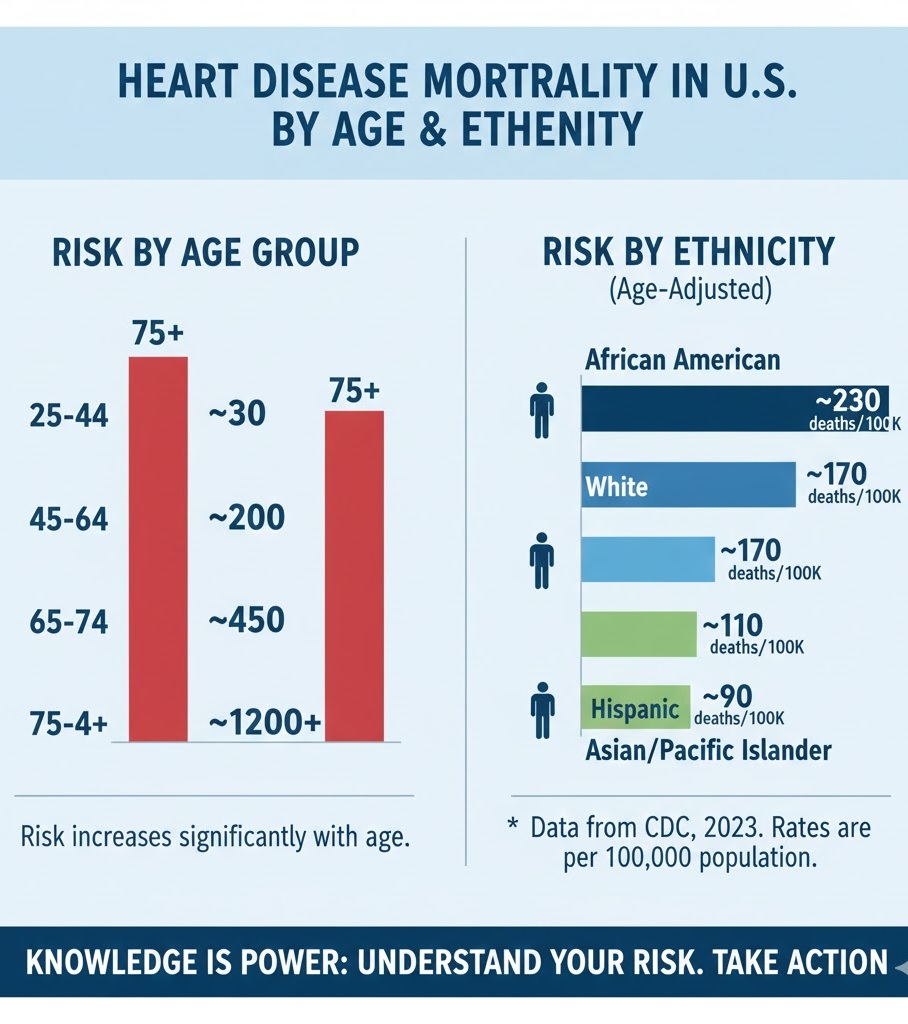
Heart disease is the leading cause of death in the United States, accounting for approximately 1 in every 5 deaths. While these numbers are significant, understanding your specific risk factors—both those you can control and those you cannot—is the most effective way to protect your health.
Risk Factors You Cannot Change
Some factors are biological or hereditary. Knowing these helps you and your doctor determine how aggressively you need to manage your changeable risks.
- Age: Risk increases for men at 45+ and women at 55+.
- Family History: Risk is higher if a father/brother was diagnosed before 55 or a mother/sister before 65.
- Race and Ethnicity: * African Americans have the highest age-adjusted death rate from heart disease (approx. 228 per 100,000).
- South Asian Americans experience higher rates of heart disease compared to other Asian groups.
- Hispanic Americans and East Asian Americans statistically have lower rates of heart disease mortality compared to Whites.
Changeable Risk Factors & Action Steps
The majority of heart disease cases can be prevented or delayed through lifestyle management.
| Risk Factor | Target / Goal | Action to Take |
| Blood Pressure | Below 120/80 mmHg | Reduce salt intake; get checked at least once a year. |
| Cholesterol | Low LDL, High HDL | Eat fiber-rich foods; use medication if prescribed. |
| Diabetes | Controlled Blood Sugar | Double the risk if unmanaged; monitor A1C levels. |
| Physical Activity | 150 mins/week | Brisk walking, swimming, or cycling to strengthen the heart. |
| Sleep | 7 to 9 hours/night | Screen for sleep apnea if you experience frequent fatigue. |
Key Lifestyle Shifts for a Healthy Heart
- Heart-Healthy Diet: Focus on the DASH or Mediterranean diet. Prioritize fruits, vegetables, and whole grains while limiting saturated fats and added sugars.
- Smoking Cessation: Smoking is a primary trigger for heart attacks. Quitting significantly lowers your risk almost immediately.
- Stress Management: High stress levels can trigger heart attacks. Practice healthy coping mechanisms like meditation or exercise rather than overeating or alcohol use.
- Alcohol Moderation: If you drink, limit it to 1 drink/day for women and 2 drinks/day for men.
About the Author


 Pharm'Up