Pharm'Up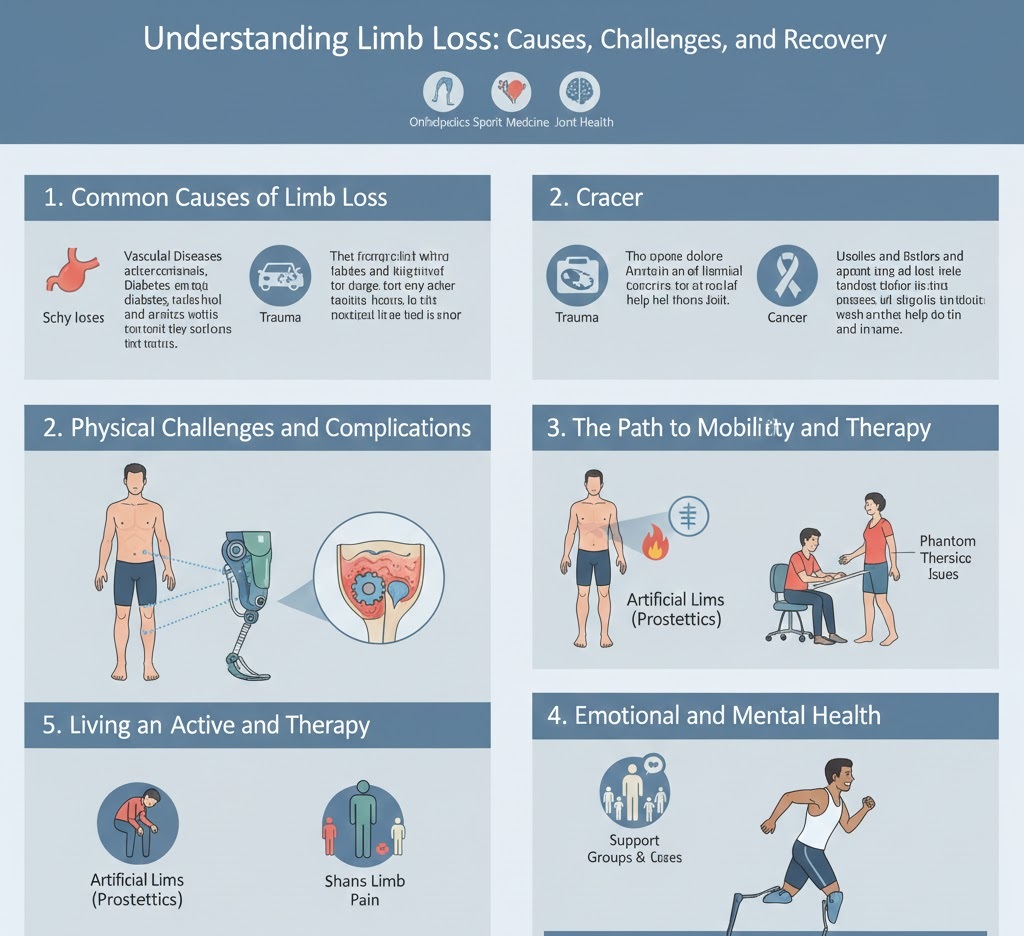
The loss of all or part of a limb—whether through surgical amputation or traumatic injury—is a life-altering event. It requires significant physical adaptation, psychological resilience, and long-term medical support to navigate the path toward recovery.
1. Common Causes of Limb Loss
Amputation or limb loss generally occurs due to severe medical complications or sudden trauma.
- Vascular Diseases: This is a leading cause of surgical amputation. Conditions like diabetes and atherosclerosis (hardening of the arteries) restrict blood flow. Without oxygenated blood, tissues die (necrosis), necessitating removal to prevent life-threatening infections.
- Trauma: Severe accidents involving motor vehicles, industrial machinery, or military combat can result in immediate limb loss or injuries so extensive that the limb cannot be saved.
- Cancer: Tumors in the bone or soft tissue of a limb (such as osteosarcoma) may require amputation to prevent the spread of the disease to the rest of the body.
- Congenital Differences: Some individuals are born with limb differences or missing limbs due to birth defects.
2. Physical Challenges and Complications
Recovery involves managing both the surgical site and the sensory changes that follow the loss of a limb.
- Phantom Limb Pain: Many amputees experience the sensation of pain, itching, or tingling in the limb that is no longer there. The brain continues to receive neural signals from the nerves that once served the missing limb.
- Skin Issues: For those using a prosthesis, the “stump” or residual limb can develop sores, rashes, or infections due to friction and moisture inside the prosthetic socket.
- Surgical Complications: Like any major surgery, risks include slow healing, blood clots, or infection at the incision site.
3. The Path to Mobility: Prosthetics and Therapy
Advancements in medical technology have made it possible for many amputees to regain high levels of function.
- Artificial Limbs (Prosthetics): Modern prostheses are highly customized. They can range from basic functional models to advanced robotic limbs that use sensors to mimic natural movement.
- Physical Therapy: Learning to use an artificial limb is a rigorous process. Physical therapists help patients rebuild core strength, balance, and gait to move efficiently with their new device.
4. Emotional and Mental Health
The psychological impact of losing a limb is profound. It is natural to experience a grieving process characterized by:
- Sadness and Depression: Dealing with the change in body image and perceived loss of independence.
- Frustration and Anger: Adjusting to the slower pace of everyday tasks during recovery.
Important Support: Counseling, peer support groups for amputees, and sometimes medication are vital tools in managing the mental health aspect of recovery.
5. Living an Active Life
With the right support system and adaptive technology, many people with limb loss lead incredibly active lives, participating in competitive sports, demanding careers, and everyday family activities.
About the Author