Pharm'Up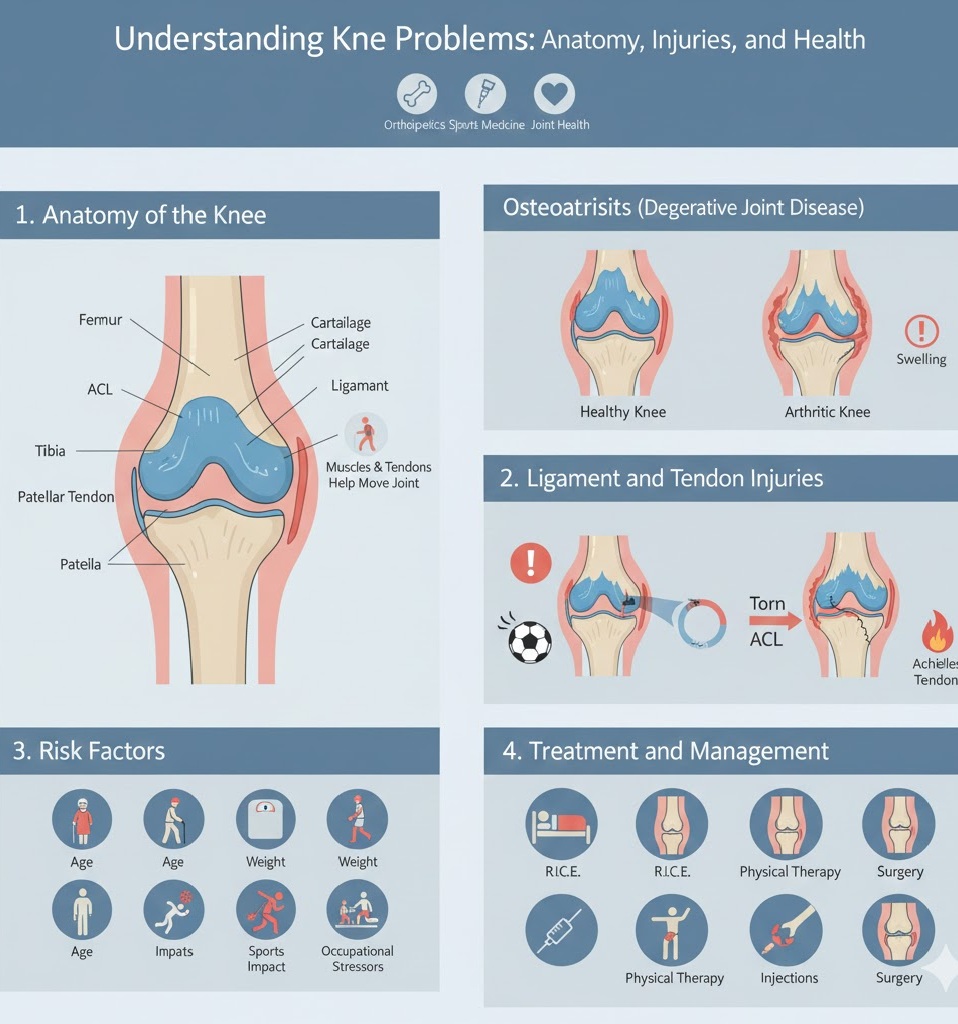
The knee is one of the largest and most complex joints in the human body. Because it bears the majority of your body weight while allowing for a wide range of motion, it is highly susceptible to both acute injury and chronic wear and tear.
1. Anatomy of the Knee
A healthy knee functions through the coordination of several different structures. When one of these is compromised, pain and mobility issues follow.
- Bones: The femur (thigh bone), tibia (shin bone), and patella (kneecap).
- Cartilage: A slippery substance that allows bones to glide smoothly against each other and acts as a shock absorber (meniscus).
- Ligaments: Tough, fibrous bands that connect bone to bone and provide stability.
- Tendons: Connect muscles to the bones to facilitate movement.
2. Common Knee Conditions
Osteoarthritis (Degenerative Joint Disease)
This is the most frequent disease affecting the knee. It occurs when the protective cartilage that cushions the ends of the bones wears down over time.
- Symptoms: Swelling, stiffness, and a “grinding” sensation during movement.
- Impact: Can make simple tasks, like climbing stairs or getting out of a chair, very painful.
Ligament and Tendon Injuries
These are often sudden and frequently occur during athletic activities.
- ACL Injury: The Anterior Cruciate Ligament (ACL) is often torn during sudden stops or changes in direction (common in soccer, basketball, and football).
- Meniscus Tear: Tearing of the “C-shaped” cartilage that acts as a cushion between your shinbone and thighbone.
- Tendinitis: Inflammation of the tendons, often caused by repetitive jumping or running.
3. Risk Factors
While anyone can experience knee pain, certain factors increase the risk:
- Age: Wear and tear accumulate over time, making older adults more prone to osteoarthritis.
- Weight: Excess body weight increases pressure on the joint during every step.
- Sports Impact: High-impact sports or occupations that require frequent kneeling put higher stress on the joint structures.
4. Treatment and Management
Treatment is highly personalized based on the specific diagnosis and the patient’s activity level.
| Approach | Typical Use Case |
| R.I.C.E. | Rest, Ice, Compression, and Elevation for minor strains and acute swelling. |
| Physical Therapy | Strengthening the quadriceps and hamstrings to support the joint. |
| Injections | Corticosteroids or hyaluronic acid to reduce inflammation and provide lubrication. |
| Surgery | Arthroscopy for minor repairs or Knee Replacement for severe, end-stage arthritis. |
About the Author