Pharm'Up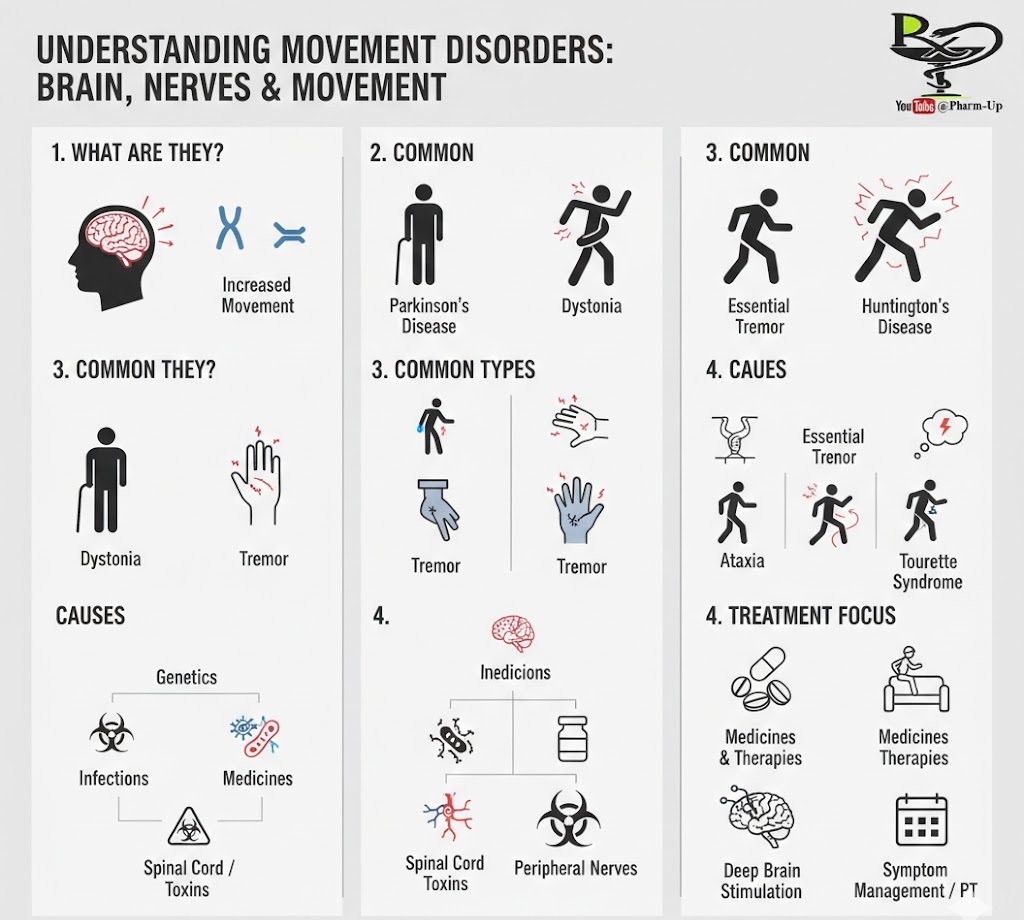
Movement disorders are a group of neurological conditions that originate in the brain and nervous system. They disrupt the complex signaling required for smooth, controlled motion. These disorders generally fall into two categories: hyperkinetic (excessive, involuntary movement) and hypokinetic (slowness or lack of voluntary movement).
1. Key Types of Movement Disorders
Because these conditions affect different areas of the brain—most notably the basal ganglia—the symptoms vary widely:
- Parkinson’s Disease: Perhaps the most well-known hypokinetic disorder. It involves a lack of dopamine, leading to tremors, muscle rigidity, and “bradykinesia” (extreme slowness of movement).
- Ataxia: Characterized by a lack of muscle coordination. It often looks like clumsiness or instability and can affect speech, eye movements, and swallowing.
- Dystonia: Causes the brain to send excessive signals to muscles, resulting in sustained twisting or repetitive movements and abnormal postures.
- Huntington’s Disease: A progressive, inherited condition that leads to “chorea”—uncontrolled, jerky, dance-like movements.
- Tourette Syndrome: Defined by repetitive, involuntary movements or sounds known as tics.
- Essential Tremor: A rhythmic shaking that occurs most often in the hands during voluntary actions, such as eating or writing.
2. Identifying the Causes
Movement disorders can be “primary” (occurring on their own) or “secondary” (resulting from another factor).
- Neurological Damage: Strokes, tumors, or traumatic brain injuries can damage motor control centers.
- Genetics: Many conditions, like Huntington’s, are passed down through families.
- External Factors: Certain medications (particularly some psychiatric drugs), exposure to environmental toxins, and metabolic imbalances can trigger movement issues.
- Infections: In some cases, a severe infection can leave lasting neurological damage.
3. Modern Treatment Approaches
While many movement disorders are chronic and lack a definitive cure, management has advanced significantly:
| Treatment Category | Examples & Use Cases |
| Pharmacotherapy | Dopamine-replacing drugs for Parkinson’s; Botox injections for localized Dystonia. |
| Physical/Occupational Therapy | Focused on maintaining balance, gait, and independence in daily tasks. |
| Deep Brain Stimulation (DBS) | A surgical option where electrodes are implanted in the brain to regulate abnormal impulses. |
| Speech Therapy | Crucial for patients with Ataxia or Parkinson’s who experience vocal changes. |
4. Lifestyle and Support
Managing a movement disorder often requires a multidisciplinary team, including a Neurologist specializing in movement disorders. Adaptive tools (like weighted utensils for tremors) and stress management are vital, as anxiety often worsens involuntary movements.
About the Author