Pharm'Up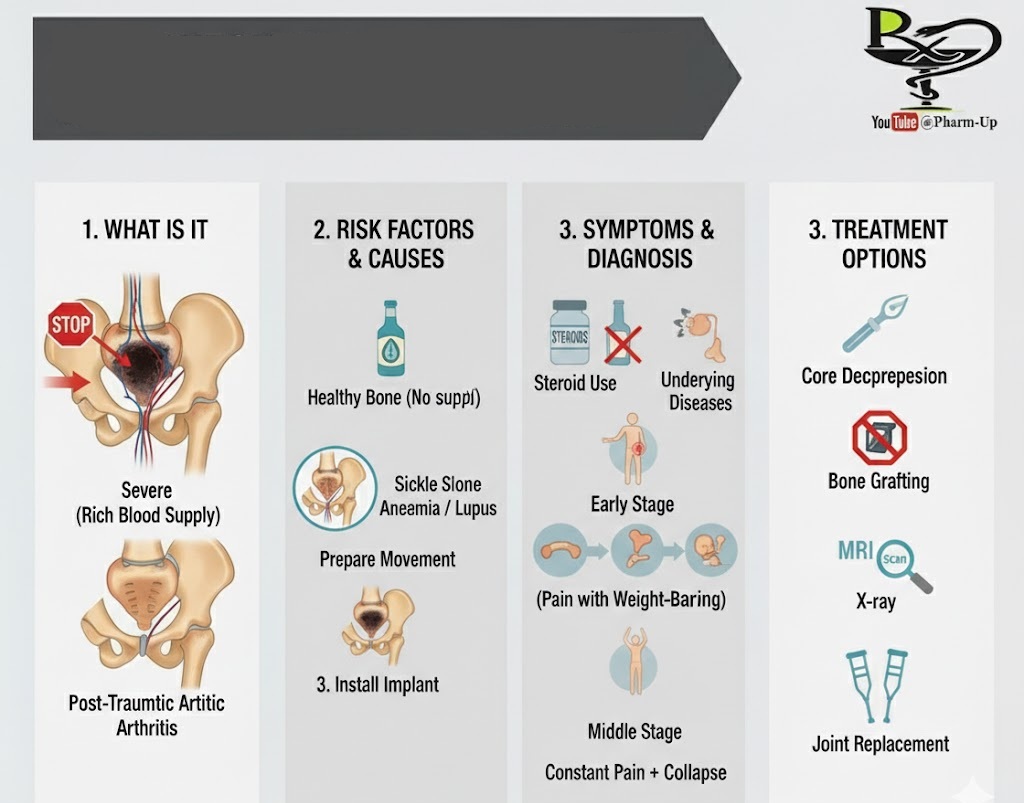
Osteonecrosis, also known as avascular necrosis (AVN), is a serious condition that occurs when the blood supply to a bone is disrupted. Because bone is living tissue, it requires a constant blood flow to stay healthy and regenerate. When this supply is cut off, the bone cells begin to die, eventually causing the bone structure to collapse and the joint to break down.
1. The Pathophysiology: Why Bone Dies
In a healthy skeletal system, there is a constant balance called “remodeling”—the body breaks down old bone and replaces it with new bone.
- The Imbalance: In osteonecrosis, the breakdown happens rapidly, but because blood isn’t reaching the area, the body cannot “ship in” the materials to build new bone.
- The Result: The structural integrity of the bone weakens, leading to tiny fractures and, eventually, the total collapse of the joint surface.
2. Common Locations and Demographics
While it can affect any bone, osteonecrosis is most commonly found in:
- The Hip (Femoral Head): The most frequent site of the disease.
- The Knee and Shoulder: Often affecting the “ball” portions of these joints.
- Ankles and Jaw: Though less common, these can be severely impacted.
Unlike many forms of arthritis that affect the elderly, osteonecrosis usually strikes adults in the prime of their lives, specifically those in their 30s, 40s, and 50s.
3. Risk Factors and Causes
The exact cause can be difficult to pinpoint, but several factors significantly increase the risk:
- Corticosteroid Use: Long-term use of high-dose steroids (like prednisone) is a leading non-traumatic cause.
- Alcohol Consumption: Excessive alcohol use can cause fatty deposits to form in the blood vessels, impeding flow to the bones.
- Trauma: A dislocated joint or a broken bone can damage nearby blood vessels.
- Underlying Conditions: Diseases like Sickle Cell Anemia, Lupus, and certain cancers can interfere with healthy blood circulation.
4. Symptoms and Progression
- Early Stage: Often “silent” with no symptoms.
- Middle Stage: Pain occurs when putting weight on the affected joint.
- Late Stage: Constant pain even while resting. The joint loses its smooth shape, leading to severe, secondary osteoarthritis and limited mobility.
5. Treatment Options
The goal of treatment is to preserve the natural joint and prevent collapse.
| Treatment | How it Works |
| Core Decompression | A surgical procedure that removes part of the inside of the bone to relieve pressure and allow new blood vessels to grow. |
| Bone Grafting | Transplanting healthy bone tissue to the affected area to provide structural support. |
| Weight-Bearing Limitations | Using crutches or walkers to reduce the mechanical stress on the dying bone. |
| Joint Replacement | If the bone has already collapsed, a total hip or knee replacement is often necessary. |
About the Author