Pharm'Up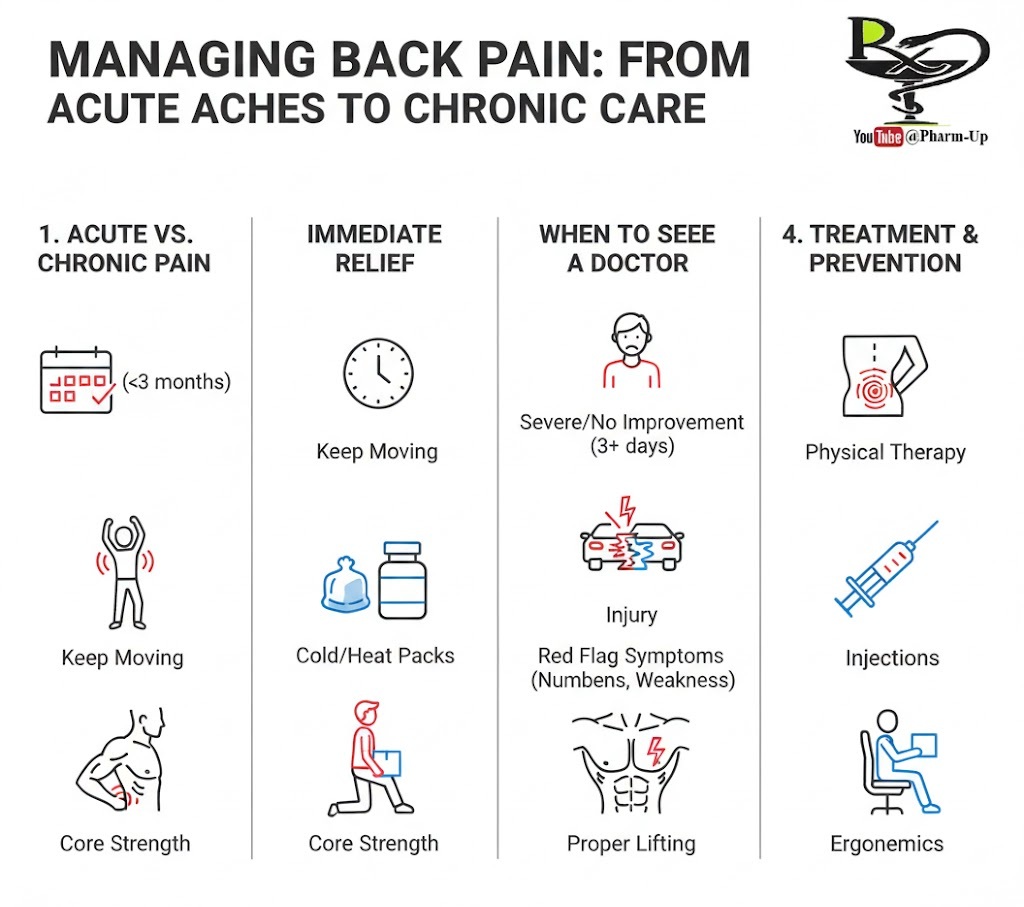
Back pain is a nearly universal human experience, impacting approximately 80% of people at some point in their lives. It is one of the leading reasons for doctor visits and missed work days. Understanding the duration and nature of your pain is the first step toward effective relief.
1. Acute vs. Chronic Pain
Medical professionals categorize back pain based on how long it persists:
- Acute Pain: This is sudden pain, often triggered by a specific movement or minor injury. It typically lasts a few days to a few weeks and resolves as the body heals.
- Chronic Pain: Pain is considered chronic if it lasts for three months or longer. This type of pain may require a more complex, multi-disciplinary treatment plan.
2. Immediate Steps for Relief
When pain strikes, the goal is to manage symptoms without losing mobility:
- Keep Moving: While it’s tempting to stay in bed, doctors advise against more than 1–2 days of bed rest. Gentle movement prevents stiffness and muscle weakness.
- Temperature Therapy: Use cold packs for the first 48 hours to reduce swelling, then switch to heat to relax tight muscles.
- Over-the-Counter (OTC) Relief: Medicines like ibuprofen or acetaminophen can help manage the “dull ache” so you can remain active.
3. When to See a Professional
Most back pain fades on its own, but you should seek medical advice if:
- The pain is severe and does not improve after three days.
- The pain started immediately following a specific injury (like a fall or car accident).
- You experience “red flag” symptoms: numbness in the legs, weakness, or unintended weight loss.
4. Treatment Options
Treatment is rarely “one size fits all” and depends on the root cause:
| Treatment Type | Examples |
| Non-Invasive | Physical therapy, specific stretching exercises, and massage. |
| Medical | Prescription muscle relaxants, nerve blocks, or steroid injections. |
| Complementary | Chiropractic adjustments, acupuncture, or yoga. |
| Surgical | Reserved for structural issues like severe disk herniation or spinal stenosis. |
5. Prevention and Maintenance
To avoid future episodes, focus on core strength. The muscles in your abdomen and back act as a natural “corset” for your spine. Maintaining a healthy weight and practicing proper posture during long hours at a computer are also vital for long-term spinal health.
About the Author