Pharm'Up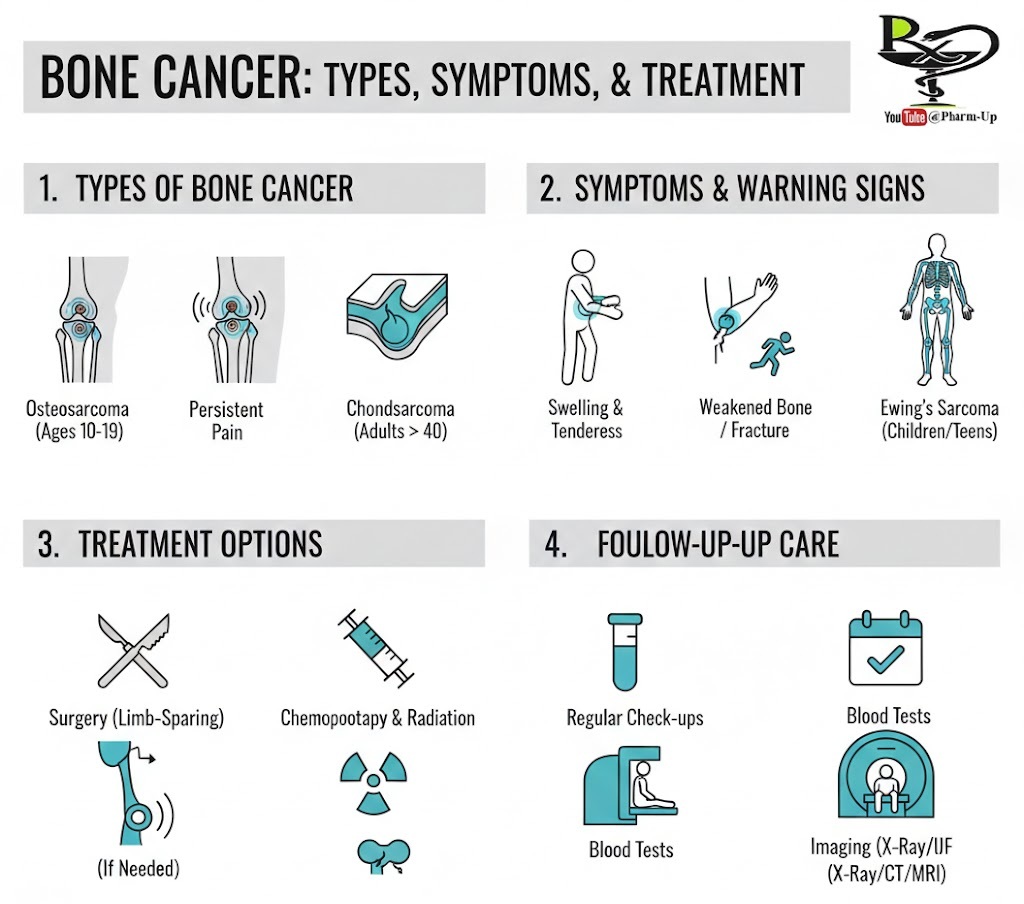
Bone cancer is a relatively rare form of malignancy when it originates directly in the bone (primary bone cancer). It is much more common for cancer to spread to the bones from other organs, such as the lungs, breasts, or prostate (metastatic bone cancer). Primary bone cancer occurs when cells in the bone grow out of control, destroying healthy bone tissue.
1. Primary Types of Bone Cancer
The classification of bone cancer depends on the type of cell where the cancer began:
- Osteosarcoma: The most common type, typically appearing in the “growth plates” of the knee and upper arm. It primarily affects children, adolescents, and young adults (ages 10–19).
- Chondrosarcoma: This cancer begins in the cartilage—the tough connective tissue between bones. It is rarely seen in young people and usually develops in adults over the age of 40.
- Ewing’s Sarcoma: Most prevalent in children and teenagers. It often starts in the long bones of the legs or arms, or in the pelvis. It is statistically more common in males.
2. Symptoms and Warning Signs
The symptoms can often be mistaken for sports injuries or “growing pains,” making awareness crucial:
- Persistent Pain: The most frequent symptom. At first, the pain may be intermittent or worse at night, but it eventually becomes constant.
- Swelling and Tenderness: A lump or mass may be felt in the area of the bone.
- Weakened Bone: In some cases, the cancer weakens the bone so much that it fractures with little to no trauma.
- Systemic Symptoms: Unintended weight loss and fatigue.
3. Treatment Modalities
Treatment plans are highly individualized based on the stage and location of the tumor:
- Surgery: The primary treatment. Surgeons aim to remove the tumor and a “margin” of healthy tissue around it.
- Limb-Sparing Surgery: Modern techniques allow doctors to replace removed bone with a metal prosthesis or bone graft, avoiding amputation in many cases.
- Chemotherapy and Radiation: Used to shrink tumors before surgery or kill remaining cancer cells afterward.
- Amputation: Though less common today, it may be necessary if the cancer involves vital nerves or blood vessels.
4. Importance of Long-term Follow-up
Because bone cancer has a risk of recurring (coming back) or spreading to the lungs, survivors require regular monitoring. Follow-up visits typically include physical exams, blood tests, and imaging like X-rays or CT scans to ensure the patient remains cancer-free.
About the Author