Pharm'Up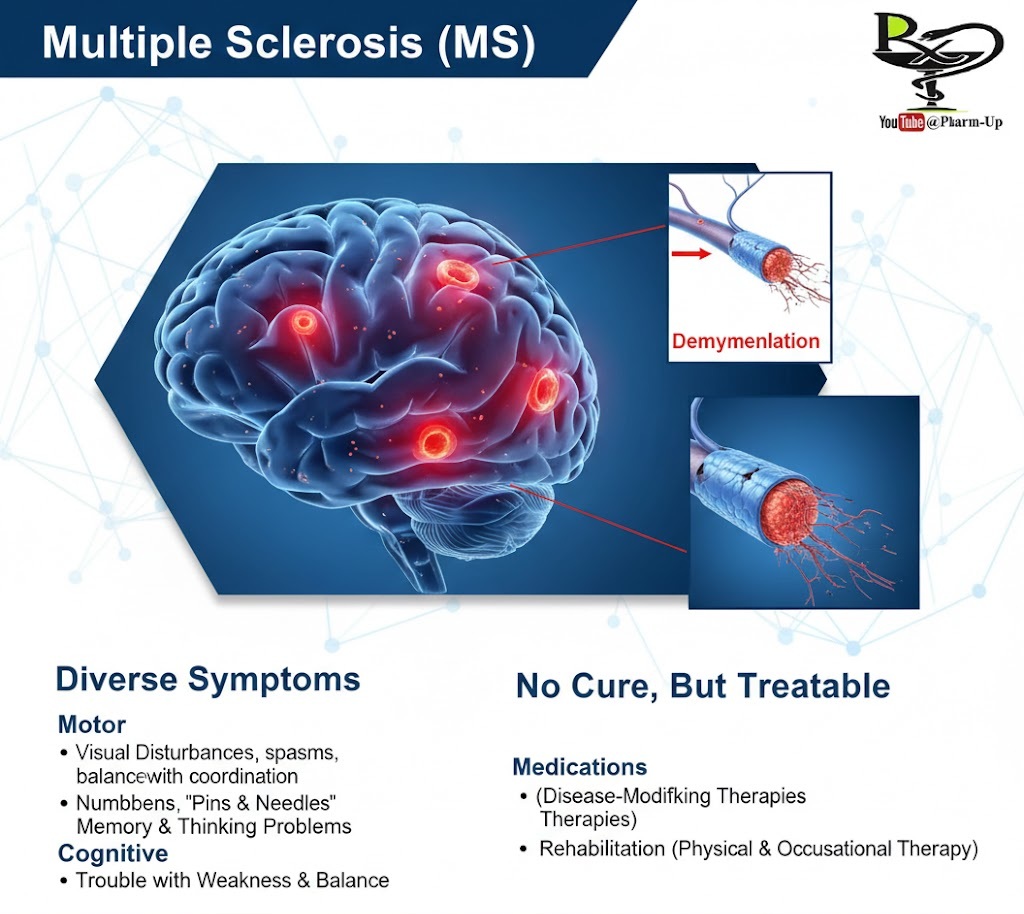
Multiple Sclerosis (MS) is a chronic disease of the central nervous system that disrupts the flow of information within the brain, and between the brain and body. It occurs when the immune system attacks the myelin sheath, the protective insulation surrounding nerve fibers. When this “insulation” is damaged, nerve signals are slowed or blocked, leading to a wide range of physical and cognitive symptoms.
Recognizing the Symptoms
Because MS affects the nervous system, symptoms can appear anywhere in the body. Common signs include:
- Mobility & Strength: Muscle weakness, tremors, and significant trouble with balance or coordination.
- Sensory Issues: Numbness, tingling, or the classic “pins and needles” sensation.
- Vision: Blurred vision, double vision, or partial loss of sight.
- Cognition: Difficulty concentrating, multitasking, or issues with short-term memory.
Who is Affected?
While the exact cause remains a mystery, MS is widely considered an autoimmune disorder.
- Demographics: It is more frequently diagnosed in women than in men.
- Age of Onset: Symptoms typically first appear between the ages of 20 and 40.
- Progression: The course of MS is unpredictable. For many, the disease remains mild with long periods of remission; for others, it can lead to severe disabilities affecting speech or walking.
Diagnosis and Management
There is no single “gold standard” test for MS. Instead, doctors use a “differential diagnosis” process:
- Neurological Exams: Testing reflexes, vision, and sensation.
- MRI Scans: To look for areas of damage (lesions) in the brain and spinal cord.
- Spinal Fluid Analysis: To check for specific proteins related to the disease.
While there is currently no cure, modern medicine offers Disease-Modifying Therapies (DMTs) that can slow the progression of the disease and reduce the frequency of flare-ups. Physical and occupational therapy are also vital tools to help patients maintain independence and manage daily tasks.
About the Author